


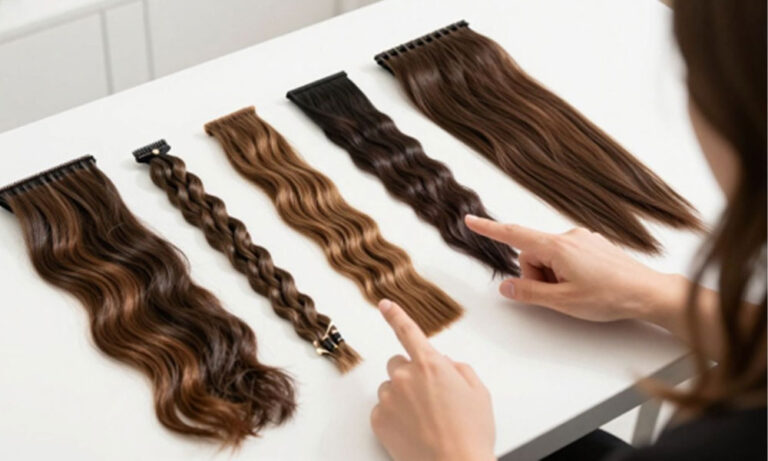
Identifying the specific needs of your hair starts with a clear look at its inherent structure. Before choosing any accessory method, you need to understand how your hair behaves on a daily basis. This foundational knowledge ensures that any additions will feel comfortable and look natural.
Categorizing your curl pattern and wave type
Texture is usually defined by the shape of the follicle, ranging from straight to tightly coiled. Identifying whether your hair falls into a straight, wavy, curly, or coily category allows for better hardware selection. A mismatch here usually results in the extensions standing out rather than blending.
Assessing hair porosity levels
Porosity refers to how well your strands absorb and hold moisture. High porosity hair often drinks up product quickly but loses it fast, while low porosity hair might struggle to absorb moisture at all. Knowing this helps you choose products that keep both your extensions and natural hair looking healthy.
Determining individual strand thickness
Strand thickness affects how much weight your hair can carry comfortably. Fine hair requires lighter attachment methods that won’t cause pulling or breakage over time. Thick strands are more robust but require higher density extensions to match the volume.
Evaluating natural hair density
Density is the total number of strands on your scalp, distinct from strand thickness. Matching the density of your extensions to your own scalp volume is a crucial styling element for creating the perfect camouflage. This balance prevents the hair from appearing sparse at the attachment points.
Exploring extension attachment methods
Choosing the right attachment method determines how naturally your hair sits and flows. Different attachment techniques work better for various hair types, ensuring the life of the extensions is as long as possible. You should always discuss these options with a professional to align with your styling needs.
Tape-in extensions for fine or thinning hair
Tape-ins offer a flat, low-profile application that lies close to the scalp. This method is generally favored for people who have finer hair because the lightweight tapes distribute weight evenly across a section of hair.
Micro-link and bead methods for medium textures
Micro-links use small beads to secure extensions to your individual strands. They are ideal for medium textures because they allow for freedom of movement and are quite inconspicuous. This method effectively blends with hair that has moderate volume and body.
Sew-in weft extensions for thick, coarse hair
For those with thick or coarse hair, sew-in wefts can provide the support needed to hold a large volume of hair. This method uses a braided base as a foundation, which is durable enough to manage weight and prevent slippage.
Versatile clip-in options for temporary texture changes
Clip-ins remain the best solution for experimental looks without a permanent commitment. These extensions are ideal for changing up style length and texture only when needed, allowing you to return to your natural hair state at the end of every day.
Selecting the right hair material for a seamless blend
Material selection determines the longevity and look of your extensions. Investing in higher quality hair usually pays off because it maintains its integrity through heat styling and daily wear. Choosing the correct type of fiber is the most reliable way to ensure a consistent appearance.
Why human hair is essential for texture compatibility
Human hair reacts to heat and humidity exactly like your own, making it the most realistic material. Synthetic fibers often maintain a static, glossy appearance that fails to match the subtle shifts in natural hair. To illustrate the functional differences between materials, consider the following breakdown:
| Feature | Virgin Human Hair | Processed Human Hair | Synthetic Fiber | |
| Heat Resistance | High | Moderate | Low | |
| Texture Range | Natural | Uniform | Rigid | |
| Longevity | Long-term | Medium-term | Short-term |
Selecting the right human hair variety is the first step toward a look that passes for your own. Natural textures tend to hold color and treatment better over time.
Distinguishing between virgin and processed hair types
Virgin hair has never been chemically altered, making it the healthiest option for a natural look. Processed hair has been treated to reach specific colors or textures, which can change its original strength and cuticle condition. Depending on your needs, virgin hair offers the best long-term results.
Benefits of custom sourced extensions for unique textures
Custom sourcing allows for a bespoke match that you simply cannot get from off-the-shelf products. This is especially helpful for people with unique curl patterns or color variations that are difficult to replicate. Working with a specialist ensures the hair reflects your actual texture perfectly.
Evaluating cuticle alignment to prevent tangling
Cuticle alignment is vital for smooth hair that does not tangle in the wind. When cuticles face the same direction, the hair remains silky and soft for many months. Poor quality extensions often neglect this step, leading to frustrating knots that ruin the entire set.
Professional techniques for blending different textures
Blending is often where the real magic happens, especially when the hair textures do not match naturally. A skilled professional knows exactly how to manipulate the hair to hide the transition point between the extension and your scalp. With the right tools and cutting techniques, the integration becomes invisible to the casual observer.
Strategic layering and cutting by your stylist
Layers are essential for removing harsh lines where your natural hair ends and the extensions begin. Your stylist will often cut the hair while it is installed so they can see exactly how the lengths transition. This technique creates a soft, feathered look that moves just like real hair.
Using heat styling to align natural curls with extensions
To ensure a perfect blend, you must style your hair and the extensions together using consistent heat tools. This could mean using a curling iron on both textures simultaneously so they hold the same shape. Aligning the curls makes the division between the two types of hair vanish completely.
Applying specialized styling products for a consistent look
Products like lightweight serums and creams can help unify the sheen of your hair. When your natural hair and extensions reflect light at different degrees, a smoothing balm can even things out. You want both textures to have the same amount of moisture for that truly seamless finish.
Braiding and twist-out techniques for curly integration
For those with curly hair, braiding or twisting your hair with the extensions helps bind them together. Setting the hair while wet is a traditional way to train different textures to adopt a uniform curl pattern. This results in a cohesive style that holds its shape for several days at a time.
Consulting with experts like Hair Mafia
Consulting with a professional is the best way to avoid common pitfalls in the extension process. Using a service like Hair Mafia ensures that your hair type is accurately assessed before any work begins. Their expertise helps you define your goals and prevents bad decisions.
Preparing for your texture matching consultation
Bring photos or examples of the styles you love to your consultation. Being prepared allows your stylist to visualize the end result and plan the installation strategy. Arriving with clean, product-free hair often provides the most accurate view of your true texture.
Communicating your style goals with your stylist
Be clear about whether you want volume, length, or a color correction. When Hair Mafia experts understand your daily routine and lifestyle, they can suggest methods that make sense for you. Clear communication is the main secret to successful hair transformation across any extension type.
Why professional color matching improves texture blending
Color matching creates the illusion of seamless volume even if the textures are slightly different. If the roots match your natural color and the ends blend into your extensions, small inconsistencies in texture become much harder to spot. Professional colorists can achieve this look with precision.
Customizing extension weight to prevent strain on your natural hair
Every scalp has a limit, and custom tailoring the weight is vital. During your sessions at Hair Mafia, your stylist will monitor how your hair responds to the attachment points to ensure no tension or strain occurs. Here are a few ways experts protect your scalp:
- Distributing weight across a larger section of hair
- Using modern, lightweight attachment materials
- Adjusting the placement to allow for natural movement
- Limiting the volume added based on your specific density
These safety measures keep your natural hair safe while guaranteeing that the result looks and feels like yours.
Maintaining texture harmony and extension integrity
Proper care is the only way to keep your extensions looking as good as they did on day one. Because extensions do not receive natural oils from your scalp, you must replace that moisture manually. Developing a routine is essential for long-term satisfaction.
Developing a nightly routine to minimize friction
Nightly protection prevents tangling and matting while you sleep. Braiding your hair or pulling it into a loose ponytail will reduce the friction against your pillowcase. A silk or satin bonnet also helps retain moisture and keep the cuticle smooth.
Choosing the appropriate brushes and detangling tools
Always use brushes specifically designed for extension upkeep, which typically feature soft, flexible bristles. These tools loosen knots without tugging on the attachment points or causing unnecessary hair loss. Start detangling from the ends and work your way up to the roots.
Managing moisture levels to keep hair soft and manageable
Use sulfate-free shampoos and hydrating conditioners that are safe for your specific extension type. Avoid applying heavy oils directly to the beads or tapes, as this can weaken the bond and lead to slipping. Keeping the hair hydrated ensures it stays soft and easy to style for weeks.
Scheduling recurring maintenance appointments at Hair Mafia
Regular check-ins are necessary to tighten beads or reset tapes as your natural hair grows out. Scheduling these appointments with the team at Hair Mafia ensures your hair stays in top condition. Consistent maintenance protects your investment and ensures your hair always looks perfect.
Conclusion
Matching your natural texture with the right hair extensions involves an honest assessment of your own hair needs and a commitment to proper maintenance. By prioritizing quality material and consulting with experts, you build a foundation for a look that is both durable and beautiful for the long term.
