


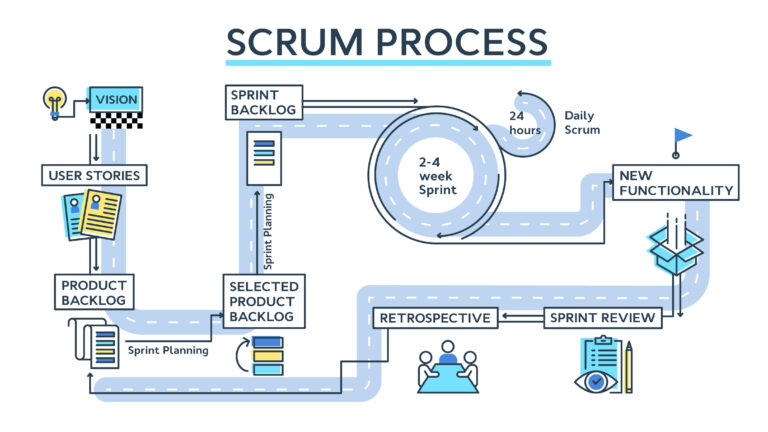
The product owner is responsible for delivering products that enhance business value and improve customer satisfaction. The roles of the Scrum Product Owner are understood in the wrong way in the agile business world. Though they are responsible for delivering successful products, they cannot take ownership of the product or make decisions on the product. These Scrum Product Owners communicate stakeholders’ and customers’ requirements to the development team and take accountability for maximising the value of the product. The current article explores the main responsibilities of the Scrum Product Owner to avoid any confusion.
Product Owner
The role of the product owner in the agile business world is much deeper than managing product backlogs. They play a key role in defining product vision and directing the Scrum team to develop the product that enhances customer satisfaction. They not only represent the needs of the stakeholders to the team but also advocate the needs and challenges of the team in developing a product. As a product owner, you should start your PSPO Certification Course today and master skills to guide a Scrum team successfully.
Responsibilities of the Scrum Product Owner
Define the Project Vision
The Scrum product owner will define a clear vision for the product development after understanding the needs of the stakeholders and customers. The product vision includes a summary of product goals to be achieved. The product vision helps the Scrum team understand the need for product development and the targeted users. The product owners communicate with the stakeholders and customers to ensure the product vision aligns with business objectives.
Managing Product Backlogs
The product backlog is a list of product features that the teams need to complete to achieve the product goals. The product owner prioritises these features based on business objectives. The scrum teams will understand the features that need to be delivered first and be able to improve the speed of product delivery. While managing the product backlog, the product owner will list dependencies in the sequence of product development. The dynamic product backlog list will change often; the product owner needs to update the list for the stakeholders and developers to deliver optimised performance of business outcomes. On the whole, the product owner manages the product backlog by expressing the items clearly and ordering the best items in sequence. Effective product backlog management optimises the work of developers in the Scrum team.
Prioritising Needs
The Scrum product owner is also responsible for prioritising the needs and objectives of the product. The role of the product owner is multifaceted, and they juggle between budget, scope of the project, and time. The product owner will balance these three aspects while weighing these priorities for product development. To achieve this, the product owner should have a clear understanding of the product features that add maximum business value and improve customer satisfaction. After the product owner prioritises the product backlog, the Scrum teams help in deciding how each product element should be developed.
Supervising the Development Stage
The product owner will also oversee the development process for a smooth flow. Though the product owner does not micromanage the Scrum team, they will consider conducting reviews and giving feedback in different phases of product development. By overseeing the product development process, they can have effective and timely communication with the Scrum team and stakeholders to support the product vision.
Enable Cross-team Collaboration
The Scrum product owner will also facilitate better communication between different development departments and stakeholders. The transparent communication between these two parties will ensure that teams work on prioritised features and stakeholders can give clear instructions. They act as a liaison between customers and the development team and play a key role in conveying their needs effectively to ensure the development process is handled more efficiently. When the product owner acts as the primary liaison between stakeholders and the development team, they will evaluate the product progress at each iteration and verify the acceptance criteria. They will collect stakeholder feedback and validate it against the product’s usability to ensure it solves real customer problems. With user story mapping, they will identify gaps in product backlogs and refine them to improve customer experience. They will use key performance indicators like user engagement and conversion rates to know whether the product increment delivered meets the expected outcome.
Participate in Scrum Events
The Scrum Product Owner will be part of all Scrum events from daily stand-ups to sprint reviews for smooth product development. By participating in these events, the product owner will make sure that Scrum teams stay aligned with business objectives. As the product owner becomes a part of Scrum events, they can be available for the teams and guide them through challenges.
Anticipating Client Needs
The product owner is also responsible for planning client needs and managing the development process. To be able to develop a product that addresses the needs of clients, the product owner should always anticipate their needs and understand their requirements. The ability of the product owner to anticipate their needs and build trust among the customers and deliver products beyond their expectations.
Conclusion
The Scrum product owner will have many job responsibilities. They focus on educating the Scrum team about why to build the product and how their objectives connect with the business goals. They will prioritise the product backlog wisely and ensure it delivers maximum business value. They will lead the Scrum team with the purpose of delivering usable product value at the end of each sprint.
