


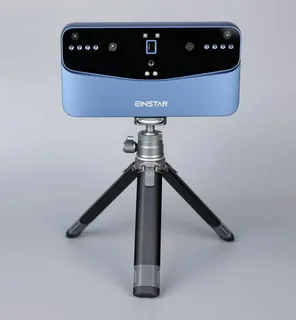
The manufacturing industry has entered a new era where digital technology plays a vital role in improving productivity, accuracy, and innovation. One of the most valuable tools driving this transformation is the 3d printer scanner. By converting physical objects into detailed digital models, this technology enables businesses to reproduce, modify, and improve products with remarkable precision. Whether used for rapid prototyping,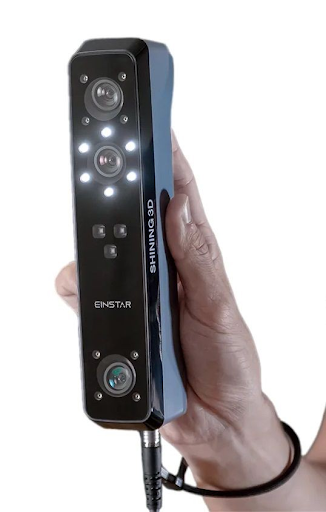 reverse engineering, or customized manufacturing, a 3d printer scanner has become an essential part of modern production workflows.
Alongside this innovation, the handheld 3d scanner has gained widespread popularity because of its portability and flexibility. It allows users to capture objects of various sizes without being restricted to a fixed scanning station. Together, these technologies simplify complex design processes while reducing production costs and development time.
What Is a 3D Printer Scanner?
A 3d printer scanner is a device that captures the geometry and dimensions of a physical object and converts it into a digital 3D model that can be edited and reproduced using a 3D printer. Instead of creating designs from scratch, users can scan existing products, make improvements, and print highly accurate replicas.
Modern scanners use advanced technologies such as structured light, laser scanning, or infrared sensors to collect millions of measurement points. The resulting digital model accurately represents the original object and can be exported into popular formats such as STL, OBJ, or PLY for 3D printing and CAD software.
Understanding the Role of a Handheld 3D Scanner
A handheld 3d scanner is designed for portability and ease of use. Unlike fixed scanning systems, it allows users to move freely around an object while capturing data from multiple angles. This makes it ideal for scanning large equipment, sculptures, automotive parts, furniture, and irregularly shaped objects.
The lightweight design and advanced tracking systems allow professionals to perform high-quality scans in workshops, factories, construction sites, museums, hospitals, and research laboratories.
Because of its flexibility, the handheld 3d scanner has become one of the most popular scanning solutions available today.
How 3D Scanning Works
The scanning process is simple yet highly efficient.
First, the object is positioned in a suitable environment. The 3d printer scanner projects structured light or laser beams onto the surface while cameras capture thousands of images from different angles.
The scanning software combines these images into a complete digital mesh. Users can then repair imperfections, smooth surfaces, remove unwanted data, and prepare the model for manufacturing.
Once completed, the digital file is transferred directly to a 3D printer, creating an accurate physical replica.
Key Benefits of Using a 3D Printer Scanner
Businesses invest in 3d printer scanner technology because it provides numerous advantages.
Faster Product Development
Engineers can scan existing components instead of designing them from scratch, significantly reducing development time.
Exceptional Accuracy
Modern scanners capture fine details with outstanding precision, producing highly reliable digital models.
Cost Efficiency
Reducing manual measurements and minimizing design errors lowers production costs.
Easy Customization
Products can be modified according to specific customer requirements before printing.
Improved Quality Control
Manufacturers compare scanned products with original CAD models to identify production defects and maintain quality standards.
Advantages of a Handheld 3D Scanner
The handheld 3d scanner offers several unique benefits that make it suitable for a wide range of applications.
- Lightweight and portable
- Easy to operate
- Fast scanning speed
- High-resolution data capture
- Wireless connectivity options
- Suitable for large and small objects
- Real-time visualization
- Excellent compatibility with CAD software
These advantages allow professionals to complete projects more efficiently while maintaining exceptional accuracy.
Applications Across Different Industries
The demand for 3d printer scanner technology continues to grow across numerous industries.
Manufacturing
Factories use scanners for reverse engineering, quality inspection, and product development.
Automotive
Automotive manufacturers scan vehicle parts for repair, customization, and replacement production.
Healthcare
Doctors and medical laboratories create customized prosthetics, dental restorations, and orthopedic devices using scanned patient data.
Architecture
Architects digitally preserve buildings and historical landmarks while creating accurate renovation plans.
Aerospace
Aircraft manufacturers inspect highly complex components to ensure precision and safety.
Education
Universities use scanning technology to teach engineering, industrial design, robotics, and product development.
Reverse Engineering Made Simple
Reverse engineering has become one of the most valuable applications of a 3d printer scanner.
Many industrial machines continue operating long after manufacturers stop producing replacement parts. Instead of manually recreating these components, engineers simply scan the existing part, generate a digital model, and manufacture a new component using 3D printing.
The handheld 3d scanner makes this process even easier by allowing technicians to scan installed equipment without removing every component.
Choosing the Right Scanner
Before purchasing a 3d printer scanner, businesses should evaluate several important factors.
- Scanning accuracy
- Resolution
- Capture speed
- Supported object size
- Software compatibility
- Export file formats
- Ease of calibration
- Portability
- Customer support
- Overall cost
Choosing the right scanner ensures maximum productivity and long-term value.
Common Challenges During Scanning
Although modern scanners are highly advanced, users may occasionally experience challenges.
Reflective or transparent materials can interfere with laser or structured-light scanning. Applying temporary scanning spray often improves results.
Large objects may require multiple scans that are automatically merged by software.
Deep cavities and hidden surfaces usually require scanning from additional angles to capture complete geometry.
Fortunately, modern software handles these challenges with automatic alignment and intelligent mesh processing.
Best Practices for High-Quality Results
To achieve professional-quality scans with a handheld 3d scanner, users should follow several best practices.
- Keep the scanner moving steadily.
- Maintain the recommended scanning distance.
- Ensure sufficient lighting.
- Scan from multiple directions.
- Avoid sudden movements.
- Clean objects before scanning.
- Review captured data before exporting.
Following these recommendations improves accuracy while reducing editing time.
Environmental Benefits
Digital manufacturing supports sustainable production practices.
Using a 3d printer scanner reduces unnecessary material waste because products are designed accurately before manufacturing begins. Combined with additive manufacturing, companies produce only the required components, minimizing excess inventory and reducing environmental impact.
This efficient workflow helps businesses lower production costs while supporting environmentally responsible manufacturing.
The Future of 3D Scanning Technology
Artificial intelligence, cloud computing, and automation continue to reshape the future of scanning technology.
Future 3d printer scanner systems will likely include AI-powered mesh repair, faster processing speeds, wireless cloud collaboration, higher scanning resolutions, and automated quality inspection.
The handheld 3d scanner will also become lighter, faster, and more intelligent, making advanced scanning accessible to businesses of every size.
As digital manufacturing continues evolving, scanning technology will remain at the center of innovation.
Conclusion
The 3d printer scanner has transformed modern manufacturing by allowing businesses to convert physical objects into accurate digital models quickly and efficiently. Whether used for reverse engineering, quality inspection, rapid prototyping, or customized production, this technology delivers significant improvements in speed, precision, and cost savings.
When combined with the flexibility of a handheld 3d scanner, manufacturers gain a complete digital workflow that supports innovation across engineering, healthcare, education, architecture, automotive, and aerospace industries. Investing in advanced scanning technology today prepares businesses for the future of smart manufacturing, where digital precision and efficient production go hand in hand.
