


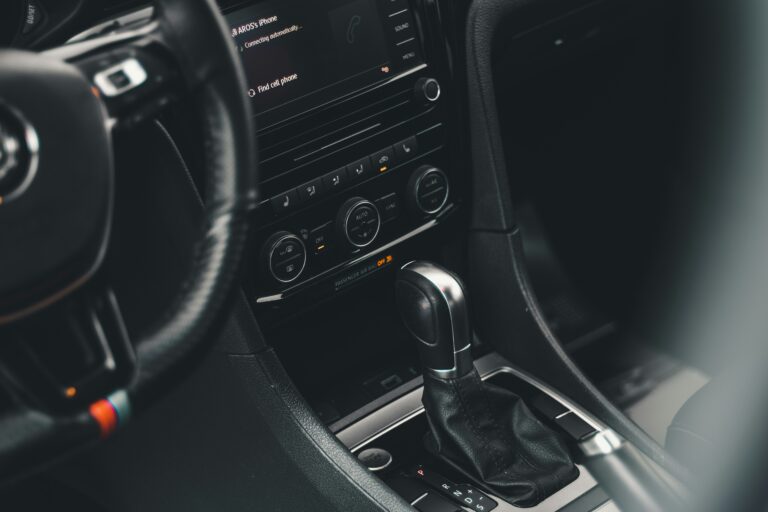
Once a mechanic confirms a gearbox is beyond a simple repair, the search for a replacement usually comes down to price fairly quickly. New units carry the steepest cost, remanufactured options sit in the middle, and a second-hand unit pulled from another vehicle often looks like the obvious way to save a substantial amount of money.
That savings is real, but it only holds up if the unit itself is sound. A transmission is one of the more complex components on a car, and a buyer who skips a few basic checks can end up paying twice, once for the part and again for labor when it fails shortly after installation.
Shops that install customer-supplied transmissions regularly see both outcomes play out. One driver does the homework, arrives with a unit that matches perfectly and installs without issue, and gets years of reliable use out of a fraction of the cost of new. Another buys based on price alone, discovers a mismatch or a hidden fault only after the labor is already paid for, and ends up spending more overall than a remanufactured option would have cost from the start.
Confirming the Unit Actually Matches Your Vehicle
The first and most important check has nothing to do with condition. It is confirming that the specific transmission on offer is actually built for the buyer’s vehicle, engine, and drivetrain configuration, since a unit that physically bolts up is not automatically the right one.
Manufacturers frequently paired the same model with more than one transmission type across different trims, engine sizes, or model years, including standard automatics, continuously variable transmissions, and dual-clutch units, each of which operates on entirely different mechanical principles. The U.S. Department of Energy’s overview of advanced transmission technologies explains that CVTs, dual-clutch transmissions, and traditional automatics each use different methods to manage gear ratios, which means they are not interchangeable even when they appear in similar-looking vehicles.
Matching by the transmission’s own identification code, rather than by model and year alone, is the most reliable way to avoid a mismatch. That code, typically found on a tag attached to the transmission housing, identifies the exact application the unit was built for, including engine pairing and sometimes even the specific options package it was originally sold with.
Drivetrain configuration matters just as much as transmission type. A transmission pulled from a front-wheel-drive version of a model will not work in an all-wheel-drive variant of the same car, even if every other specification appears to line up, since the internal gearing and output shafts differ to accommodate how power reaches the wheels.
Hybrid and electrified vehicles add another layer of complexity worth flagging separately. Many hybrid models use a transmission that is integrated with an electric motor and its own control software, which means a unit from a conventional gasoline version of the same nameplate is very unlikely to be compatible, regardless of how similar the badge on the back of the car looks.
What a Careful Buyer Checks Before Paying
Source: https://unsplash.com/photos/man-holding-credit-card-and-smartphone-on-couch-eFVsY9wkIsU
Once compatibility is confirmed, the condition of the specific unit becomes the deciding factor. Mileage on the donor vehicle is the starting point, but it matters less on its own than the reason the transmission became available in the first place. A unit pulled from a vehicle that was in an accident, rather than one that was scrapped due to a mechanical failure, generally represents a safer bet, and reputable sellers should be willing to share that detail without hesitation.
A physical inspection, either in person or through detailed photos and documentation, should focus on a handful of specific signs. Fluid that has been drained for shipping should still show a clean, reddish color when a small sample is available, since fluid that appears dark brown or smells burnt suggests the unit was already failing before it was removed. The presence of metal shavings in that fluid, if a sample can be checked, is one of the clearest signs of internal wear that a buyer should walk away from.
The torque converter deserves its own look on automatic units, since it is one of the more common points of failure and is not always visible without removing external covers. Asking a seller directly whether the torque converter was tested or replaced, and what evidence supports that claim, is a reasonable question that a transparent seller should be able to answer clearly.
Electronic components matter as much as the mechanical ones on modern transmissions. Solenoids, speed sensors, and the transmission control module, when it is sold as part of the unit, all need to be functioning correctly, since a mechanically sound gearbox paired with a failing sensor will still produce the same symptoms as a bad transmission. Sellers who can confirm the unit was bench tested or verified for electronic function before sale offer meaningfully more confidence than one sold purely as is.
Documentation and warranty terms round out the picture. The Federal Trade Commission’s guidance on buying used vehicle components online recommends researching a seller’s return policy and payment protections before committing to any online purchase, advice that applies especially to a component as expensive and complex as a transmission. A second-hand transmission unit that comes with a documented mileage history, a stated reason for removal, and even a short warranty gives a buyer far more protection than a bargain listing with none of those details attached.
Grading standards from the recycled parts industry can also help buyers compare listings on equal footing. The Automotive Recyclers Association’s consumer facing Choose Recycled Parts resource has long promoted consistent condition grading across recyclers, giving buyers a general framework for what a transparent listing should disclose, regardless of which specific seller they end up buying from.
Shipping and mounting hardware are easy details to overlook until installation day. A transmission is heavy and awkward to package, and it is worth confirming in advance whether the listing includes the torque converter, mounting bolts, and any sensors that were attached at removal, since a missing component discovered mid-installation can turn a planned weekend repair into an unplanned delay while the part is sourced separately.
Conclusion: The Savings Only Hold Up With the Right Checks
A second-hand transmission can be a genuinely smart way to get a car back on the road without paying for a new or remanufactured unit, but that value depends entirely on doing the homework before paying. Confirming the transmission type and identification code match the vehicle exactly, checking the drivetrain configuration, and verifying the fluid, torque converter, and electronic components are all in good condition cover the areas where a bad purchase most often goes wrong.
Asking direct questions about mileage, the reason for removal, testing history, and warranty coverage rounds out a short but thorough process that takes far less time than dealing with a failed unit after installation. Approached with that level of care, a used transmission can offer the same reliability as a far more expensive alternative, at a fraction of the price.
