


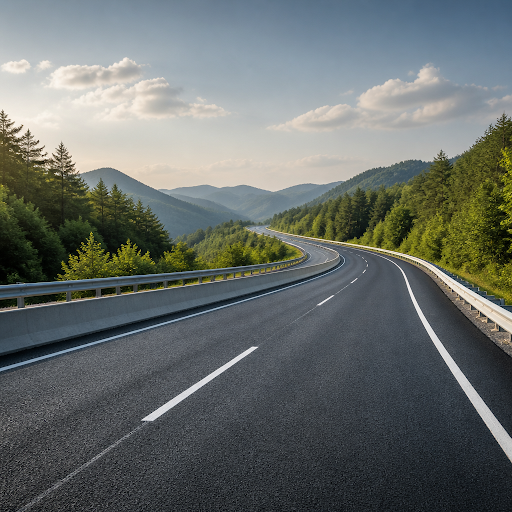
Roads are no longer just strips of asphalt connecting point A to point B. They are becoming intelligent, adaptive, and environmentally conscious infrastructure systems. From wildlife-sensitive corridors in India to hexagonal modular pavers in Scandinavia, the global conversation around road surfaces is evolving at a remarkable pace. At the heart of this transformation lies a renewed focus on materials science, ecological responsibility, and long-term durability — principles that are reshaping how engineers, urban planners, and property owners think about pavement.
Why Road Surface Technology Is Gaining Global Attention
For decades, road construction was largely treated as a utilitarian exercise — lay the material, compact it, and move on. But mounting pressures from climate change, urban heat islands, increased traffic loads, and ecological disruption have forced a fundamental rethinking of what a road surface should do. Modern pavement must balance structural integrity with environmental sensitivity, thermal performance, and even aesthetic value. This shift is visible across continents, from government-led highway initiatives to private-sector innovations in coating and sealing technologies.
The economic argument is equally compelling. Poor road maintenance costs governments and property owners billions annually in repairs, liability, and lost productivity. Investing in high-quality surface treatments and coatings upfront dramatically reduces lifecycle costs. This is why both public infrastructure agencies and private landowners are increasingly turning to professional pavement solutions that extend surface life and improve performance under stress.
Ecological Road Design: Lessons from India’s Red Roads Initiative
One of the most fascinating developments in road surface innovation is happening in India, where the National Highways Authority of India (NHAI) is experimenting with color-coded road surfaces in ecologically sensitive zones. India’s red road safety initiative uses thermoplastic coatings to visually alert drivers when they are entering wildlife corridors or biodiversity hotspots, reducing animal-vehicle collisions and encouraging slower, more cautious driving behavior. This approach demonstrates that road surface treatments are not merely functional — they can serve as active safety and ecological management tools.
The implications of this model extend far beyond India. Urban planners in Europe, North America, and Southeast Asia are watching closely, recognizing that surface coatings and color treatments can be deployed strategically to manage traffic behavior, reduce accidents, and protect sensitive ecosystems. The technology is relatively low-cost compared to physical barriers or electronic signage, making it an attractive option for governments working within tight infrastructure budgets.
Surface Coatings as a Safety Mechanism
Beyond color, the composition of road surface coatings plays a critical role in safety. Anti-skid coatings, reflective sealants, and rubberized asphalt treatments all contribute to reducing accident rates, particularly in wet or low-visibility conditions. These materials improve tire grip, channel water away from the driving surface, and increase the visibility of road markings. As vehicle speeds increase and road networks age, the importance of high-performance surface treatments becomes impossible to overstate.
Modular and Permeable Pavement: A New Design Paradigm
While asphalt remains the dominant road surface material globally, alternative systems are gaining traction in urban and pedestrian environments. Snøhetta’s Flyt hexagonal paver system represents a compelling vision for the future of urban surfaces. As detailed in Dezeen’s coverage of the Flyt paver system, the design uses interlocking hexagonal units that allow for easy installation, replacement, and reconfiguration — dramatically reducing the waste and disruption associated with traditional road repair. The system also supports permeable drainage, addressing one of the most persistent challenges in urban pavement design: stormwater management.
Permeable surfaces reduce runoff, recharge groundwater, and lower the risk of urban flooding — outcomes that are increasingly critical as cities face more intense rainfall events driven by climate change. While modular systems like Flyt are best suited for pedestrian plazas, bike lanes, and low-traffic zones, they signal a broader design philosophy that values adaptability and environmental performance alongside structural durability.
Integrating Traditional and Emerging Materials
The most effective pavement strategies often combine the proven durability of asphalt with the performance enhancements offered by modern coatings and sealants. Asphalt’s flexibility, cost-effectiveness, and recyclability make it an enduring choice for driveways, parking lots, roads, and commercial surfaces. When properly maintained with professional-grade coatings, asphalt surfaces can last decades longer than untreated alternatives, delivering exceptional return on investment for property owners and municipalities alike.
Professional Asphalt Coating: The Foundation of Long-Lasting Surfaces
For property owners and facility managers seeking to protect and extend the life of their asphalt surfaces, working with an experienced, reputable contractor is essential. Asphalt Coatings Company brings deep expertise in sealcoating, crack filling, and pavement maintenance, offering solutions tailored to the specific demands of residential, commercial, and industrial surfaces. Their approach combines high-quality materials with proven application techniques, ensuring that every treated surface delivers maximum durability, weather resistance, and curb appeal.
Professional sealcoating does more than improve appearance. It creates a protective barrier against UV radiation, water infiltration, oil spills, and freeze-thaw cycles — the primary culprits behind premature asphalt deterioration. Regular maintenance programs that include sealcoating and crack repair can double or even triple the functional lifespan of an asphalt surface, making professional pavement care one of the most cost-effective investments a property owner can make.
Timing and Frequency of Asphalt Maintenance
Industry best practices recommend applying a fresh sealcoat every two to three years, depending on traffic volume, climate conditions, and the age of the existing surface. New asphalt should be allowed to cure for at least six months before the first sealcoat application. Crack filling should be performed as soon as damage is detected, before water infiltration causes the underlying base to weaken. A proactive maintenance schedule, developed in consultation with a qualified pavement professional, is the most reliable way to protect a long-term infrastructure investment.
The Broader Picture: Pavement as Infrastructure Investment
Whether we are talking about a national highway cutting through a wildlife sanctuary, a hexagonal paver plaza in a Scandinavian city, or a commercial parking lot in suburban America, the underlying principle is the same: the quality of a road surface directly determines its safety, longevity, and environmental impact. Investing in the right materials, applied by skilled professionals, is not an optional upgrade — it is a fundamental responsibility of sound infrastructure management.
As global road surface technology continues to advance, the gap between well-maintained and neglected pavement will only widen. Property owners, municipalities, and infrastructure planners who embrace high-performance coatings and proactive maintenance strategies today will be far better positioned to manage costs, reduce liability, and deliver safe, functional surfaces for years to come.
Conclusion
The future of road surfaces is being written simultaneously in research laboratories, government policy offices, and the daily work of skilled pavement contractors. From ecologically sensitive color-coded highways to modular urban pavers and professional-grade asphalt sealcoating, innovation is happening at every scale. What unites these developments is a shared commitment to surfaces that perform better, last longer, and work in harmony with the environments they serve. For anyone responsible for maintaining asphalt infrastructure, the message is clear: quality coatings and professional maintenance are not expenses — they are investments in safety, sustainability, and long-term value.
