


Most bottles on the shelf promise the same thing: taller kids, happier parents, money-back guarantee. The reality is a lot less dramatic and a lot more useful once you understand it.
A height growth supplement is a nutritional product — not a drug — designed to fill gaps in a child’s or teen’s diet during the years when growing taller is still biologically possible. It can’t override genetics or reopen closed growth plates. What it can do is support the nutrient needs behind normal bone and skeletal development, especially in kids whose diets fall short.
What Is a Height Growth Supplement?
A height growth supplement is a dietary supplement, not a medicine, which means the FDA doesn’t approve it the way it approves drugs. It’s regulated more loosely, under supplement law, so the burden falls on you to read the Supplement Facts label carefully rather than assume a claim on the front of the bottle has been verified by anyone.
These products come in a few common forms: gummies, capsules, chewable tablets, and nutritional powders. Kids under about ten usually get gummies or chewables because swallowing pills is its own battle. Teens and adults tend toward capsules or protein powders, partly for dosage and partly because nobody wants to explain gummy vitamins to a friend.
Most formulas combine a multivitamin base — think vitamin D, calcium, zinc — with a few minerals aimed at bone and tissue support. None of that is exotic. It’s the same nutritional logic behind a basic multivitamin, just marketed toward a specific age group and a specific hope.
How Height Growth Works in Children and Teens
Height comes down mostly to genetics, with nutrition and health status determining how much of that genetic ceiling actually gets reached. Growth happens at the growth plates — epiphyseal plates — located near the ends of long bones, where cartilage cells multiply and gradually turn into new bone. Once puberty finishes and those plates fuse, that particular door closes for good.
That’s the piece a lot of marketing conveniently skips. A 12-year-old and a 19-year-old are not the same audience for a growth product, because one still has open growth plates and the other, in most cases, does not. Growth hormone, sex hormones released during puberty, and overall nutritional status all interact to determine the timing and speed of the adolescent growth spurt.
This is also why two siblings raised in the same house on the same meals can end up with noticeably different heights. Genetics sets a range, not a fixed number, and nutrition decides where in that range a person lands.
Key Nutrients in Height Growth Supplements
Calcium and vitamin D do the heaviest lifting for bone health, and they’re the two nutrients with the most consistent evidence behind them. Calcium is the primary mineral in bone tissue, and vitamin D governs how well the body actually absorbs that calcium — without enough vitamin D, extra calcium in the diet doesn’t do much.
Zinc and magnesium play supporting roles in bone mineralization and normal cell growth, and deficiencies in either have been linked to slower growth in children. Protein matters too, since it supplies the building blocks — including for collagen synthesis — that bone and connective tissue need to develop normally during growth spurts.
None of these nutrients “cause” extra height on their own. What they do is remove a bottleneck, if one exists. A well-nourished kid with no deficiencies isn’t going to grow taller by adding more calcium than they already get — the ceiling was never nutrition in that case.
Do Height Growth Supplements Actually Work?
They work at correcting nutritional deficiencies; they don’t work at pushing a child past their genetically influenced height potential. That distinction is the whole answer to “do height growth supplements work,” and most marketing copy blurs it on purpose.
If a child is eating enough calcium, vitamin D, and protein already, adding a supplement on top mostly produces expensive urine — the body excretes what it doesn’t need. Where supplements make a measurable difference is in kids with an actual dietary gap: picky eaters, restricted diets, or families in food deserts where dairy and fortified foods aren’t always accessible.
Age and growth-plate status matter more than any ingredient list. A supplement given to a 17-year-old whose plates have already fused is nutritionally fine but height-wise, it’s too late — the biology has moved on.
How to Choose a Height Growth Supplement
Start with the label, not the marketing page. Look for a clear Supplement Facts panel, actual dosages instead of vague “proprietary blends,” and manufacturing under GMP (Good Manufacturing Practice) standards.
A few things worth checking before buying anything:
- Age suitability — dosages for a 6-year-old and a 16-year-old shouldn’t be identical.
- Third-party testing — an independent lab check (ConsumerLab, NSF, USP) adds real accountability beyond the brand’s own word.
- Ingredient transparency — exact amounts per serving, not just a list of names.
- Price per serving — a 30-day supply that costs less than a similar one from a competitor isn’t automatically worse; check dosage first.
- Claims language — “supports healthy growth” is honest; “guaranteed inches” is a red flag.
Talking to a pediatrician before starting any supplement is worth the ten minutes, especially if there’s an existing medical condition or medication in the picture.
NuBest Nutrition as a Height Growth Supplement Option
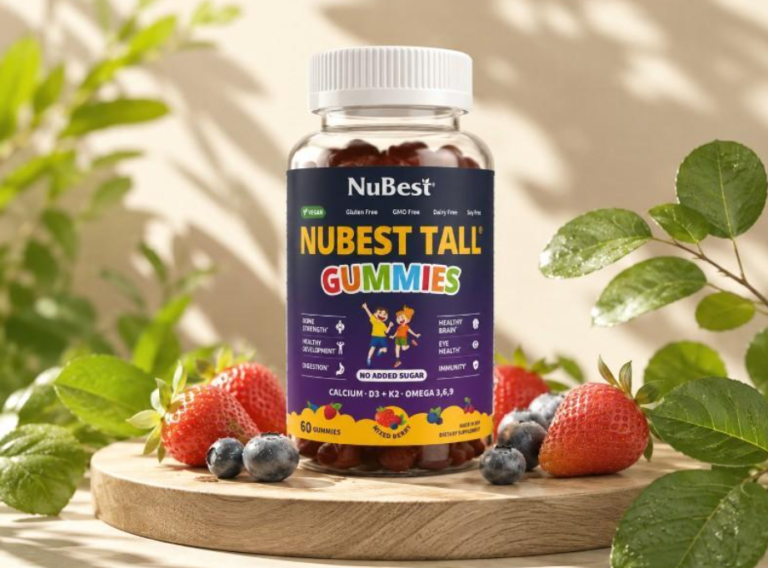
NuBest Nutrition is one U.S. brand in this category, offering age-specific formats that range from gummies and chewables to capsules and protein powders. NuBest Tall is its flagship line, and depending on the specific formula, products are built around bone-supporting nutrients like calcium and vitamin D3.
The age-segmented approach is the more sensible part of the lineup — a formula built for a 5-year-old’s nutrient needs looks different from one built for a 15-year-old mid-growth-spurt. That’s a reasonable design choice, not a marketing gimmick.
The same caveat from earlier still applies here: a supplement can support nutrition, but it works within the boundaries genetics and growth-plate status already set. Evaluate any NuBest product — or any competitor’s — against the same checklist: transparent dosages, third-party testing, and age-appropriate formulation.
Supporting Healthy Growth Beyond Supplements
Sleep, diet, and exercise do more heavy lifting for growth than any bottle on the shelf, mostly because growth hormone release peaks during deep sleep. A consistent bedtime matters more than people give it credit for — an 8-to-10-hour range for kids and teens isn’t a nice-to-have, it’s when a lot of the actual biological work happens.
Weight-bearing activities — basketball, soccer, jumping rope, regular outdoor play — support bone density and overall skeletal health during the growing years. Meals built around dairy, lean protein, fortified breakfast cereals, and leafy greens supply the calcium, protein, and vitamin D that growth depends on, without needing a supplement to fill a gap that food already covers.
None of this is glamorous advice. But it’s the part of the equation that actually moves the needle, with or without a supplement sitting next to the orange juice.
