


Look for a day care center that passes the small tests, not just the big ones. Queensland parents searching for care today want more than a tidy foyer and a friendly hello at the door. You want proof that your child stays safe, healthy, and genuinely happy while you’re at work.
This guide gives you real, usable checks — starting with the one every parent instinctively already does: the runny nose test.
The Runny Nose Test: What It Really Tells You
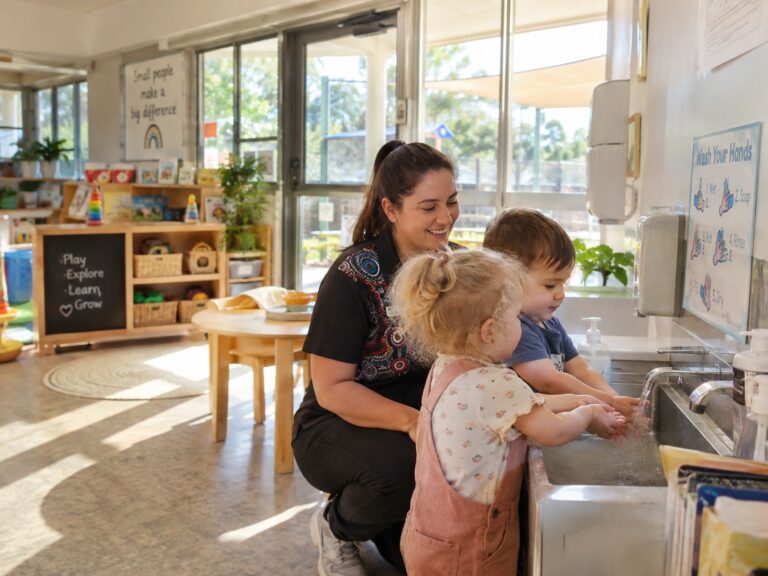
Watch how a day care center handles a sick or sniffly child during your tour. Do educators wash hands between wiping noses? Is there a clear process for isolating unwell kids? These small moments say more than any brochure.
This matters because illness spreads fast in group care settings. According to the national guidelines for preventing infectious disease spread in early learning services, children entering care often have immune systems that are still developing, which makes daily hygiene routines one of the strongest indicators of a well-run centre. A strong service follows these hygiene protocols daily, not just when someone’s watching.
Quick checks during your visit:
- Hand-washing stations at child height, with soap and paper towel supplies stocked
- Visible cleaning routines for toys, surfaces, and nap mats
- A clear illness policy posted or explained to you upfront
- Staff who model good hygiene habits without being asked
If a center fumbles this basic test, keep looking.
Beyond the Nose: What the National Quality Standard Measures
Every approved child care center in Australia gets assessed against the seven quality areas that make up the National Quality Standard, and services receive a public rating in each area plus an overall score.
You can check any service’s rating before you even step through the door. For a deeper look at how these ratings translate into everyday care, the parent guide to understanding the National Quality Framework breaks down exactly what “Meeting” or “Exceeding” actually means for your child’s day-to-day experience. Anything below that deserves a conversation, not a signature.
The seven areas worth knowing:
| Quality Area | What It Covers |
| Educational program | Learning that follows the child’s interests |
| Health and safety | Illness prevention, nutrition, supervision |
| Physical environment | Safe, stimulating spaces indoors and out |
| Staffing arrangements | Educator-to-child ratios and qualifications |
| Relationships with children | Warmth, respect, and responsiveness |
| Partnerships with families | Communication and involvement |
| Leadership and management | Policies, training, and accountability |
For the specifics on how services protect your child’s wellbeing day to day, the health and safety quality area guidance explains what regulators expect from infection control through to nutrition and supervision ratios.
Ask the Right Questions, Every Time
A quality daycare center welcomes your questions instead of dodging them. Don’t settle for vague answers.
Ask directly:
- What’s your educator-to-child ratio for my child’s age group?
- How do you handle allergies, medication, and emergencies?
- What does a typical day actually look like?
- How do you communicate daily updates with parents?
Watch how staff answer. Confident, specific responses signal a well-run facility that offers good child care services. Hesitation or scripted lines often mean something’s missing behind the scenes.
Trust Your Gut, Then Verify It
Your instincts matter here. Notice whether children seem engaged, calm, and comfortable around their educators. Does the space smell clean? Do kids look busy, not bored or overstimulated?
Then back up that gut feeling with facts. The Australian Government’s overview of quality and safety reforms in early childhood education confirms that child safety requirements continue to tighten across the sector, a sign the whole system keeps raising its bar rather than lowering it.
A quick pre-enrolment checklist:
- Confirm the current NQS rating through official government resources
- Tour during active hours, not after closing
- Ask about staff turnover and qualifications
- Request the illness, allergy, and emergency policies in writing
- Watch one full nappy change or nose-wipe if possible
Making the Right Call for Your Family
Choosing daycare services shouldn’t feel like guesswork. A reputable day care center gives you transparency at every turn — from posted ratings to open conversations about ratios, hygiene, and daily routines. If a provider hesitates to answer your questions or skips the small hygiene habits during your visit, treat that as useful information, not a minor detail.
Speak with an early childhood professional if you want guidance tailored to your child’s specific needs, whether that’s settling an infant into group care or transitioning a toddler toward kindergarten readiness. The right day care facility exists across Queensland — you just need to know what to look for, and now you do.
