


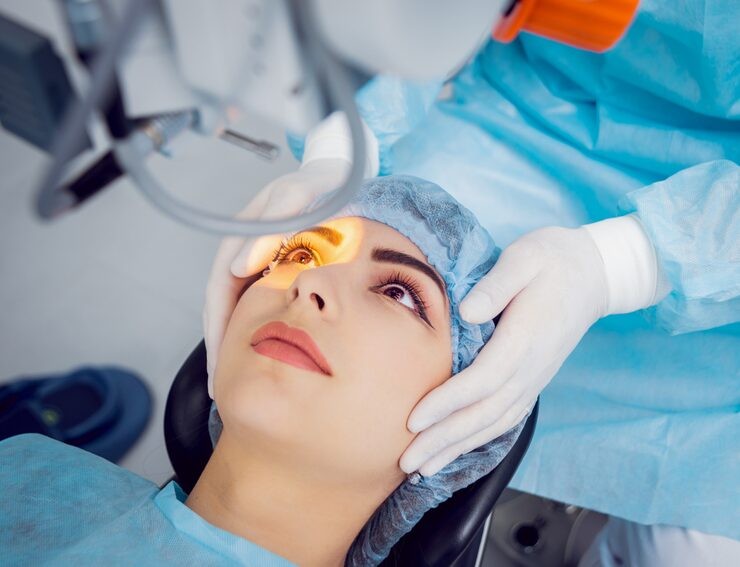
For those living with astigmatism, the world can often feel like a permanent “portrait mode” photo blurry, distorted, and constantly out of focus. While glasses and contact lenses have long been the standard fix, LASIK eye surgery in Australia has reached a level of precision in 2026 that makes permanent correction a reality for almost everyone.
However, moving from “interested” to “scheduled” requires navigating a complex landscape of technology and specialist options. Here is how to choose the right professional for your astigmatism treatment and what to expect from the Australian market today.
1. Understand the Technology for Astigmatism
Astigmatism occurs when your cornea is shaped more like a football than a basketball. Correcting this requires a laser that can handle complex, asymmetrical reshaping. When researching clinics, look for these specific “Trust Markers” in their technology:
- Wavefront-Guided LASIK: This creates a 3D “map” of your eye’s unique irregularities. It is superior for astigmatism because it treats the eye based on its specific topography rather than just a standard prescription.
- SCHWIND AMARIS 1050RS: Many premier Australian clinics, such as Vision Eye Institute, utilise this laser. It features 7D eye tracking, which compensates for even the tiniest eye movements during the procedure, ensuring the laser hits the exact “high” and “low” points of your astigmatism.
- SMILE Pro: The latest evolution of the “Small Incision Lenticule Extraction” method. It is minimally invasive and increasingly popular in hubs like Melbourne and Sydney for its rapid recovery and reduced risk of dry eye.
2. Evaluate Specialist Credentials
In Australia, you want your surgery performed by a Fellow of the Royal Australian and New Zealand College of Ophthalmologists (FRANZCO).
- The Fellowship Check: Beyond their basic medical degree, look for a surgeon who has completed an international fellowship specifically in Refractive Surgery.
- Case Volume: Don’t be afraid to ask how many astigmatism-specific procedures they perform annually. High-volume surgeons typically have more experience handling the nuances of irregular corneal shapes.
- Surgeon-Led Care: Ensure the surgeon who is performing the procedure is the one conducting your final pre-operative assessment. Avoid “high-street” clinics where you only meet the surgeon for a few minutes on the day of the operation.
3. Compare the “Hybrid” Treatment Options
Not everyone is a candidate for traditional LASIK. A true specialist will offer a range of astigmatism treatments to suit your corneal thickness:
- Trans-PRK: If your cornea is too thin for a LASIK flap, Trans-PRK is a “touchless” surface treatment. While the recovery is slower (3-5 days of discomfort), it maintains more of the eye’s structural integrity.
- ICL (Implantable Collamer Lenses): For those with extreme astigmatism or very thin corneas, a specialist may suggest an ICL. This is a tiny, permanent lens placed inside the eye, which can be removed or replaced later if needed.
4. Transparent Pricing in the Australian Market
In 2026, the cost of LASIK eye surgery in Australia generally ranges from $2,600 to $4,500 per eye. When comparing quotes, ensure you are looking at an “all-inclusive” figure.
- What’s Included? A professional quote should include the initial suitability assessment, the surgery itself, all post-operative medications, and follow-up appointments for at least 12 months.
- Private Health Extras: While Medicare typically does not cover elective laser surgery, many “Extras” policies with providers like Bupa or Medibank Private now offer significant rebates or fixed-price arrangements with specific network clinics.
5. The “Cooling Off” and Consultation Experience
The initial assessment is your chance to “interview” the clinic. A professional Australian specialist should:
- Perform Dilated Scans: They must look at the health of your retina and the thickness of your cornea using high-resolution tomography.
- Provide a Realistic Prognosis: No surgeon can guarantee 20/20 vision. They should provide you with a statistical likelihood of success based on your specific level of astigmatism.
- Respect the Choice: Australian medical guidelines encourage a “cooling off” period. Be wary of any clinic offering “today only” discounts or high-pressure sales tactics.
Final Thoughts
Choosing a specialist for LASIK eye surgery in Australia is about finding the intersection of high-end technology and personalised care. For those with astigmatism, the goal is not just to see clearly, but to eliminate the “ghosting” and halos that define the condition.
By prioritising FRANZCO surgeons who utilise 7D tracking or SMILE Pro technology, you are investing in a future where your vision is as sharp and stable as it was meant to be.
