


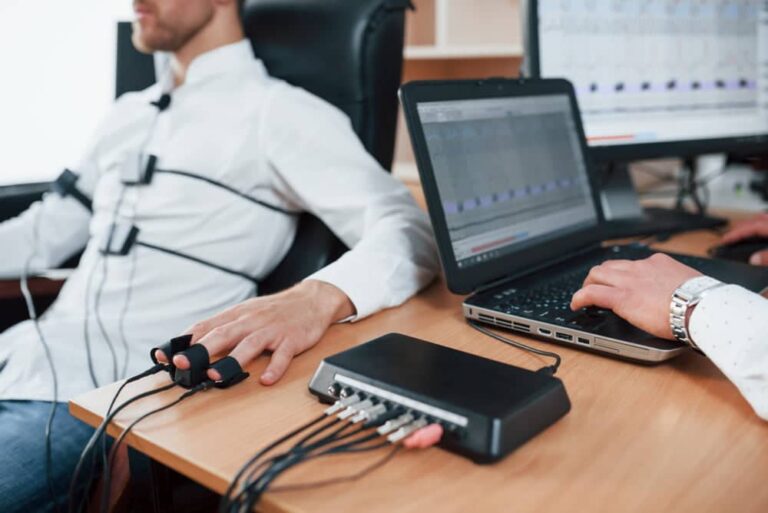
The American Polygraph Association alleges that when used correctly, polygraph testing can result in 90% accuracy. This finding directly contradicts independent researchers like the National Academy of Sciences who argue that accuracy in real-world settings is much lower and context-dependent. In their criticisms of polygraph tests, it has been pointed out that these tests are also fallacious; specifically, a false positive could misidentify an honest person.
Lie detector tests, or polygraphs, are often used as tools for determining the truth. They are still the focus of much controversy and have only minor relevance within the US legal system. Polygraph tests are not admissible as evidence in most courts, as concerns are raised over reliability and scientific validity.
Understanding state laws about the validity of using polygraph results in court is important. Are polygraphs admissible in court in Texas? No. Texas courts apply a long-term legal precedent that prevents lie-detector evidence from being admissible in court. This decision comes on the grounds of the procedure’s reliability. Still, there is an exception that should be taken into account. Polygraph results may be admitted, but only if both parties consent to them. Judges must sanction its admissibility before it is allowed to be presented in court.
Let’s discuss the legal implications of bringing polygraph tests in court.
Are Polygraphs Admissible in Court?
A major challenge is faced by the courts regarding the authenticity and false accusations against lie detectors. Many courts don’t accept polygraph results as evidence owing to concerns about reliability and scientific validity.
Judges may reject the use of polygraph assessments as evidence, especially if they view these tests to have excessive subjectivity. The relative results of the procedure depend on various factors that affect test results. There are territories that require both parties to agree upon polygraph admissibility so that they may be used before courts.
The courts’ treatment of the polygraph results signifies their discretion, which varies according to the standards of the judiciaries.
The legal system requires you to master various details about polygraph use in court proceedings. The court has authority to make decisions that stem from the test results.
Whatever your case may be, it is important that you hire a criminal defense lawyer if you have been arrested or charged with a crime. Your attorney can protect your rights and fight for the most beneficial outcome in your case, according to criminal defense lawyer Benjamin Abdulnour, Esq.
The History of Polygraphs in Legal Context
Polygraphy became a part of the legal system in the early 20th century, when its use became popular.
Police departments adopted these devices since they thought the machines would help them solve criminal cases. The 1920s marked the beginning of court cases that involved polygraph evidence but judges initially refused to recognize this form of evidence as legitimate.
The 20th century reached its midpoint when several jurisdictions started to test polygraph results for court use but the scientific community maintained doubts about the actual precision of the tests.
You would discover that some legal experts supported the technology while other experts warned people not to trust the test results.
Disputes about the legality of polygraphs came to exist as a result of discussions surrounding their relevance in the legal system.
Understanding the Science and Controversy of Polygraphs
The science of polygraph testing shows a complex relationship between physical body reactions and mental health assessments. Polygraph machines record data such as blood pressure, heart rate, respiration, and skin conductivity levels during examinations.
There is a physiological response that a body generates when undergoing anxiety or stress. These body reactions are then linked to lying. The link between these physical reactions and honesty assessment remains difficult to understand. Critics maintain that innocent people will demonstrate the same stress patterns since they experience anxiety and fear.
The situation creates disputes since some people doubt the accuracy of polygraphs to detect lies. The supporters declare that the system works but the doubters point out the dangers of incorrect positive and negative test results. These flaws make you question the tests’ ability to determine truthfulness and dishonesty in court.
Factors Affecting Polygraph Accuracy and Results
Multiple elements create substantial effects that decrease polygraph test results while producing differing data interpretations.
Your emotional state functions as the central element that determines your testing results. Your anxiety and nervousness lead to false positive outcomes. The results will be affected by medical conditions and medications since they change how the body shows its physiological responses.
Examiner expertise and training determine one’s ability to analyze test results. Untrained examiners cannot correctly interpret the readings. The specific questions asked during a test will determine its outcomes. Emotionally charged questions together with vague questions will produce misleading answers.
The testing environment establishes bias, which requires research to control outside factors. The examination of these factors establishes your ability to assess polygraph test results and create conditions for evaluation.
Legal Alternatives to Polygraph Testing
The limits and unreliability of polygraph testing lead people and legal experts to seek different methods that can evaluate the truth in statements.
Behavioral analysis experts can study non-verbal communication and body movements. This technique can help determine whether a suspect is lying. The process of interviewing witnesses would help you collect important testimony and could reveal any contradictions.
The second option involves using voice stress analysis, which studies how vocal patterns change when people undergo interrogation. Digital forensics can extract key information from digital devices. Background checks can present important data about people’s pasts.
The different options available to you help your case development through methods that do not depend on the disputed findings obtained from polygraph tests.
The Future of Polygraph Testing in Courtroom Settings
The future of polygraph testing in courtroom settings will experience major changes since technological advancements and scientific discoveries will continue to evolve.
Your capacity to assess truthfulness will improve through neuroimaging and other biometric technologies, which provide more trustworthy assessment tools. Modern testing methods will increasingly gain acceptance in courts while traditional polygraph methods will begin to lose their importance.
The legal standards will change, which will result in increased examination of expert witnesses. These experts will testify about the test’s precision. Jurors’ perceptions of polygraphs could change, impacting their weight in deliberations.
New developments in scientific research and technological advances will determine how polygraphs work in the legal system.
Law professionals, defendants, and witnesses should familiarize themselves with the changing dynamics in science surrounding polygraph tests.
The existence of polygraphs creates interest among people but their use in court shows uncertain results. Judges usually avoid accepting polygraph evidence since they doubt its scientific value and its accuracy. You need to evaluate which evidence types will have greater influence in courtroom settings and get a favorable outcome for your case.
