


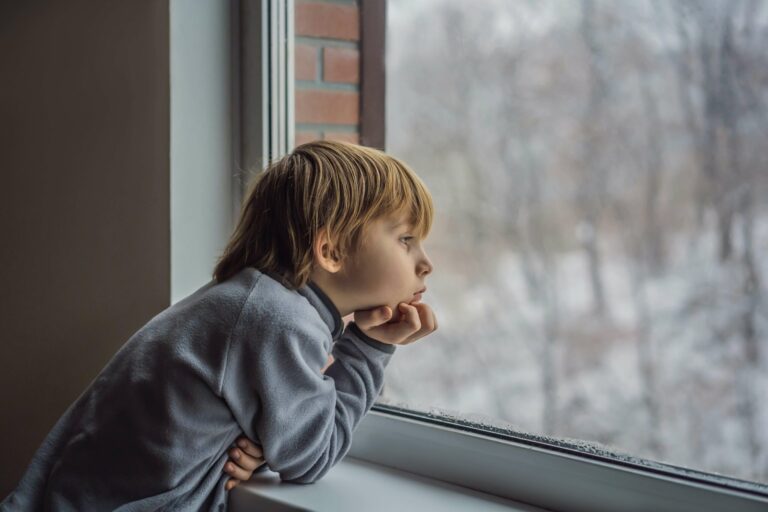
Poverty is not just about money. It shows up in lunchboxes, bedtime routines, doctor visits, school bags, and quiet moments when a child wonders why life feels harder for their family than it seems for others.
A child does not need to understand rent, bills, inflation, or low wages to feel the pressure of poverty. They feel it when there is not enough food in the fridge. They feel it when a parent works two jobs and still looks worried. They feel it when the lights get turned off, when shoes are too tight, when the house is cold, or when moving again means starting over at another school.
Here’s the thing. Children are still growing. Their bodies, brains, emotions, and sense of self are all under construction. So when poverty becomes part of daily life, it does not simply create temporary discomfort. It shapes development. It can affect physical health, emotional safety, learning, confidence, and even the way a child sees their future.
That does not mean poverty defines a child forever. Many children grow up in low-income homes and become strong, thoughtful, capable adults. But strength should not be confused with lack of harm. Some children become resilient because they had to be, not because life gave them enough support.
Poverty Starts in the Body First
Before poverty affects grades, confidence, or behavior, it often affects the body.
Food insecurity is one of the clearest examples. A child who does not eat enough, or who eats mostly cheap, processed food because that is all the family can afford, can struggle with energy, growth, focus, and immunity. Hunger is not always dramatic. Sometimes it looks like a child putting their head down in class. Sometimes it looks like mood swings. Sometimes it looks like getting sick again and again.
Poor nutrition can also affect brain development. Children need protein, vitamins, iron, healthy fats, and steady meals to support learning and growth. When meals are skipped or uncertain, the body goes into survival mode. And survival mode is not great for spelling tests, math lessons, or sitting still through a long school day.
Sleep is another hidden health issue. Low-income families often live in crowded housing, noisy neighborhoods, or unstable homes. A child may share a room with siblings, sleep on a couch, or wake up because adults are arguing about money. That kind of broken sleep adds up.
And honestly, tired children are often misunderstood. They are called lazy, rude, distracted, or difficult. But sometimes they are just exhausted.
When Healthcare Comes Too Late
Limited healthcare makes things worse. A child in poverty may not see a doctor until a problem becomes serious. Dental pain, asthma, untreated infections, vision problems, and hearing issues can all interfere with daily life.
Think about a child who cannot see the board but has never had an eye exam. That child may fall behind in reading and get labeled as careless. Or a child with untreated asthma may miss school often, then struggle to catch up. One problem turns into another.
Families living in poverty often face tough choices. Pay for medicine or buy groceries? Take time off work for a clinic visit or risk losing wages? These are not small choices. They are stressful, and children notice more than adults think.
Some families also deal with wider mental health or addiction issues connected to long-term stress. When stress at home becomes too heavy, families sometimes need outside support, including services like Massachusetts behavioral health treatment, especially when emotional strain affects the whole household.
Stress at Home Can Shape Emotional Development
Children need more than food and shelter. They need calm. They need comfort. They need adults who can respond to them with patience most of the time.
But poverty often steals that patience.
Parents under financial pressure are not bad parents. Let’s be clear about that. Many low-income parents love their children deeply and work hard every day. But constant stress wears people down. Bills, job insecurity, unsafe housing, lack of childcare, and debt can make a home feel tense.
Children absorb that tension. They may not know the details, but they sense the mood. A child hears the short answers, the tired sighs, the late-night phone calls, the slammed cabinet, the silence after bad news.
Over time, this can affect emotional development. Some children become anxious and watchful. They scan rooms for danger. They try not to ask for things. They become “easy” because they do not want to be a burden.
Others act out. They cry quickly, get angry, refuse instructions, or seem defiant. But behavior is often communication. A child who feels unsafe or unseen may not have the words to say, “I am scared,” so the feeling comes out sideways.
The Brain Learns Survival Before Trust
Early stress can affect how the brain responds to the world. When a child faces ongoing stress, the body releases stress hormones more often. In small doses, stress is normal. In constant doses, it becomes heavy.
A child raised in survival mode may struggle to relax even when nothing bad is happening. They may become jumpy, defensive, withdrawn, or overly responsible. Some become little adults too soon. They help with siblings, worry about money, translate paperwork, or comfort parents.
People sometimes praise these children as mature. And yes, they may be mature. But sometimes that maturity came from pressure, not peace.
This matters because emotional safety is the soil where confidence grows. Without that safety, a child may doubt themselves before they even get a fair chance to try.
School Becomes Harder When Life Is Already Heavy
Education is often described as the way out of poverty. That can be true. But it is also incomplete.
School is harder when a child is hungry, tired, cold, worried, or embarrassed. It is harder when homework requires internet access, and there is no stable Wi-Fi. It is harder when a parent cannot help because they are working late, stressed, or did not get strong support in school themselves.
A child in poverty may also move more often. Housing instability can mean changing schools, losing friends, adjusting to new teachers, and missing lessons. Every move creates a gap. The child has to catch up academically and socially.
Then there are school supplies, field trips, sports fees, uniforms, devices, and “small” costs that are not small for struggling families. A missing notebook or an unpaid trip fee can make a child feel exposed. Kids notice who has new shoes, who brings snacks, who gets picked up on time, and who never joins paid activities.
You know what? Shame is a powerful teacher, but it teaches the wrong lessons.
It teaches children to stay quiet. To stop asking. To pretend they do not care.
Confidence Takes a Hit in Quiet Ways
Poverty can damage confidence in subtle ways. A child may start to believe they are less capable because they have fewer resources. They may compare themselves to classmates and feel behind before they begin.
This can affect participation. A child who worries about being laughed at may not raise their hand. A child without clean clothes may avoid group activities. A child who has moved often may not bother making friends because they expect to leave again.
Teachers may see low effort. But underneath, there may be fear.
And once a child believes they are “not smart” or “not good enough,” that belief can stick. It becomes like background noise. Even later in life, when opportunities appear, the child may hesitate because early life taught them that good things are not really meant for them.
Unsafe Environments Add Another Layer
Poverty is not only inside the home. It also lives in neighborhoods.
Low-income children are more likely to live near busy roads, pollution, unsafe buildings, poor lighting, or places with higher crime. They may have fewer parks, fewer safe sidewalks, fewer libraries, and fewer clean play spaces.
Play is not extra. It is part of healthy development. Children learn coordination, problem-solving, friendship, and confidence through play. But if the nearest park feels unsafe, or if parents are afraid to let children go outside, childhood gets smaller.
A child may spend more time indoors, on screens, or in crowded spaces. Not because the family does not care, but because safe options are limited.
There is also the emotional weight of seeing hardship around them. Children may witness violence, substance use, eviction, police activity, or adults struggling in public ways. These experiences can normalize stress. They can also make children feel that danger is just part of life.
In families where poverty mixes with untreated trauma or addiction, the home can become even less stable. Some adults need structured care, including options such as Inpatient rehab in Massachusetts, when substance use has reached a point where safety, health, and family stability are at risk.
The Long-Term Impact Can Follow a Child Into Adulthood
Childhood poverty does not always end when childhood ends.
Its effects can follow people into adulthood through health problems, lower educational outcomes, anxiety, low self-worth, and unstable relationships. A person who grew up with scarcity may struggle to trust calm moments. They may overwork because rest feels unsafe. They may avoid doctors because healthcare has always been linked with cost. They may stay in harmful situations because they learned early that choices were limited.
This is where the conversation has to become more honest.
Society often tells people to “work hard” and “make better choices.” Work matters, of course. Choices matter too. But childhood poverty limits choices before a child even knows what choices are. It shapes the starting line.
A child born into poverty may have to run the same race with heavier shoes, less sleep, fewer tools, and more people telling them to hurry up.
That is not an excuse. It is reality.
Breaking the Cycle Takes More Than Motivation
Support changes outcomes. Stable housing, school meals, accessible healthcare, community clinics, safe recreation, tutoring, mental health care, and family support programs all help children build healthier lives.
Small interventions matter. A free breakfast program can improve focus. A school counselor can help a child name their feelings. A safe after-school program can give structure and mentorship. A teacher who notices a child’s effort instead of only their behavior can shift how that child sees themselves.
And for families dealing with addiction, stress, or trauma, treatment access matters. Services like Outpatient addiction treatment in Sacramento can help adults receive support while still staying connected to work, family, and daily responsibilities.
When adults get care, children often feel the difference. Home becomes more predictable. Conversations become calmer. Routines return. That matters more than people realize.
So What Can Communities Actually Do?
Poverty is big, but help does not always need to start big.
Schools can reduce shame by making support easier to access. Free meals should feel normal, not embarrassing. Teachers can avoid calling attention to unpaid fees or missing supplies. Clinics can offer flexible hours. Local groups can create clothing closets, food programs, reading clubs, and safe play spaces.
Employers also play a role. Fair wages, stable schedules, paid leave, and childcare support do not just help workers. They help children. When parents have a little breathing room, the whole household changes.
Neighbors matter too, not in a nosy way, but in a human way. A ride to school, a bag of groceries, a kind word to a stressed parent, or patience with a child who seems difficult can make a real difference.
Children do not need perfect communities. They need communities that notice them.
A Child’s Future Should Not Be Limited by Their Family’s Income
Growing up in poverty can affect a child’s body, emotions, learning, and confidence. It can make ordinary childhood tasks feel harder. Eating well, sleeping deeply, focusing in school, making friends, and believing in the future all become more difficult when daily life is shaped by scarcity.
But poverty is not a personal flaw. It is not a sign that a child is less bright, less worthy, or less capable. It is a condition that places pressure on developing lives.
And that pressure can be reduced.
With steady support, children can recover, learn, connect, and grow. They can build confidence when adults give them safety. They can do better in school when hunger and stress are addressed. They can dream bigger when their world gives them room to breathe.
Honestly, every child deserves that room.
Not as charity. Not as a bonus. As a basic part of growing up well.
