


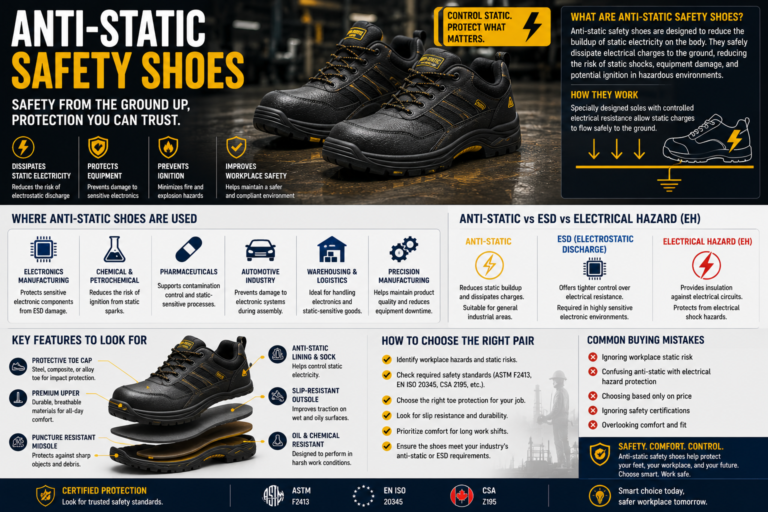
Quick Overview
- What anti-static safety shoes are
- Why static electricity can be dangerous at work
- Industries that require anti-static footwear
- Key benefits of anti-static safety shoes
- Anti-static vs electrical hazard footwear
- How to choose the right anti-static work shoes
- Common buying mistakes
- FAQs about anti-static safety shoes
Not All Workplace Hazards Are Visible
When people think about workplace safety, they usually picture heavy machinery, falling tools, or slippery floors.
Those hazards are easy to spot.
Static electricity isn’t.
Yet a tiny electrostatic discharge can damage expensive equipment, interrupt production lines, destroy electronic components, and in some environments, even trigger fires or explosions.
That’s why anti-static safety shoes have become an essential part of workplace safety programs across many industries.
They’re designed to help control static electricity before it becomes a problem.
And while they may look like ordinary safety shoes, they’re doing much more than protecting your toes.
What Are Anti-Static Safety Shoes?
Anti-static safety shoes are protective footwear designed to reduce the buildup of static electricity on the body.
As workers move around, friction between footwear, clothing, flooring, and equipment naturally generates electrical charges.
Without proper grounding, those charges can accumulate.
Eventually, they discharge as a spark.
Anti-static shoes help dissipate those charges safely through the sole and into the ground, minimizing the risk of sudden electrostatic discharge.
Think of them as a controlled pathway for static electricity.
Instead of allowing energy to build up and release unexpectedly, the footwear gradually channels it away.
Why Static Electricity Is a Workplace Risk
Most people have experienced a static shock after touching a metal door handle.
It might be annoying, but usually it’s harmless.
Industrial environments are different.
In certain workplaces, even a tiny spark can cause major problems.
Potential risks include:
- Damage to electronic components
- Production downtime
- Data loss
- Equipment malfunction
- Ignition of flammable vapors
- Combustible dust explosions
In highly sensitive industries, static control isn’t optional—it’s a critical safety requirement.
Industries That Commonly Use Anti-Static Safety Shoes
Electronics Manufacturing
Electronic components can be extremely sensitive to electrostatic discharge.
A static spark that a person barely notices may permanently damage a microchip.
Anti-static footwear helps protect products during manufacturing and assembly.
Pharmaceutical Production
Pharmaceutical facilities often maintain strict environmental controls.
Anti-static footwear helps reduce electrostatic risks while supporting workplace compliance.
Automotive Manufacturing
Modern vehicles contain complex electronic systems and sensors.
Anti-static shoes help protect sensitive parts during assembly.
Warehousing and Distribution
Warehouses that store electronic equipment frequently require anti-static footwear to prevent accidental damage during handling.
Chemical and Petrochemical Industries
Flammable gases, vapors, and chemicals create environments where static sparks can become dangerous.
Anti-static footwear helps reduce ignition risks.
How Anti-Static Safety Shoes Work
Anti-static shoes contain specialized materials within the sole construction.
These materials provide controlled electrical resistance.
The resistance is carefully balanced.
The shoe must:
- Dissipate static electricity
- Protect sensitive equipment
- Maintain worker safety
Too much resistance allows static charges to accumulate.
Too little resistance could create other electrical concerns.
Manufacturers design anti-static footwear to operate within specific resistance ranges required by industry standards.
Key Benefits of Anti-Static Safety Shoes
Improved Workplace Safety
Reducing electrostatic discharge helps create a safer work environment.
This is particularly important in facilities handling flammable substances.
Protection for Sensitive Equipment
Modern industrial equipment often contains delicate electronics.
Anti-static footwear helps prevent accidental damage.
Compliance With Workplace Requirements
Many employers require anti-static footwear as part of their safety policies.
Using certified shoes helps workers remain compliant.
Enhanced Productivity
Unexpected equipment failures and product damage can slow operations.
Proper static control helps minimize disruptions.
Anti-Static vs Electrical Hazard Safety Shoes
This is one of the most misunderstood areas of safety footwear.
Many buyers assume they’re the same thing.
They’re not.
Anti-Static Safety Shoes
Designed to dissipate static electricity safely.
Used in environments where electrostatic discharge poses a risk.
Electrical Hazard (EH) Safety Shoes
Designed to insulate workers from electrical currents.
Used where accidental contact with live electrical circuits may occur.
The objectives are completely different.
Anti-static footwear releases small electrical charges.
EH footwear helps block dangerous electrical currents.
Always check workplace requirements before choosing between the two.
Important Features to Look For
Not all anti-static shoes offer the same level of performance.
Here are the features worth considering.
Protective Toe Caps
Depending on workplace hazards, choose:
- Steel toe
- Composite toe
- Alloy toe
Each option provides certified impact protection.
Slip-Resistant Outsoles
Many industrial environments contain:
- Wet floors
- Oily surfaces
- Smooth concrete
Slip resistance improves stability and reduces accident risk.
Lightweight Construction
Workers often spend long hours on their feet.
Lightweight safety shoes help reduce fatigue and improve comfort.
Breathable Materials
Modern anti-static footwear frequently includes:
- Moisture-wicking linings
- Breathable mesh panels
- Ventilation systems
These features improve comfort during extended shifts.
Safety Certifications
Always verify compliance with recognized standards such as:
- ASTM F2413
- EN ISO 20345
- CSA Z195
Certification confirms the footwear has undergone proper testing.
Common Mistakes When Buying Anti-Static Safety Shoes
Focusing Only on Price
Cheap footwear may not provide the durability or comfort needed for daily industrial use.
Ignoring Workplace Requirements
Some facilities require specific certifications.
Always confirm requirements before purchasing.
Choosing the Wrong Toe Protection
A warehouse worker may not need the same footwear as a welder or construction worker.
Match protection levels to actual hazards.
Overlooking Comfort
Workers are more likely to wear safety footwear consistently when it’s comfortable.
Comfort supports both compliance and productivity.
How to Choose the Right Anti-Static Safety Shoes
Ask yourself these questions:
What hazards exist in my workplace?
You may need protection from:
- Falling objects
- Sharp materials
- Slippery surfaces
- Static electricity
How much walking do I do?
Workers covering long distances should prioritize lightweight footwear with good cushioning.
Do I need anti-static or ESD footwear?
Some electronic manufacturing facilities require stricter ESD standards.
Verify workplace requirements carefully.
Will I work indoors or outdoors?
Environmental conditions affect material choices, insulation needs, and durability requirements.
The Growing Demand for Anti-Static Footwear
As workplaces become increasingly automated and technology-driven, anti-static protection continues to grow in importance.
Modern factories, electronics facilities, and logistics operations rely heavily on sensitive equipment.
A single electrostatic discharge can create costly problems.
That’s one reason anti-static safety shoes are becoming more common across industries that previously focused only on toe protection and slip resistance.
Today, buyers are looking for footwear that combines:
- Safety
- Comfort
- Durability
- Static control
All in one package.
Final Thoughts
Anti-static safety shoes may not receive the same attention as steel toe boots or waterproof work footwear, but they play a critical role in protecting people, products, and equipment.
By safely dissipating static electricity, these shoes help reduce workplace risks while supporting operational efficiency.
Whether you work in electronics manufacturing, automotive production, pharmaceuticals, logistics, or chemical processing, choosing the right anti- static safety footwear can contribute to a safer and more productive workplace.
The best anti-static safety shoe isn’t simply the one with the highest rating.
It’s the one that matches your workplace hazards, meets required standards, and remains comfortable throughout every shift.
FAQs About Anti-Static Safety Shoes
1. What are anti-static safety shoes used for?
Anti-static safety shoes help prevent the buildup of static electricity and reduce electrostatic discharge in workplaces handling sensitive equipment or flammable materials.
2. Who should wear anti-static safety footwear?
Workers in electronics manufacturing, pharmaceuticals, automotive assembly, logistics, chemical processing, and industrial production often require anti-static footwear.
3. Are anti-static shoes the same as ESD shoes?
No. ESD shoes provide stricter electrostatic control and are designed for highly sensitive electronic environments.
4. Do anti-static safety shoes protect against electric shock?
No. Anti-static footwear is designed to dissipate static electricity, not protect against high-voltage electrical hazards.
5. How can I tell if footwear is anti-static?
Check product specifications and certification markings. Certified anti-static footwear will clearly identify its anti-static properties and compliance standards.
As a professional safety shoes manufacturer, zstep provide good safety shoes for you!
