


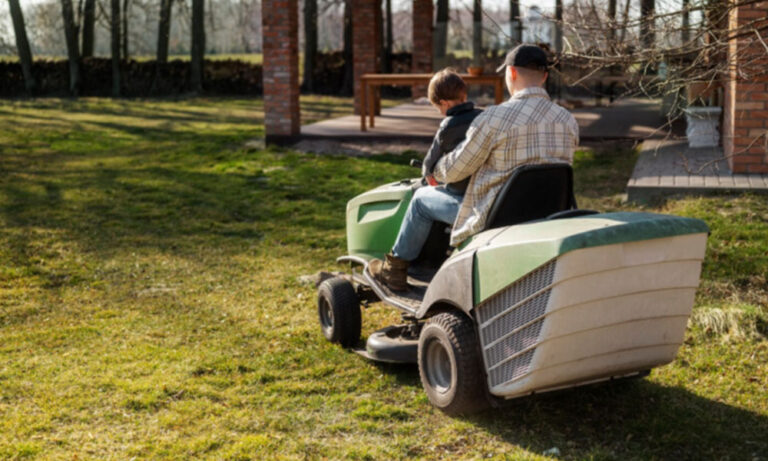
Commercial landscaping has always been a business driven by productivity. Every minute saved on a property translates into lower labor costs, higher crew efficiency, and the ability to serve more clients in a single day. While improvements in cutting deck size and engine power have traditionally fueled these gains, battery technology is now reshaping how professional landscapers approach fleet management.
The modern electric zero turn mower combines commercial-grade maneuverability with quieter operation, lower maintenance requirements, and instant torque delivery. For landscaping companies maintaining office parks, schools, municipal properties, and residential communities, investing in an electric zero turn mower can improve operational efficiency while reducing downtime associated with fuel engines. Today’s battery-powered platforms are no longer niche products they’re becoming practical solutions for many professional mowing applications.
After more than a decade working alongside commercial landscape crews, I’ve seen the industry’s priorities shift. Contractors are no longer focused solely on cutting speed. They’re looking at total operating efficiency, equipment uptime, maintenance costs, and crew productivity over an entire season. Electric zero turn technology addresses all four.
Why Commercial Landscaping Is Changing Faster Than Ever
Professional lawn care businesses face increasing pressure to complete more work with fewer resources.
Today’s contractors must balance:
- Rising fuel costs
- Labor shortages
- Equipment maintenance
- Noise restrictions
- Tight scheduling
- Client expectations for high-quality results
Improving efficiency is no longer simply about buying faster equipment—it’s about reducing every source of operational delay.
How an Electric Zero Turn Mower Improves Daily Productivity
Battery-powered zero turn mowers deliver several performance advantages that directly impact commercial operations.
Key benefits include:
- Instant motor torque
- Precise steering control
- Reduced maintenance downtime
- Quieter operation
- Fewer moving mechanical parts
- Consistent cutting performance
Unlike gasoline engines that require warm-up time, electric drive systems provide immediate power from startup.
For crews completing multiple properties each day, these small improvements accumulate into measurable productivity gains.
Lower Maintenance Means More Time on the Job
One of the biggest operational advantages isn’t visible during mowing—it’s found in the maintenance shop.
Electric power systems eliminate many routine service items, including:
- Engine oil changes
- Spark plug replacement
- Fuel filter maintenance
- Carburetor servicing
- Air filter replacements
- Fuel stabilization during storage
With fewer wear components, equipment spends more time working and less time awaiting repairs.
For fleet managers, improved equipment availability directly supports profitability.
Commercial Properties That Benefit Most from Electric Equipment
Not every property presents the same mowing demands.
Electric zero turn mowers perform especially well on:
- Corporate campuses
- Schools and universities
- Hospitals
- Apartment communities
- Municipal parks
- HOA-managed neighborhoods
- Government facilities
- Sports complexes
Many of these environments also benefit from quieter operation, particularly during early morning maintenance windows.
Instant Torque Delivers Consistent Cutting Performance
Electric motors produce maximum torque immediately.
In real-world mowing conditions, this translates into:
- Smooth acceleration
- Strong hill-climbing performance
- Consistent blade speed
- Better response in dense grass
- Reduced hesitation when changing direction
This predictable power delivery helps crews maintain a consistent mowing pace without sacrificing cut quality.
Electric Zero Turn Mower vs. Gas-Powered Commercial Mower
Both equipment types remain valuable depending on operational needs.
| Electric Zero Turn Mower | Gas-Powered Commercial Mower |
| Lower routine maintenance | More engine maintenance required |
| Quiet operation | Louder during operation |
| Instant torque | Engine must build RPM |
| No fuel storage | Requires gasoline management |
| Lower operating emissions | Produces engine exhaust |
| Simplified startup | Engine warm-up may be necessary |
As battery technology continues to improve, many contractors are finding electric platforms increasingly competitive for daily commercial workloads.
Fleet Management Benefits Beyond Fuel Savings
Fuel savings often receive the most attention, but they represent only one part of the equation.
Electric fleets may also reduce:
- Scheduled maintenance hours
- Equipment downtime
- Parts inventory
- Fuel transportation
- Cold-weather starting issues
For larger landscaping companies operating multiple crews, these operational efficiencies can significantly simplify fleet management.
Best Practices for Maximizing Productivity
Professional crews can improve performance by following several simple habits.
Recommended strategies include:
- Plan mowing routes before arriving on-site.
- Monitor battery charge throughout the day.
- Clean mower decks after each shift.
- Keep blades properly sharpened.
- Rotate batteries according to manufacturer recommendations.
- Schedule preventative maintenance inspections regularly.
Efficient workflows often generate greater productivity improvements than simply increasing mowing speed.
Common Mistakes When Transitioning to Electric Equipment
Companies adopting electric equipment sometimes overlook important planning considerations.
Avoid these common mistakes:
- Underestimating daily runtime requirements.
- Ignoring charging logistics.
- Using dull mower blades.
- Skipping routine battery inspections.
- Purchasing equipment without evaluating property size.
- Failing to train operators on electric drive characteristics.
A thoughtful transition plan ensures crews fully benefit from electric technology.
Choosing the Right Electric Zero Turn Mower for Commercial Use
When evaluating equipment, prioritize:
- Deck width
- Battery capacity
- Charging time
- Terrain capability
- Operator comfort
- Service support
- Build quality
- Warranty coverage
Rather than focusing solely on top speed, consider how the mower fits your daily property mix and crew workflow.
The Outdoor Power Equipment Institute (OPEI) recommends following manufacturer maintenance schedules and operating guidelines to maximize equipment performance and longevity.
The National Association of Landscape Professionals (NALP) also highlights efficient equipment management and preventative maintenance as essential components of successful commercial landscaping operations.
Frequently Asked Questions
Are electric zero turn mowers suitable for commercial landscaping?
Yes. Modern commercial-grade battery-powered models are capable of handling many daily mowing applications while offering lower maintenance and quieter operation.
Do electric mowers require less maintenance than gas models?
Generally, yes. They eliminate many engine-related service tasks such as oil changes, spark plug replacement, and fuel system maintenance.
Can electric zero turn mowers handle thick grass?
Modern high-torque electric drive systems provide consistent cutting performance across a wide range of residential and commercial turf conditions.
How long do commercial batteries typically last?
Battery lifespan depends on charging practices, operating conditions, and maintenance. Following manufacturer recommendations helps maximize long-term performance.
Are electric mowers quieter than gasoline models?
Yes. Electric drive systems significantly reduce engine noise, making them well suited for noise-sensitive environments like schools, hospitals, and residential neighborhoods.
Final Thoughts: Commercial Efficiency Is About More Than Speed
The future of commercial landscaping isn’t defined solely by faster mowing—it’s driven by smarter operations. Contractors who reduce downtime, simplify maintenance, improve operator comfort, and streamline fleet management gain a competitive advantage that extends well beyond individual job sites.
An electric zero turn mower supports that shift by combining professional-grade maneuverability with lower maintenance requirements, consistent cutting performance, and quieter operation. For landscaping businesses seeking long-term operational efficiency rather than short-term gains, battery-powered commercial mowing equipment has become a practical investment that delivers measurable value throughout every mowing season.
