


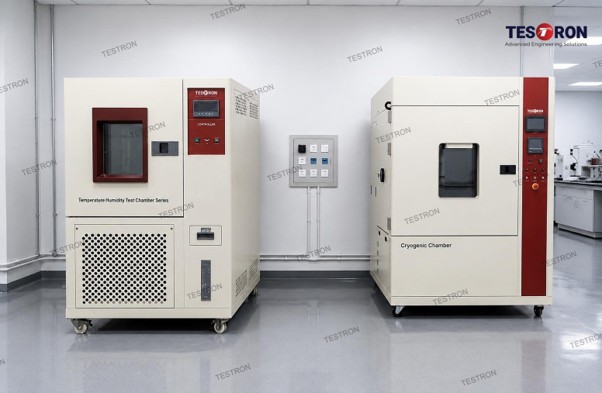
Temperature and humidity are the two major environmental factors when it comes to laboratory tests, because they affect the operation of various materials, components, and end products. No matter whether one is testing electronic assemblies, pharmaceutical products, packaging materials, or anything else that constitutes industrial components, there must be environmental control in the laboratory for accurate results. Any variation during testing impacts the product’s behavior, and hence the need for environmental control.
In selecting the right temperature and humidity chamber in the USA, it is important not only to consider the parameters but also other characteristics that can make it fit for the laboratory’s testing objectives. By understanding these characteristics, one will be in a position to select a chamber that will enable environmental testing in a laboratory.
Why Environmental Testing Is Essential for Modern Laboratories
The performance of the product is determined by the environment it operates within throughout its entire lifespan. Temperature changes and humidity can impact the durability, stability, size, electricity, and reliability of various materials.
A temperature and humidity test chamber allows laboratories to simulate these conditions within a controlled environment before the products are supplied to consumers.
Industries That Commonly Use Environmental Chambers
Some common industries that use controlled environment simulations include:
- Electronics and semiconductors
- Automobile manufacturing
- Aerospace engineering
- Pharmaceuticals
- Medical devices
- Packaging and plastic industry
- Building materials
- Research laboratories
- Universities
Each industry has unique testing requirements, making controlled environmental simulation an important part of product validation.
Why Consistency Matters
Consistency in lab testing requires that the environment remain constant during the entire testing process.
For instance, unstable humidity or temperature in the chamber might affect the test results and make it hard to repeat the results. Constant temperature and humidity test chambers should be built in a way that reduces these variables so that labs can produce consistent data.
Features That Define a High-Quality Temperature and Humidity Chamber in the USA
Every environmental chamber offers the same performance capabilities. There are some specific technical details that have an effect on the accuracy of tests and reliability of operations.
Accurate Temperature and Humidity Control
Accurate environmental control is the key to a successful test.
Many of the advanced chambers have the ability to function at:
- Temperature: -70°C to +180°C (depending on the model)
- Humidity: 10% to 98% RH
A well-designed chamber will be able to provide these parameters consistently during testing processes.
Programmable Controls and Data Monitoring
In modern times, laboratories are using more automation in their tests. A quality chamber must include:
- Controller with a touch screen
- Customizable test profiles
- Automatic cycling of conditions
- Easy transfer of analysed data through USB
- Interconnection through Ethernet
- Digital recording of results
With these options, a laboratory can document various processes easily.
Chamber Size Should Match Testing Requirements
It may not be necessary to choose the largest temperature and humidity control chamber all the time.
Environmental chambers are usually available in the following forms:
- Bench-top for small samples
- Floor-mounted for normal lab work
- Walk-in for large parts or multiple test pieces
The selection of the correct constant temperature and humidity chamber will depend on a variety of factors including sample size and future test needs.
What Should Laboratories Consider Before Selecting a Temperature and Humidity Chamber in the USA?
Beyond specifications, laboratories should evaluate how well the chamber supports their testing objectives.
Operating Range and Application Suitability
Different products require different environmental conditions.
For example:
- Electronics may require thermal cycling.
- Pharmaceuticals often undergo stability studies.
- Packaging materials may be tested under high-humidity storage conditions.
- Industrial components may be exposed to repeated heating and cooling cycles.
A humidity and temperature controlled chamber should support the environmental conditions required for the intended application rather than offering unnecessary capabilities.
Calibration and Compliance
Accurate measurements require properly calibrated equipment.
When evaluating environmental chambers, laboratories should look for features such as:
- Calibration-ready sensors
- Traceable calibration support
- CE-compliant equipment
- ISO/IEC 17025 calibration compatibility
- Reliable sensor performance over extended use
These characteristics help laboratories maintain confidence in their testing results.
Built-In Safety Features
Environmental testing normally requires the system to run for many hours.
High-quality temperature and humidity testing chambers should have safety elements like:
- Over-temperature safety elements
- Over-humidity safety elements
- Alarm safety elements
- Shutdown safety elements
- Efficient refrigeration and heating elements
These elements will play an important role in ensuring that the samples being tested and laboratory equipment are safe from damage.
Maintenance Supports Long-Term Performance
Maintenance plays an important role in ensuring consistency in testing accuracy.
Labs carrying out stability chamber temperature and humidity studies should carry out maintenance on:
- Temperature and humidity sensors
- Condensers
- Water systems
- Air circulation systems
- Door seals
Preventive maintenance minimizes downtime and helps maintain stable environmental conditions over the long term.
Selecting Equipment That Delivers Reliable Environmental Testing
The ideal environmental chamber will be the one that fits in the needs of the laboratory and not necessarily the one with the most number of features.
During evaluation of the choices available for purchase, laboratories need to consider if the temperature and humidity controlled chamber provides:
- Environmental stability
- Air circulation consistency
- Test program capabilities
- Data log capability
- Chamber capacity
- Long-term calibration capability
- Safety systems
Prior to purchasing any product, it is equally important to compare the temperature and humidity chamber price with its features, technical support, and costs associated with running the equipment.
Reviewing solutions from experienced temperature and humidity chamber manufacturers and reputable temperature and humidity chamber suppliers can help laboratories identify equipment suited to their operational and compliance requirements.
Conclusion
Consistent environmental testing requires reliable equipment. A high-caliber chamber will offer exact environmental control, programmable functionality, proper chamber size, dependable safety features, and calibration that allows labs to obtain consistent test results.
As testing demands become more complex, it becomes necessary to choose equipment according to the needs of the application and not just the technical specifications of the equipment. Investigating professional humidity and temperature chamber solutions can help in determining the right environmental testing equipment for your lab.
