


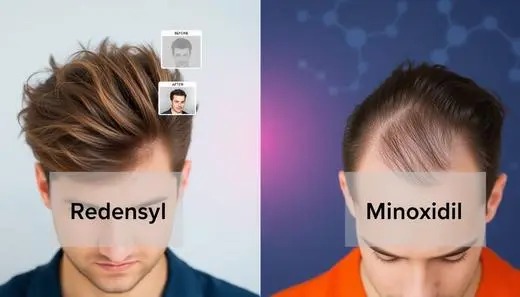
Search for hairfall solutions long enough, and you’ll notice the same comparison appearing over and over again: Redensyl vs. Minoxidil. The two ingredients often share the same shelf space.
You’ll find them in a hair growth serum for women, across online recommendations, and sometimes even in products positioned as alternatives to one another. That makes it easy to assume they’re competing versions of the same thing. They’re actually very different products with very different histories.
Minoxidil is a medicine that has been studied for decades and is FDA-approved for certain types of hair loss. Redensyl is a cosmetic active developed much more recently, with early clinical studies that have attracted attention because of their encouraging results. Understanding where that evidence comes from—and where it doesn’t—is far more useful than trying to decide which ingredient “wins.”
Two Ingredients with Two Different Approaches
Minoxidil has one of the longest track records of any topical ingredient used for hair loss. It works by widening blood vessels around the hair follicle, increasing blood flow to the scalp. Better circulation helps deliver oxygen and nutrients to the follicle, encouraging more hairs to remain in the active growth phase for longer. Redensyl approaches the problem differently.
Rather than acting on circulation, it was developed to support the biological activity around the hair follicle itself. Research into Redensyl focuses on cells involved in the hair growth cycle and follicle renewal, which is why the ingredient has become popular in cosmetic leave-on treatments aimed at reducing thinning and excessive shedding.
If you’re choosing between the two, the mechanism matters because it shapes everything else, from the evidence available to the type of product you’re buying.
Looking Beyond the Marketing Claims
Marketing pages often place Redensyl and Minoxidil side by side, but the research behind them isn’t comparable in size.
Minoxidil has been investigated for decades through clinical trials and continues to be one of the best-studied topical treatments for androgenetic alopecia. Its FDA approval for specific forms of hair loss reflects that long research history rather than a single successful study. Redensyl has a much shorter timeline.
Several published studies have reported improvements in hair density and reductions in hair shedding among participants using Redensyl-based formulations. Those findings are encouraging, particularly for people looking for cosmetic alternatives, but they’re based on fewer studies with much smaller participant groups.
That’s why dermatologists usually talk about the two ingredients differently.
Minoxidil has an established evidence base built over many years. Redensyl has promising early evidence that still needs broader, long-term research before it reaches the same level of confidence.
Treating those two evidences bases as though they’re equal does a disservice to anyone trying to make an informed decision.
Side Effects: What Daily Use Can Feel Like
Reading a list of side effects on paper rarely tells you what living with a treatment is actually like.
People starting minoxidil are often advised about something called the shedding phase. During the first few weeks, some users notice more hair falling than usual. It can feel alarming if you weren’t expecting it, but it’s a recognised part of treatment for many people. Dryness, itching, or mild scalp irritation are also reported by some users, particularly during the adjustment period.
Another practical consideration is consistency. Stopping minoxidil doesn’t permanently preserve the progress you’ve made. If the underlying cause of hair loss remains, shedding often resumes over time.
Redensyl-based cosmetic products are generally reported to be gentler on the scalp, and irritation appears less frequently in the available studies and user experience reports. Long-term data, however, is still limited compared with minoxidil, so fewer conclusions can be drawn about years of continuous use or what happens after discontinuation.
Whichever ingredient you’re considering, patch-testing a new product before full application is a sensible habit rather than an optional extra.
Which One Fits Your Situation?
Choosing between Redensyl and minoxidil becomes easier once you think about your goals instead of the marketing.
Someone experiencing progressive pattern hair loss, especially with a diagnosis from a dermatologist, will usually be directed towards treatments backed by stronger clinical evidence. That’s where minoxidil has its biggest advantage.
Someone noticing early thinning, wanting to explore a cosmetic option first, or looking for a hair growth serum for women that fits into an everyday routine may feel more comfortable starting with a Redensyl-based formulation.
You’ll also come across products marketed as a hair growth oil for women containing Redensyl. It’s worth remembering that the ingredient itself has been studied primarily in leave-on formulations. The overall formula plays a role in how a product performs.
Hair fall is rarely caused by a single factor. Genetics, hormonal changes, nutritional deficiencies, illness, stress, and certain medications can all influence the hair growth cycle. That’s why two people using the same product can have very different experiences.
Can They Be Used Together?
Because they work through different mechanisms, dermatologists sometimes recommend combining Redensyl with minoxidil as part of a broader treatment plan. That doesn’t make combination therapy the right choice for everyone.
If you’re already using prescription hair-loss treatments or have a sensitive scalp, it’s worth asking a dermatologist how to layer the products and whether your routine needs adjusting. A personalized plan is usually more valuable than adding multiple actives simply because they’ve become popular online.
For anyone comparing Redensyl vs. Minoxidil, the most useful question isn’t which ingredient sounds more impressive on the label. It’s which one has evidence that matches your expectations, your stage of hair loss, and the kind of treatment you’re genuinely comfortable committing to over the long term
The Complete De-Tan Guide: What Actually Works Beyond Lemon and Besan
If you’ve ever searched for ways to remove a tan, you’ve probably noticed that the advice swings between two extremes. One side recommends raiding your kitchen for lemon juice, besan, yogurt, and tomato pulp. The other jumps straight to products, promising visible results in a matter of days. Neither approach tells the full story, which is why so many people find themselves treating the same tan over and over again.
For most people in India, tanning isn’t the result of one beach holiday or a weekend trek. It builds quietly through everyday routines. A two-wheeler ride to work, standing at a bus stop, walking between meetings, or driving home in the late afternoon sun all add up. The face, neck, hands, and forearms receive just enough UV exposure each day for pigment to accumulate faster than the skin can naturally shed it.
That’s why a face pack used once a week often feels disappointing. It’s also why buying the first de-tan face wash you see online doesn’t always solve the problem either.
Removing a tan isn’t about finding one magical ingredient. It’s about understanding how tanning happens, choosing products that support your skin’s natural renewal process, and protecting those results so you’re not starting from scratch every few weeks.
This guide brings those pieces together. You’ll learn what actually happens inside the skin after sun exposure, which home remedies have genuine value, where formulated de-tan products offer an advantage, and how to build a routine that delivers realistic results without irritating your skin.
Why Your Skin Tans in the First Place
Most people think of a tan as something sitting on top of the skin, almost like a layer of dust waiting to be scrubbed away.
That’s not how tanning works. When ultraviolet (UV) rays reach your skin, they trigger specialized cells called melanocytes. These cells produce melanin. It’s the pigment responsible for the colour of your skin, hair, and eyes. Melanin acts as the body’s natural defence system, helping absorb and scatter UV radiation before it damages the DNA inside skin cells.
The darker appearance you notice after spending time in the sun isn’t dirt, dead skin, or oxidation. It’s fresh pigment your body has intentionally produced.
That distinction explains why quick fixes rarely live up to their promises. A scrub can remove loose surface cells. It can’t immediately remove pigment that’s already been built into living skin cells beneath the surface. Those cells need to complete their normal life cycle before they’re naturally shed.
For most healthy adults, that process takes around four weeks. As older cells gradually move towards the surface, newer ones replace them underneath. Any routine that claims to remove a deep tan overnight is working against basic skin biology.
Why Indian Skin Tans So Easily
Climate plays a much bigger role than most people realize. Across much of India, UV exposure isn’t limited to holidays or summer afternoons. Strong sunlight is part of everyday life for most of the year, and even short periods outdoors can gradually deepen a tan.
Indian skin also tends to fall within Fitzpatrick skin types III to V, which naturally contain more active melanocytes than very fair skin tones. That’s one reason many people tan quickly without burning. It’s a protective adaptation, but it also means pigmentation becomes more noticeable after repeated exposure.
The challenge isn’t that your skin produces melanin. The challenge is that it often doesn’t get enough time to clear yesterday’s pigment before today’s exposure begins all over again.
Think about a typical weekday. You leave home in the morning, spend fifteen minutes commuting, walk from the parking area to the office, step out for lunch, and repeat the journey in the evening. None of those moments feels significant on its own, yet together they expose your skin to UV radiation almost every day. After several weeks, the change becomes visible, not because of one afternoon in the sun, but because of dozens of small exposures that quietly accumulate.
That’s why tanning often appears most prominently on the forehead, cheeks, neck, and the backs of the hands. These are the areas that stay uncovered throughout the day, even when the rest of your body is protected by clothing.
Why Some Tans Fade Quickly While Others Seem Permanent
Not every tan behaves the same way. A light tan after a weekend cricket match or a day at the beach often fades naturally once your regular skin turnover catches up.
Daily commuter tan is different. Repeated UV exposure keeps telling your melanocytes to produce more pigment before the older pigmented cells have finished shedding. Instead of one tanning event followed by recovery, your skin is caught in a cycle of constant stimulation.
That’s why many people notice the same pattern. They use a face pack over the weekend. Their skin looks a little brighter for a few days. Then, by the middle of the following week, the tan seems to be back. In reality, the skin never had a chance to recover fully. The surface looked fresher because of gentle exfoliation, but fresh UV exposure continued to trigger new melanin beneath the surface.
This is also why sunscreen deserves far more attention in conversations about de-tanning than it usually gets. Treating existing pigmentation while allowing new pigmentation to form every day is a frustrating cycle that rarely produces lasting improvement.
Before looking at products, it’s worth understanding what home remedies can realistically achieve and where they reach their limits. Some ingredients have earned their reputation for good reason. Others have survived almost entirely because they’ve been passed from one generation to the next.
What Home Remedies Actually Help (and Which Ones Are Better Left Alone)
Kitchen remedies have survived for decades because some of them genuinely do make skin look fresher. The problem starts when every homemade ingredient is treated as equally effective. They aren’t.
Some work because they gently speed up the removal of dead surface cells. Others mainly soothe irritated skin after sun exposure. A few have built their reputation through word of mouth despite very little evidence that they fade a tan at all. Knowing the difference saves both time and unnecessary irritation.
Besan and Yogurt: Popular for a Reason
If there’s one home remedy that continues to hold up surprisingly well, it’s the classic besan and yogurt combination.
Besan provides gentle physical exfoliation, helping remove dead cells that naturally contain older pigment. Yogurt contributes lactic acid, a mild alpha hydroxy acid (AHA) that encourages surface cell turnover without being overly harsh when used once or twice a week.
That’s also why skin often feels softer immediately after washing the pack off. You’re not removing the tan itself in one sitting. You’re helping the outermost layer of skin renew itself a little faster.
Used consistently, it can support gradual fading of superficial tanning. Used every day with vigorous scrubbing, it often does more harm than good.
Aloe Vera Helps Skin Recover—Not Fade Pigment
Aloe vera has earned a place in many after-sun routines because irritated skin usually feels calmer after application. Its biggest strength isn’t depigmentation. It’s barrier support.
Sun exposure can leave skin dehydrated and mildly inflamed, making it feel rough even before visible tanning develops. Aloe helps restore comfort while reducing some of that post-sun irritation. Think of it as recovery care rather than a de-tan treatment.
Raw Papaya Deserves More Credit Than It Gets
Papaya rarely gets as much attention as lemon or potato, but it’s one of the more sensible ingredients to use.
The fruit naturally contains papain, an enzyme that helps loosen dead surface cells. The effect is gentle, making papaya a reasonable option for people whose skin doesn’t tolerate rough scrubs particularly well.
Don’t expect dramatic colour change after one application. Over several weeks, though, regular exfoliation can contribute to a more even complexion as naturally pigmented cells are shed.
Tomato: Better for Prevention Than Correction
Tomato masks are usually recommended because tomatoes contain lycopene, an antioxidant associated with protection against oxidative stress caused by UV exposure.
That sounds impressive until you look at the research more closely. Many studies demonstrating lycopene’s benefits rely on measured doses delivered through diet or controlled supplements, not a few slices of tomato placed on the skin for fifteen minutes. Using tomato pulp occasionally isn’t likely to harm healthy skin, but it’s unlikely to become the deciding factor in fading an established tan either.
Potato Juice Has Outgrown the Evidence
Few DIY remedies have spread as widely as potato juice. You’ll often see it described as a natural bleaching treatment capable of removing pigmentation and brightening skin within days. The evidence doesn’t really support those claims.
Potato is mostly water. It feels cool on freshly sun-exposed skin, which explains why many people find it soothing, but convincing research showing meaningful pigment reduction from topical potato juice remains limited.
There’s nothing wrong with using it if you enjoy the ritual. It’s simply unrealistic to expect it to tackle weeks of accumulated tanning on its own.
Why Lemon Is the One Ingredient Worth Rethinking
Almost every homemade de-tan list includes lemon. It’s also the ingredient dermatologists are most likely to discourage.
Fresh lemon juice is highly acidic. Applied directly to the skin, it can disrupt the skin barrier, cause irritation, and increase sensitivity to sunlight. Even more concerning is a reaction called phytophotodermatitis, where plant compounds combined with UV exposure trigger redness, blistering, or stubborn dark patches that can linger long after the original tan would have faded.
Ironically, a remedy people use to lighten skin can sometimes leave it looking darker. That’s why many dermatologists recommend skipping raw lemon altogether, especially on the face.
If you’re looking for brightening ingredients, modern skincare offers far more predictable options without exposing the skin to unnecessary irritation.
Building a De-Tan Routine That Actually Fits Real Life
One of the biggest reasons de-tan routines fail has nothing to do with the products themselves. People often expect one product to do everything. A de-tan face wash is expected to remove weeks of tanning on its own. A serum is expected to replace sunscreen. A face pack becomes the weekend fix after six days of unprotected sun exposure. Skin doesn’t work that way.
Think of a de-tan routine as a series of small habits that support one another. Cleansing removes buildup, brightening ingredients encourage a more even complexion, moisturisers keep the skin barrier healthy, and sunscreen prevents new pigment from replacing the old pigment you’re trying to fade.
When one step disappears, especially sunscreen, the rest of the routine has to work much harder.
Your Morning Routine
Morning skincare should focus on two things: preventing fresh UV damage and preparing your skin for the day ahead.
Step 1: Cleanse Gently
Wash your face with a gentle de-tan face wash or cleanser to remove overnight oil, sweat and skincare residue.
If your cleanser contains brightening ingredients such as niacinamide or vitamin C derivatives, consistent daily use helps support gradual improvement without making your routine feel complicated.
Avoid harsh scrubbing at this stage. Skin that’s repeatedly rubbed or over-exfoliated often becomes more sensitive, making it harder to tolerate active ingredients later.
Step 2: Moisturise
Hydrated skin functions better. A lightweight moisturiser helps reduce water loss, supports the skin barrier and makes it easier to tolerate brightening ingredients over the long term.
People often skip moisturiser because they’re trying to remove tan, especially during humid weather. Ironically, dehydrated skin can appear duller and rougher, making tanning look more obvious than it actually is.
Choose a texture that suits your skin type rather than avoiding moisturiser altogether.
Step 3: Sunscreen Is the Step That Protects Your Progress
This is the part many routines underestimate. Every brightening ingredient works on pigment that’s already there.
Sunscreen helps stop fresh pigment from forming. Without daily sun protection, you’re asking your skincare to undo damage while new tanning continues at the same time.
For most people, an SPF 30 or higher broad-spectrum sunscreen applied generously every morning is a sensible starting point. If you’re outdoors for extended periods, sweating heavily or spending time on a two-wheeler, reapplication becomes just as important as the first layer.
Many dermatologists would argue that sunscreen contributes more to long-term de-tanning than any single brightening ingredient.
Your Evening Routine
Evening is when your skin shifts its focus from protection to repair. This is also the best time to support that process.
Remove Everything the Day Leaves Behind
If you’ve worn sunscreen or makeup or spent hours outside, start with a thorough cleanse.
Double cleansing isn’t necessary every evening for everyone, but if you’re wearing water-resistant sunscreen or long-wear makeup, an oil-based cleanser followed by your regular cleanser usually removes residue more effectively than washing twice with the same face wash.
Leaving sunscreen, pollution, and excess oil sitting on the skin overnight doesn’t directly cause tanning, but clean skin gives leave-on products a better chance to perform as intended.
Follow With Brightening Care
Night is a good time for leave-on products containing ingredients such as niacinamide, vitamin C derivatives, alpha arbutin or licorice extract if they’re already part of your routine. These ingredients don’t bleach the skin. Instead, they support a more even-looking complexion over time through different pathways involved in pigmentation.
There’s rarely any benefit to introducing several active ingredients at once. If your skin is new to brightening products, begin with one product, use it consistently for a few weeks and then decide whether your routine needs anything else.
Weekly Care Makes the Difference
Daily habits do most of the work. Weekly treatments simply give them extra support. Using a brightening mask or a homemade besan and yogurt pack once or twice a week adds gentle exfoliation without overwhelming the skin.
More isn’t necessarily better. One mistake people make is trying to speed up results by exfoliating every day. Instead of fading tan faster, over-exfoliation often leaves skin irritated, dehydrated and more reactive. Healthy skin renews itself more efficiently than irritated skin.
Common Mistakes That Keep Tan Coming Back
Sometimes the routine itself isn’t the problem. A few small habits quietly undo weeks of consistent skincare.
Expecting Overnight Results
A tan develops over multiple days or weeks. It fades the same way. Products claiming to remove deep tanning in a day or two usually rely on temporary brightening or exfoliation rather than meaningful pigment reduction.
Treating Only the Face
Look closely in natural daylight, and you’ll often notice something interesting. The face looks brighter, but the neck and hands still appear noticeably darker. Those areas receive just as much daily UV exposure and deserve the same sunscreen and skincare whenever possible.
Using Too Many Brightening Products Together
When progress feels slow, it’s tempting to add another serum, another exfoliant, and another face pack. The result is often irritation rather than faster improvement. Skin usually responds better to a simple routine followed consistently than an ambitious routine that’s impossible to maintain.
Forgetting That Commutes Count
Many people associate UV exposure with holidays. But, daily life contributes far more than most realize. Walking from the parking area, waiting for public transport, stopping at roadside shops, or spending twenty minutes on a scooter every morning adds up over months.
Protecting your skin during those ordinary moments often matters more than preparing for occasional vacations.
How Long Before You Notice a Difference?
One question comes up almost every time someone starts a de-tan routine—”When will I actually see results?” The honest answer depends on how long the tan has been there, how consistent your routine is, and whether you’re preventing new UV exposure.
Most people notice changes gradually rather than all at once. During the first week, the biggest difference is usually how the skin feels. Cleansing, moisturising and gentle exfoliation often leave skin feeling smoother before any visible colour change appears.
Around the third week, many people begin noticing a more even complexion, particularly along the cheeks and jawline, where skin turnover tends to be a little quicker.
By six weeks, someone following a consistent routine, including sunscreen every day, often sees the most noticeable improvement. Deeper or long-standing tanning may continue improving beyond that point, especially if daily UV exposure has been reduced.
One simple habit makes progress easier to judge. Take a makeup-free photo in the same place, under the same lighting, before starting your routine. Repeat it after three weeks and again around the six-week mark. Side-by-side photos usually reveal gradual changes that are surprisingly difficult to notice when you’re looking in the mirror every morning.
When It Makes Sense to See a Dermatologist
Most tanning improves with time, a consistent skincare routine, and good sun protection. There are situations, however, where continuing to experiment with new products isn’t the best next step.
If you’ve followed a routine for six to eight weeks, worn sunscreen daily, and haven’t noticed any improvement at all, it’s worth getting your skin assessed rather than assuming you simply haven’t found the right de-tan face wash yet.
The same applies if the pigmentation doesn’t behave like an ordinary tan. A dermatologist should evaluate skin changes that:
- appear suddenly without obvious sun exposure
- have irregular borders or uneven colouring
- continue getting darker despite sun protection
- itch, bleed, become raised or feel painful
- develop alongside hormonal changes or pregnancy
Many people mistake melasma, post-inflammatory hyperpigmentation, or other pigment disorders for a stubborn tan. Although they can look similar in the mirror, they don’t always respond to the same treatments.
A dermatologist can also recommend options that aren’t available over the counter, including prescription-strength brightening creams, chemical peels, or laser treatments when they’re appropriate.
Seeking professional advice isn’t a sign that your routine has failed. Sometimes it simply means the pigmentation has a different cause.
Final Thoughts
Removing a tan isn’t about finding one miracle ingredient or copying every trending DIY remedy that appears on social media. Skin follows its own timeline, and the products that genuinely help are the ones that support that process rather than promising to shortcut it.
For some people, a simple routine built around a gentle de-tan face wash, sunscreen, and occasional exfoliation is enough to gradually restore a more even complexion. Others may benefit from adding targeted brightening ingredients or speaking with a dermatologist if pigmentation proves more persistent.
Whichever approach you choose, consistency matters far more than complexity. A routine you can comfortably follow every day will almost always produce better long-term results than one packed with products that only get used when you remember they’re sitting on the bathroom shelf.
Frequently Asked Questions
- Does a de-tan face wash work as well as a face pack?
They serve different roles rather than competing directly. A wash offers daily, low-dose active ingredient contact; a pack offers a more concentrated but occasional exfoliation boost. Most people see faster results combining both than relying on either alone.
- How long does it take to see results from tan removal treatment?
Most people notice initial change around three weeks and a meaningful difference by six weeks, assuming daily use and consistent sunscreen. Deeper or long-standing tan can take longer.
- Can I use lemon safely to remove tan from my face?
Only with real caution. Dilute it heavily, patch-test first, keep contact time short, and stay indoors afterwards, since undiluted lemon juice in sunlight can cause a photosensitivity reaction that leaves skin darker, not lighter.
- Is tan the same as pigmentation or melasma?
No. Tan is a temporary UV response that fades with cell turnover and reduced exposure. Melasma and other forms of hyperpigmentation are often hormonally driven, tend to be more stubborn, and usually need a dermatologist’s input rather than a standard de-tan routine.
- Do I still need sunscreen if I’m using a de-tan product?
Yes, every day. Treating tan while continuing unprotected sun exposure works against the product, since new pigment forms as fast as, or faster than, existing pigment fades.
