


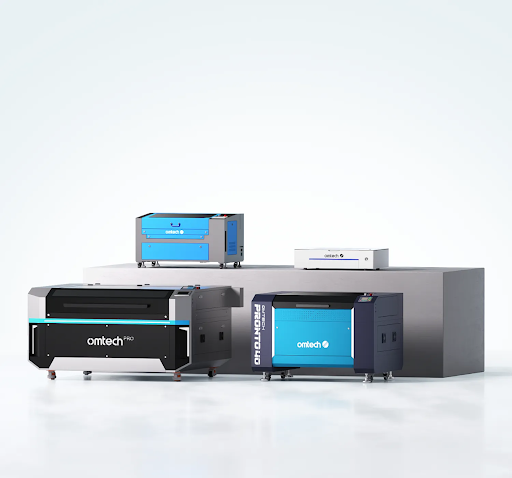
A friend of mine runs a small gift shop. She makes personalized cutting boards, engraved tumblers, custom wooden signs. She asked me last spring which laser she should buy and I asked her one question back. What are you going to cut.
She listed wood, acrylic, leather, and the occasional piece of glass. I told her CO2 without hesitating. She pushed back a little. She had been watching videos online and everyone seemed to be using diode lasers. They looked cheaper and more portable and the results on wood looked fine.
I explained the acrylic problem and she understood immediately. Diode lasers cannot cut clear acrylic. She needed clear acrylic for some of her award products. That one material requirement decided the whole purchase. She bought a 60 watt CO2 machine and has been running it ever since.
That conversation happens constantly in the laser community. People get close to buying the wrong machine because they are comparing specs and prices without thinking through the material question first. This article is the version of that conversation I wish more people had before they spent money.
The Material Question Comes First
Every laser type works on a different set of materials. That is not a preference thing or a quality thing. It is physics. The wavelength of light the machine produces either gets absorbed by your material or it does not. If it does not get absorbed, you do not get a mark.
CO2 lasers run at 10,600 nanometers. Organic materials and polymers absorb that wavelength well. Wood, acrylic in any color, leather, fabric, glass, MDF, slate. The CO2 beam does not care about material color, which is a significant advantage over diode machines.
Fiber lasers run at 1,064 nanometers. Metals absorb that wavelength. Steel, stainless steel, aluminum, brass, copper, titanium, gold, silver. Raw bare metal that bounces CO2 light back absorbs fiber laser energy and produces a permanent mark.
Diode lasers run at around 455 nanometers. Dark organic materials absorb this blue wavelength. Wood, leather, cork, paper, dark-colored acrylic. Light-colored materials and transparent materials mostly reflect or transmit the beam. Clear acrylic does not get cut. Raw aluminum does not get marked.
Write down your three most-used materials. Match them to the wavelength that works on them. That decision is mostly made.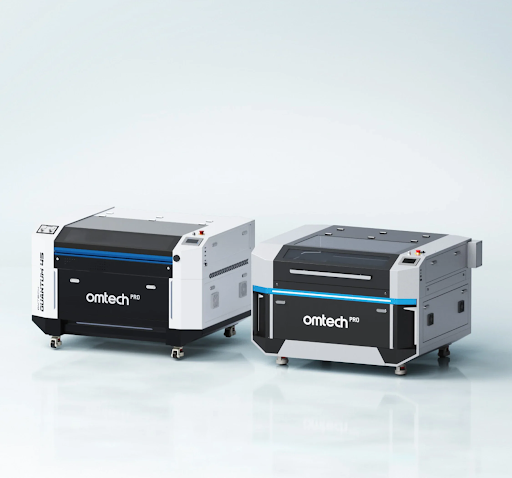
CO2 Laser Engravers
CO2 is what most small laser businesses run. Sign shops, gift sellers, personalization businesses, award shops. The material range is wide enough to cover most non-metal product lines from a single machine.
The reason clear acrylic matters so much for CO2 is that it has no equivalent in the other categories. Diode machines cannot do it. Fiber machines are the wrong tool for it. If your business involves awards, display pieces, backlit signs, or any product that uses clear or light-colored acrylic, you need CO2. Full stop.
Wood engraving on CO2 is excellent. The contrast is sharp. The beam does not struggle with light-colored wood the way diode lasers sometimes do. Maple engraves with a deep dark mark. Birch plywood comes out clean. Bamboo cutting boards look professional.
What CO2 Does Well
- Cuts clear acrylic, colored acrylic, and any polymer that absorbs 10,600nm light
- Engraves wood with sharp contrast regardless of wood color or tone
- Cuts leather cleanly without fraying or burning edges excessively
- Marks glass with a frosted finish suitable for awards and drinkware
- Engraves coated metals and anodized aluminum particularly well with a rotary for tumblers
- Handles fabric, MDF, slate, and most non-metal craft materials
What CO2 Does Not Do
- Cannot mark bare steel, brass, copper, or titanium. Wrong wavelength
- Laser tubes have a finite life of roughly 8,000 to 12,000 hours and need replacing
- Most production machines require a water chiller which adds cost and setup complexity
- Larger footprint than most diode machines
Budget Reality for CO2
Entry level CO2 machines at 40 watts start around 800 to 1,200 dollars. They handle light materials but struggle with thicker stock and run slowly on production work. Most small businesses find that 60 to 80 watts is the practical sweet spot. That range starts around 2,500 to 3,500 dollars for a quality enclosed system with a decent work area.
Diode Laser Engravers
Diode lasers are cheap. You can spend 300 to 600 dollars and have a machine running on your kitchen table in an afternoon. For someone who wants to test whether they enjoy laser work before spending real money, that accessibility is genuinely useful.
The production limitations become apparent fairly quickly. Open frame designs mean the beam is not contained, which puts safety management on the operator rather than the machine. You need to think about where the beam is going at all times. In a home environment with kids or pets that is not a trivial consideration.
Speed on comparable materials is noticeably slower than CO2. A project that takes eight minutes on a CO2 machine might take twenty-five minutes on a comparable diode. When you are making fifty cutting boards for a holiday order that difference is real.
The material ceiling is also lower. Clear acrylic does not work. White and light-colored materials are inconsistent. Bare metal does not mark. You end up working around the machine rather than letting it handle the full range of what you want to make.
What Diode Does Well
- Low entry cost for testing and learning the workflow
- Compact and portable enough to store when not in use
- Wood and leather engraving at acceptable quality for personal use and low-volume sales
- Good starting point before committing to a larger enclosed machine
What Diode Does Not Do
- Cannot cut clear acrylic or mark bare metal
- Slower production speeds on every comparable material
- Open frame requires active management of the beam environment
- Narrower material range than CO2 at prices that are only modestly lower once you add necessary accessories
Fiber Laser Engravers
Fiber lasers are for metal. If that is not your primary material, you probably do not need one yet. But if you mark steel parts, engrave jewelry, identify tools, or do any work on bare aluminum or brass, fiber is the only technology that handles it reliably.
The marks are permanent in a way that other methods are not. Laser annealing on stainless steel produces a dark oxide mark that survives heat treatment, oil, chemical exposure, and years of outdoor use. Electrochemical etching and dot peen marking both have failure modes in harsh environments that fiber laser marks do not have.
Speed is another advantage that gets underappreciated. The galvo scanning system in a fiber laser moves the beam at thousands of millimeters per second. A serial number or logo on a small metal part takes three to five seconds. For a shop doing production volumes, that throughput matters.
What Fiber Does Well
- Permanent marks on all common metals without consumables or chemistry
- Production speeds far faster than gantry machines on equivalent mark areas
- Laser source life exceeding 100,000 hours with no tube replacement
- Meets traceability standards in automotive, medical, and aerospace supply chains
- MOPA variants add color marking capability on stainless steel and titanium
What Fiber Does Not Do
- Does not work on wood, leather, or organic materials
- Cannot cut or engrave acrylic effectively
- Higher entry cost than CO2 for equivalent production capability
Side by Side
- CO2: Wood, acrylic any color, leather, glass, fabric. Best all-round non-metal machine. 60 to 80 watt production range starts around 2,500 dollars
- Diode: Wood, leather, dark materials. Lowest cost entry. Best for learning before committing to CO2 or fiber. Starts under 600 dollars
- Fiber: All bare metals permanently. Production speeds. 100,000 hour source life. 20 watt production systems start around 3,500 dollars
The Questions That Decide It
Do you need to cut clear acrylic
Yes means CO2. There is no other option that handles this reliably at a small business price point.
Is bare metal your primary material
Yes means fiber. CO2 and diode both fail on raw steel and aluminum regardless of power settings.
Are you testing a business idea on a limited budget
Start with diode. Learn the workflow. Prove there is demand for what you want to make. Upgrade to CO2 when the volume justifies it.
Do you need the widest possible material range from one machine
CO2 wins that comparison. A 60 to 80 watt enclosed CO2 machine handles the full range of non-metal materials that most small businesses actually need. CO2 laser engraver machines in that power range are where most serious small laser businesses start and many never need to go beyond.
Conclusion
The comparison between CO2, diode, and fiber laser engravers is not actually complicated once you stop looking at specs and start looking at materials. The wavelength determines the material compatibility and the material compatibility determines which machine you need.
Most small businesses making personalized non-metal products belong on CO2. Most shops marking metal parts belong on fiber. Most people testing the hobby before committing real money belong on diode.
That breakdown covers probably 95 percent of buying decisions. Figure out which category you are in and pick the machine from that category that fits your budget and work area requirements.
About OMTech
OMTech is a laser equipment company based in Anaheim, California. The company manufactures CO2 laser engravers, fiber laser marking systems, and MOPA fiber lasers for small businesses and production environments across the United States. Their full product range is available at OMTech.
The CO2 product line covers 40 watt desktop systems through 150 watt production machines. Fiber and MOPA systems cover 20 to 100 watts. OMTech machines are used by sign shops, gift sellers, jewelers, contract manufacturers, and home workshop users.
