


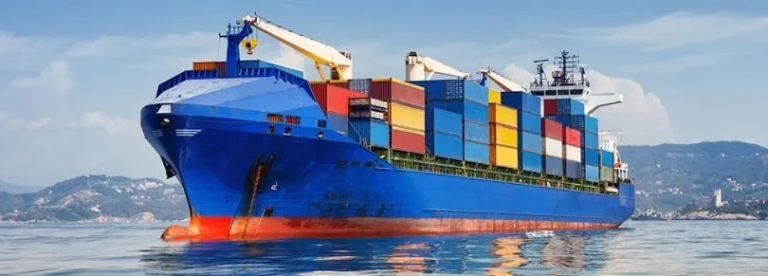
International container shipping is the most widely used method for moving vehicles, personal effects, commercial goods, and general cargo from the UK to destinations worldwide. A container gives your goods a sealed, secure environment for the entire sea voyage — minimising handling, protecting against the elements, and giving you a clear chain of custody from UK loading to destination port. This guide explains how the process works, what it costs, and what to prepare before your shipment departs.
FCL vs LCL: Which Container Option Is Right for You?
International container shipping is available in two formats, and choosing the right one depends on the volume of your cargo.
FCL (Full Container Load) gives you exclusive use of a 20ft or 40ft container. Your cargo is loaded, sealed, and does not move again until it arrives at the destination port. FCL is the right choice when your cargo fills a significant proportion of a container, when you are shipping a vehicle, when you are including personal effects alongside a vehicle, or when the cargo is fragile, high-value, or sensitive to handling.
LCL (Less than Container Load) consolidates your goods with other shippers’ cargo inside a shared container. You pay only for the space your cargo occupies, measured in cubic metres (CBM). LCL is cost-effective for smaller volumes — a few pallets, a single motorcycle, or a part-load of commercial goods — where paying for an entire container would not be economical.
As a practical guide, FCL typically becomes more cost-effective than LCL above approximately 13–15 CBM. Below that threshold, LCL usually offers better value.
Container Types and Sizes
Three container types cover the majority of international shipments from the UK.
| Container type | Internal dimensions (L x W x H) | Volume | Door height |
| Standard 20ft | 5.89m x 2.33m x 2.38m | 33.18 m³ | 2.28m |
| Standard 40ft | 12.01m x 2.33m x 2.38m | 67.67 m³ | 2.28m |
| 40ft High Cube | 12.01m x 2.33m x 2.69m | 76.28 m³ | 2.56m |
The 20ft container suits a single standard car, a motorcycle, or a smaller volume of cargo. The 40ft and 40ft High Cube accommodate two or more vehicles, larger personal effect consignments, or bulkier commercial freight. Dimensions can vary slightly by manufacturer — confirm suitability for oversized items before booking.
For cargo that falls outside standard container dimensions (out-of-gauge freight), dedicated handling is available on request.
UK Departure Ports
The UK departure port for your container shipment depends on your destination and collection address. The main ports serving international container routes from the UK are:
| Port | Primary routes served |
| London Gateway / Tilbury | Middle East, Asia, Australasia, Americas |
| Southampton | Australasia, Americas, Africa |
| Felixstowe | Europe, Asia, Americas, worldwide |
| Grangemouth (Scotland) | Northern Europe, Americas |
Published rates are typically based on London Gateway departures. If your cargo suits a different departure port — for example, Southampton for Australian routes or Grangemouth for Scottish collections — request a separate quote for those ports.
How Much Does International Container Shipping Cost?
Indicative starting prices for a 20ft or 40ft container from London Gateway, for a standard vehicle (including professional loading and securing):
| Destination | 20ft container | 40ft / High Cube | Approx. transit |
| Australia (Melbourne, Fremantle, Sydney, Brisbane) | from £1,705 | from £2,165 | ~66 days |
| New Zealand (Auckland, Lyttelton, Napier, Tauranga) | from £1,705 | from £2,165 | ~65 days |
| UAE — Jebel Ali (Dubai) | from £1,265 | from £1,395 | ~28 days |
| Saudi Arabia — Jeddah | from £1,245 | from £1,395 | ~16 days |
| Pakistan — Karachi | from £1,295 | from £1,495 | ~24 days |
| Hong Kong | from £990 | from £1,195 | ~40 days |
These are indicative sea freight starting prices from London Gateway and are subject to change with market conditions and fuel surcharges. Larger vehicles, out-of-gauge cargo, or additional items in the container may attract higher rates. Prices are for sea freight only and exclude destination port fees, customs duties, taxes, and local charges at the destination.
Important: Always request an itemised quote that separates sea freight from destination charges. Port handling and customs costs at the destination can be significant and vary considerably by country — they should be budgeted for separately.
What Can Be Shipped in a Container?
International container shipping handles a broad range of cargo:
- Vehicles — standard cars, SUVs, classic and vintage cars, motorcycles, vans, motorhomes, and plant machinery
- Personal effects — household goods, furniture, and personal belongings shipped alongside a vehicle in a dedicated FCL container
- Commercial cargo — spare parts, electronics, tyres, tools, manufactured goods, and general freight
- Non-running vehicles — vehicles that cannot be driven are loaded by forklift or winch and are only suitable for container shipping (they cannot travel by RoRo)
- Electric and hybrid vehicles — permitted in containers, though EVs typically attract a hazardous goods surcharge of approximately £295 for a dedicated container, reflecting IMDG Code requirements for lithium-ion battery handling. EVs cannot travel by RoRo.
Prohibited items include hazardous materials, weapons, ammunition, illegal goods, live animals, and perishables.
If you are including personal effects alongside a vehicle in a container, items must be securely packed, braced within the container, and fully declared. Destination-specific rules on personal effects imports vary — your shipping agent will advise on the rules for your route.
How Collection and Loading Works
For FCL shipments, daily collections are available across the UK — from Scotland, Wales, and England — provided there is safe access for the container vehicle at your location. The container can be placed on the ground at your premises for loading, or kept on the truck at approximately 5ft height (which may reduce overall costs on some services).
For LCL shipments, daily collections run from across the UK, with goods consolidated at a UK handling facility before onward sea freight.
Professional loading and securing at the freight agent’s facilities is included in FCL rates — vehicles are secured on wooden bearers inside the container to prevent movement during transit.
Documentation and Customs
For every international container shipment from the UK, the freight agent handles the UK export customs declaration and arranges the Bill of Lading. The Bill of Lading is the key title document for your shipment — it is required to release the cargo at the destination port and should be kept securely throughout the process.
Standard documentation for international container shipments includes:
- UK Export Declaration — filed on your behalf by the freight agent
- Bill of Lading — issued after vessel departure; the title document for your cargo
- Commercial invoice — declares the cargo, its value, and the parties involved
- Packing list — itemises contents, weights, and dimensions
- Certificate of origin — required for certain destinations and cargo types
- Marine insurance certificate — if marine cover is arranged
Destination-specific requirements vary. For example, New Zealand’s Ministry for Primary Industries (MPI) requires that vehicles and containers are free of soil, seeds, and organic material before arrival — a clean vehicle is required for biosecurity compliance. Your freight agent will advise on the destination-specific documents and inspections required for your route.
Marine Insurance
Carrier liability under international shipping conventions is limited and rarely covers the full value of the cargo. Marine insurance is strongly recommended for any international container shipment.
Two levels of cover are typically available:
- Total Loss Cover — approximately 1% of the vehicle or cargo value plus the shipping cost. Covers total loss from fire or water.
- Comprehensive Cover — approximately 1.5% of the vehicle or cargo value plus the shipping cost. Also covers cosmetic and partial damage. Generally available for vehicles up to 10 years old; a condition report is required at the time of loading.
Discuss insurance options with your freight agent at the time of booking and ensure the declared value reflects the true replacement cost of the cargo.
Frequently Asked Questions
Can a non-running vehicle travel in a container? Yes. Non-running vehicles are loaded using a forklift or winch and secured inside a dedicated container. This is the only method available for vehicles that cannot be driven — non-running vehicles cannot travel by RoRo.
Can I put personal belongings in the container with my car? Yes, in a dedicated FCL container. Personal effects must be securely packed, braced, and fully declared. Destination-specific rules on personal effects imports vary — confirm the rules for your destination before packing.
Can electric vehicles be shipped in a container? Yes. Electric and hybrid vehicles are permitted in containers following IMDG Code requirements for lithium-ion battery handling. An additional hazardous goods surcharge of approximately £295 typically applies for a dedicated EV container. EVs cannot travel by RoRo.
What is the difference between a 20ft and a 40ft container? A 20ft container (33 m³ internal volume) suits a single standard car or a smaller volume of cargo. A 40ft container (67 m³) accommodates two or more vehicles or a larger consignment. A 40ft High Cube adds extra height (2.69m vs 2.38m internally), useful for taller cargo.
Are the published prices all-inclusive? No. Published sea freight rates cover the cost from UK departure port to destination port. Destination port handling charges, customs duties, taxes, and any onward delivery costs are separate and should be budgeted for at the time of booking. Always ask for an itemised quote that shows every cost element.
How long does container shipping take? Transit times vary by destination — from approximately 16 days to Jeddah, up to 65–66 days to Australia and New Zealand. These are sea voyage times; allow additional time for UK depot intake, port handling before departure, customs clearance at the destination, and any required inspections.
