


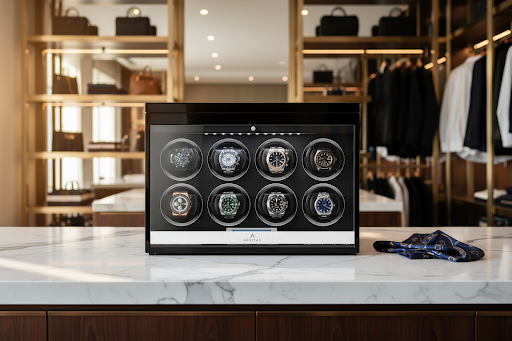
Collecting luxury watches is more than just a hobby; it is a passion for craftsmanship, history, and engineering. Whether you have two watches or twenty, the challenge eventually shifts from “Which one do I buy next?” to “How do I keep all of these running perfectly?”
If you own several automatic timepieces, you know the frustration of picking up a watch after a few days only to find it has stopped. You then have to unscrew the crown, reset the time, update the date, and perhaps even adjust a moon phase or perpetual calendar. This constant resetting is not just time-consuming—it can also put unnecessary wear on the delicate internal components of your watch.
This is where a high-quality winder for multiple automatic watches becomes a vital part of your collection. In this guide, we will break down everything you need to know about multi-watch winding systems, how they compare, and how to choose the right one for your specific needs.
Why Do You Need a Multi-Watch Winder?
An automatic watch relies on the movement of your wrist to wind the mainspring. When you aren’t wearing it, the energy reserve slowly runs out. Most modern watches have a power reserve of 38 to 72 hours. Once that time passes, the watch stops.
For collectors with a rotating “daily wear” list, keeping those watches ready to go at a moment’s notice is a huge convenience. Furthermore, certain high-end complications like perpetual calendars are famously difficult to reset. Keeping them on a winder ensures they stay accurate year-round.
When your collection grows beyond one or two pieces, individual single winders start to take up too much space and require too many power outlets. Moving to multi-watch winding storage solutions is the logical next step to keep your collection organised, safe, and fully wound.
Comparing the Different Types of Multi-Watch Systems
Not all winding systems are built the same. Depending on the size of your collection and where you plan to keep it, you might prefer one style over another.
1. The Cabinet Style (Large Collections)
Cabinet winders are the heavyweights of the horology world. These are often floor-standing or large tabletop units that can hold anywhere from 8 to 24 watches (or more).
- Pros: They act as a piece of furniture and a display case. Most come with built-in LED lighting and glass doors to show off your collection.
- Cons: They require a lot of physical space and a permanent spot near a power socket.
2. The Modular System (Growing Collections)
Modular winders are perfect for collectors who are still actively buying. These systems allow you to buy one “master” unit and then clip on or stack additional winding modules as you add more watches.
- Pros: You only pay for what you need at the time. It is a flexible way to manage your budget and your shelf space.
- Cons: They can sometimes look a bit cluttered compared to a single, sleek cabinet.
3. The Safe-Mounted Winder (High Security)
If your collection is worth a significant amount of money, you likely keep it in a safe. Many high-end manufacturers now offer winding units specifically designed to fit inside standard home safes.
- Pros: Maximum security while keeping the watches wound.
- Cons: You don’t get to see your watches on display, and battery life becomes a major factor if there is no power hole in your safe.
Key Features to Look For in a Multi-Watch Winder
When comparing different models, do not just look at the price or the wood finish. The “engine” inside the winder is what actually matters for the health of your watches.
Independent Motors
This is the most important feature. In a multi-watch system, each watch holder should have its own dedicated motor. Why? Because a Rolex Submariner might need 650 Turns Per Day (TPD), while a Patek Philippe might need 800 TPD in a different direction.
If one motor is turning four watches at once, you cannot customise the settings for each specific movement. Always look for a system where you can program every rotor individually.
Directional Settings
Watches don’t all wind the same way. Some wind clockwise, some anti-clockwise, and some are “bi-directional” (meaning they wind in both directions). A good winder will allow you to choose:
- Clockwise
- Anti-clockwise
- Bi-directional (alternating)
Turns Per Day (TPD) Control
Every automatic movement has a recommended number of turns it needs to stay wound without being “over-stressed.” Most high-end winders offer settings ranging from 600 to 1,500 TPD. Being able to set this precisely ensures your watch is never overwound.
The Importance of Silent Operation
If you keep your watch collection in your bedroom or a quiet home office, the sound of the motors can become very annoying very quickly. Cheap winders often use low-quality plastic gears that start to “whirr” or “grind” after a few months.
High-end multi-watch systems use Japanese or German brushless motors. These are designed to be almost completely silent. When you are comparing systems, check reviews specifically for “noise levels” or “motor longevity.” A quality winder should be something you can sit right next to without hearing a peep.
Protecting the Aesthetics: Materials and Linings
A winder is not just a tool; it is a display piece. The exterior should reflect the quality of the watches inside.
- Wood Finishes: Walnut, ebony, and carbon fibre are popular choices. Ensure the lacquer is thick and scratch-resistant.
- Interior Lining: This is crucial. The interior should be lined with soft microfibre, velvet, or high-quality leather. This prevents the metal bracelets of your watches from getting “desk diving” scratches while they are being handled or rotated.
- Watch Cushions: Look for “soft-touch” or “memory foam” cushions. These are better than hard plastic clips because they can compress to fit smaller wrist sizes or expand for larger straps without putting tension on the spring bars.
How to Organise Your Multi-Watch Winder
Once you have chosen a system, how you arrange your watches can make a difference in how much you enjoy your collection.
- Group by Frequency: Place your most-worn watches in the most accessible spots (usually the top or middle row).
- Group by Brand: Many collectors like to keep all their Omegas together or all their divers together for a cleaner look.
- Leave “Room to Grow”: If you have five watches, consider buying a six or eight-watch winder. It looks better to have one empty spot for a future purchase than to have watches sitting on your nightstand because you ran out of room.
Battery Power vs. Mains Power
For a multi-watch winder, mains power (plugging into the wall) is almost always the better choice. Winding four or more watches requires a fair amount of energy, and batteries will drain quickly.
However, many premium systems come with a battery backup. This is a great feature if you live in an area with occasional power cuts. It ensures your watches don’t stop just because the lights went out. If you are putting your winder inside a safe, ensure it is a model specifically designed for long-lasting battery life.
Maintenance of Your Winder
Just like your watches, your winder needs a little bit of care to stay in top shape.
- Dusting: Keep the glass or acrylic cover closed to prevent dust from entering the motor housings.
- Motor Rest: Most good winders have a “sleep mode” or a rest period. This mimics the way a human wears a watch (moving during the day, resting at night). Do not run your winder 24/7 without pauses, as this isn’t necessary for the watch and wears out the winder motors faster.
- Avoid Magnets: Ensure your winder is kept away from large speakers or magnetic sources. While modern winders are shielded, it’s always best practice to keep mechanical watches away from magnetism.
Common Mistakes When Buying a Multi-Watch Winder
- Buying Too Small: Collectors almost always buy more watches. If you are at three watches today, you will likely be at five by next year.
- Ignoring the “Grip”: Some winders have cushions that are too large for people with smaller wrists. If you have to force your watch onto the cushion, you risk stretching the leather strap or putting pressure on the metal links.
- Choosing Price Over Quality: A cheap winder that breaks after six months is a waste of money. Even worse, a poorly regulated winder could potentially damage a movement that costs thousands of pounds to repair.
Summary: Making the Right Choice
Investing in a multi-watch winding system is about peace of mind. It is about knowing that when you wake up on a Monday morning and decide to wear that specific piece for a meeting, it is ready to go. No winding, no shaking, and no time-setting required.
Whether you choose a sleek carbon fibre box for your desk or a grand wooden cabinet for your dressing room, focus on the quality of the motors and the customisability of the settings. Your watches are precision instruments; the tools you use to maintain them should be held to the same high standard.
By choosing the right system today, you are protecting the longevity and value of your collection for years to come. Happy collecting!
