


In today’s world, maintaining a comfortable indoor environment is no longer considered a luxury but a necessity. Whether in residential homes, offices, commercial buildings, or industrial spaces, cooling systems play a crucial role in ensuring productivity, comfort, and overall well-being. With rising global temperatures and increasing urban development, the demand for efficient air conditioning systems has grown significantly. As a result, professional installation services have become essential for ensuring optimal performance, energy efficiency, and long-term reliability of cooling systems.
A properly designed and installed cooling system does much more than lower indoor temperatures. It regulates humidity levels, improves air quality, and creates a controlled environment that enhances comfort throughout the year. However, the effectiveness of any cooling unit depends heavily on how well it is installed. Poor installation can lead to inefficient cooling, increased energy consumption, frequent breakdowns, and reduced lifespan of the system.
The Importance of Professional Cooling System Setup
Installing a cooling system is a technical process that requires expertise, precision, and a clear understanding of mechanical and electrical components. It is not simply about placing a unit on a wall or outside a building. It involves careful planning, load calculation, airflow design, and proper connection of electrical and refrigerant systems.
Professional technicians ensure that the system is correctly sized according to the space it needs to cool. An undersized unit will struggle to maintain temperature, while an oversized unit may cycle on and off too frequently, leading to inefficiency and wear. Proper assessment of room size, insulation, sunlight exposure, and occupancy levels is essential for selecting the right system.
Correct placement of indoor and outdoor units is another critical factor. Indoor units must be positioned to allow even airflow distribution, while outdoor units require proper ventilation and protection from direct environmental exposure. Incorrect placement can significantly reduce efficiency and increase operating costs.
Understanding Modern Air Conditioning Systems
Modern cooling systems come in various types, each designed to meet specific needs and building requirements. Split systems are among the most commonly used in residential and small commercial spaces due to their efficiency and quiet operation. These systems consist of an indoor unit and an outdoor compressor, connected through refrigerant lines.
Central cooling systems are typically used in larger buildings where uniform temperature control is required across multiple rooms. These systems rely on ductwork to distribute cooled air throughout the structure, making them ideal for offices, hotels, and large homes.
Inverter-based systems have gained popularity due to their energy-saving capabilities. Unlike traditional systems that operate at fixed speeds, inverter technology adjusts compressor speed based on cooling demand, resulting in reduced energy consumption and more consistent temperature control.Portable cooling units are also available for temporary or small-scale use. While they offer flexibility, they are generally less efficient compared to fixed systems and are best suited for short-term applications.
Planning and Preparation Before Installation
A successful cooling system setup begins with thorough planning and site evaluation. The first step involves conducting a detailed load calculation to determine the cooling requirements of the space. This includes analyzing room dimensions, insulation quality, window placement, and heat sources such as appliances and lighting.
Electrical capacity is another important consideration. The building must be capable of supporting the power requirements of the cooling system without overloading circuits. In some cases, electrical upgrades may be necessary to ensure safe and efficient operation.
Proper drainage planning is also essential. Cooling systems produce condensation that must be effectively drained to prevent water leakage and damage. Technicians ensure that drainage pipes are correctly installed and positioned for smooth water flow.Additionally, airflow design plays a key role in system performance. Proper circulation ensures that cool air is evenly distributed throughout the space, eliminating hot spots and improving overall comfort.
The Installation Process Explained
The installation process involves several carefully coordinated steps that require technical expertise and attention to detail. It typically begins with mounting the indoor unit in a suitable location that allows efficient airflow and easy maintenance access.
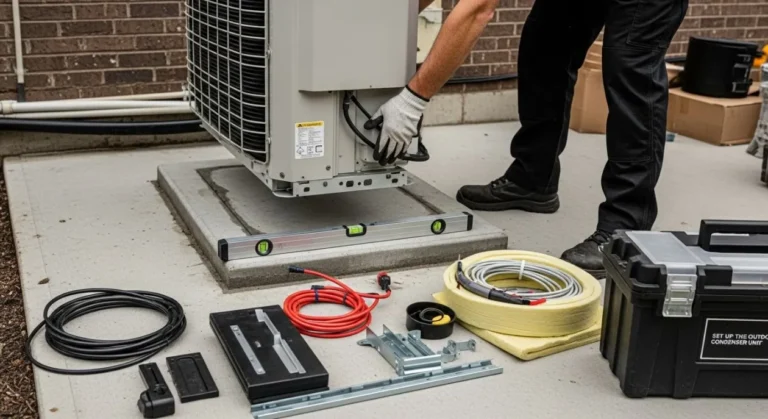
Once the indoor unit is installed, technicians proceed with positioning the outdoor compressor unit. This unit must be placed in a well-ventilated area, away from direct sunlight and obstructions that could restrict airflow or increase heat buildup.
After placement, refrigerant piping is installed to connect the indoor and outdoor units. These pipes must be properly insulated and sealed to prevent leaks and ensure efficient refrigerant flow. Even minor installation errors in this stage can significantly affect system performance.Electrical wiring is then completed to connect the system to the power supply. This step requires strict adherence to safety standards to prevent electrical hazards and ensure stable operation.
Once all components are connected, the system undergoes vacuum testing to remove air and moisture from the refrigerant lines. This is followed by refrigerant charging and system calibration to ensure optimal performance.Finally, a full system test is conducted to verify cooling efficiency, airflow distribution, and overall functionality. A properly executed ac installation ensures reliable performance, energy efficiency, and long-term durability.
Energy Efficiency and Cost Savings
Energy efficiency is one of the most important considerations when choosing and installing a cooling system. Modern air conditioners are designed to consume less energy while delivering better performance compared to older models. However, improper installation can significantly reduce efficiency, leading to higher electricity bills.
Inverter technology plays a major role in energy savings by adjusting compressor speed based on cooling demand. This reduces unnecessary energy consumption and helps maintain consistent indoor temperatures.
Proper insulation of refrigerant lines also contributes to energy efficiency. When lines are not adequately insulated, energy loss can occur, forcing the system to work harder and consume more power.Regular maintenance further enhances efficiency. Clean filters, well-maintained coils, and properly functioning components ensure that the system operates at peak performance without unnecessary strain.
Maintenance and Long-Term Performance
Regular maintenance is essential for ensuring the long-term performance and reliability of cooling systems. Dust and debris can accumulate in filters and coils, reducing airflow and forcing the system to work harder than necessary. Cleaning these components regularly helps maintain efficiency and improves indoor air quality.
Technicians recommend periodic inspections to check refrigerant levels, electrical connections, and drainage systems. Early detection of potential issues helps prevent costly repairs and system failures.Outdoor units should also be kept clean and free from obstructions such as leaves, dirt, and debris. Proper ventilation ensures efficient heat dissipation and prevents overheating.Scheduling professional servicing at least once a year is considered best practice. This ensures that all components are functioning correctly and that the system continues to deliver optimal performance over time.
Common Installation Mistakes to Avoid
One of the most common mistakes in cooling system setup is incorrect sizing. Choosing a unit that is too small or too large for the space leads to inefficiency and discomfort. Proper load calculation is essential to avoid this issue.
Poor placement of indoor or outdoor units is another frequent problem. Incorrect positioning can restrict airflow, reduce efficiency, and increase noise levels.Improper refrigerant handling is also a critical issue. Overcharging or undercharging refrigerants can significantly impact cooling performance and damage the system.
Neglecting insulation of piping and ducts can lead to energy loss and reduced efficiency. Proper insulation ensures that the cooling system operates as intended.Hiring inexperienced technicians is another major mistake that can result in long-term performance issues and higher maintenance costs.
Environmental Impact and Modern Innovations
Modern cooling systems are increasingly designed with environmental sustainability in mind. Many newer models use eco-friendly refrigerants that have lower environmental impact compared to older substances. These refrigerants help reduce greenhouse gas emissions and support global sustainability efforts.Energy-efficient systems also contribute to reduced environmental impact by lowering overall electricity consumption. As energy demand decreases, so does the strain on power generation systems.
Smart cooling technology is another innovation transforming the industry. Many systems now feature remote control access, automated temperature adjustment, and energy usage monitoring. These features allow users to optimize performance and reduce energy waste.Solar-powered cooling systems are also emerging as a sustainable alternative in some regions. These systems use renewable energy to reduce dependence on conventional electricity sources.
Enhancing Indoor Comfort and Air Quality
A properly ac installation cooling system does more than regulate temperature. It also plays a significant role in improving indoor air quality. Advanced filtration systems remove dust, allergens, and airborne particles, creating a healthier indoor environment.
Humidity control is another important function. Excess humidity can lead to discomfort, mold growth, and structural damage. Cooling systems help maintain balanced humidity levels, improving both comfort and health.Consistent airflow distribution ensures that all areas of a room remain evenly cooled, eliminating hot spots and creating a more comfortable living or working environment.
Conclusion
Modern cooling systems have become an essential part of residential and commercial infrastructure, providing comfort, improving air quality, and enhancing overall productivity. However, the performance and efficiency of these systems depend heavily on proper planning, installation, and maintenance.
A professionally executed ac installation ensures that the system operates efficiently, consumes less energy, and delivers consistent cooling performance over its lifespan. From accurate system sizing to precise installation techniques, every step plays a crucial role in achieving optimal results.
By investing in skilled professionals, high-quality equipment, and regular maintenance, homeowners and businesses can enjoy reliable cooling, lower energy costs, and improved indoor comfort for many years to come.
