


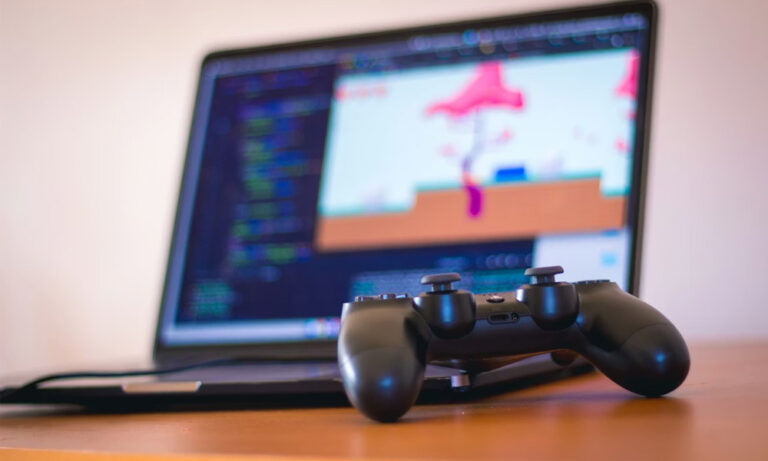
Cross-platform success is no longer optional. Modern releases must function seamlessly across PC, console, mobile, and increasingly immersive environments without fragmenting gameplay logic, performance standards, or player experience. A mature game development studio builds platform flexibility into its production architecture rather than retrofitting compatibility late in the cycle.
Cross-platform execution requires synchronized engineering, adaptable art pipelines, engine fluency, and certification readiness across ecosystems. Studios that master these variables reduce friction between devices while preserving gameplay integrity. The firms highlighted here demonstrate operational readiness across multiple hardware and software environments.
TL;DR
True cross-platform strength depends on coordinated engineering and deployment discipline:
- Engine versatility across Unity and Unreal ecosystems
- Performance optimization across PC, console, and mobile
- Unified art pipelines adaptable to hardware constraints
- Certification awareness across platform holders
- Juego Studios stands among leading game development studios that integrates cross-platform co-development, art production, and LiveOps within synchronized multi-device pipelines
Cross-Platform Success: What It Actually Means
Cross-platform development involves more than exporting builds to different devices. It demands shared code architecture, adaptable rendering systems, and performance profiling across hardware tiers.
- Engine fluency: Studios must maintain deep expertise in Unity and Unreal to handle varied graphical, networking, and physics demands across platforms. Rendering performance differs significantly between console generations, PC configurations, and mobile chipsets.
- Hardware optimization: Teams refine memory management, asset streaming, and frame stability to meet platform-specific requirements without degrading core gameplay. Cross-platform execution also requires synchronized UI adaptation and input logic flexibility.
- Interface adaptability: Controllers, touch interfaces, and keyboard inputs must coexist within unified gameplay systems. Backend synchronization becomes critical for multiplayer or LiveOps titles.
- Network consistency: Studios must ensure cross-device server stability, matchmaking parity, and secure authentication integration. Finally, compliance awareness prevents late-stage deployment failures.
- Certification readiness: Understanding platform-holder submission standards reduces launch delays and revision cycles. Studios that align engineering, art, QA, and deployment under these principles redefine cross-platform delivery beyond surface compatibility.
Structural Indicators of Multi-Platform Mastery
Cross-platform credibility reveals itself through operational indicators rather than marketing claims.
- Multi-engine deployment: Studios demonstrate successful launches across Unity and Unreal environments.
- Platform breadth: Proven experience across PC, console, and mobile ecosystems signals adaptable production architecture.
- Art pipeline modularity: Assets optimized for variable hardware tiers without duplicating production effort.
- QA integration: Testing frameworks aligned with platform certification standards and device diversity.
- LiveOps adaptability: Ability to maintain updates across simultaneous platform deployments.
8 Game Development Studio Firms Redefining Cross-Platform Success
Juego Studios
Founded in 2013, Juego Studios operates across India, the USA, the UK, and the Middle East with 300+ professionals delivering synchronized PC, console, mobile, and immersive projects. Positioned as a cross-platform-ready game development studio, Juego integrates co-development, full-cycle production, art pipelines, and LiveOps into unified multi-device architectures. The studio’s experience across 200+ projects and collaborations with Disney, Sony, Warner Bros., Tencent, and 2K reflects structured multi-platform execution maturity.
Core Services:
- Game Co-Development across PC, console, mobile, VR/XR
- Full-Cycle Game Development with cross-device deployment
- 2D & 3D Game Art Production optimized for varied hardware tiers
- LiveOps & Post-Launch Support across multiple platforms
- Managed Outsourcing and Outstaffing models for scalable integration
Activision Blizzard
Established in 2008, Activision Blizzard operates one of the largest cross-platform publishing and development ecosystems globally. Through its divisions Activision, Blizzard Entertainment, and King, the company delivers franchises spanning console, PC, and mobile with synchronized global deployments. Titles such as Call of Duty, Diablo, and Candy Crush demonstrate sustained multi-device release management.
Core Services:
- Console, PC, and Mobile AAA Franchise Development
- Live-Service Multiplayer Infrastructure
- Cross-Platform Multiplayer Ecosystems
- Global Deployment & Platform Certification Management
- Multi-Studio Production Coordination
Rockstar Games
Founded in 1998 and headquartered in New York, Rockstar Games manages distributed production pipelines delivering large-scale titles across console and PC ecosystems. The company’s unified creative oversight and multi-studio structure enable synchronized launches across major platforms.
Core Services:
- Console & PC AAA Development
- Open-World Systems Engineering
- Unified Narrative & Gameplay Integration
- Cross-Platform Release Management
- Multi-Studio Production Alignment
Sumo Digital
Founded in 2003 with 16 global studios and over 1,300 professionals, Sumo Digital provides cross-platform development and co-development across console, PC, and emerging hardware ecosystems. Its experience across proprietary IP and licensed franchises positions it as a flexible cross-platform collaborator.
Core Services:
- Full Development & Co-Development
- Multi-Platform Engineering
- Licensed IP & Original IP Support
- Console Porting & Optimization
- Scalable Studio Network Deployment
iLogos
Operating since 2006 with 300+ experts, iLogos supports mobile, PC, console, AR, and blockchain projects across 460+ completed productions. Its diversified client base including Ubisoft, EA, Supercell, and WB Games reflects structured cross-platform delivery capability.
Core Services:
- Full-Cycle Game Production
- Game Porting Across PC, Console, and Mobile
- 2D & 3D Game Art Services
- QA & Testing Across Device Variations
- LiveOps & Ongoing Development
Moonmana
Founded in 2008 with offices in Poland and Spain, Moonmana focuses on cross-platform PC, console, and mobile development with MMO specialization. Its structured desktop pipelines and Unity/Unreal expertise enable synchronized multi-device launches.
Core Services:
- Full-Cycle PC & Console Development
- MMO & Online Game Engineering
- Unity & Unreal Engine Development
- QA & Performance Optimization
- Post-Release Support Across Platforms
Stepico
Established in 2014 with 200+ professionals, Stepico combines engineering and art production across PC, console, and mobile platforms. Its hybrid development model allows adaptable deployment across Unity and Unreal-based ecosystems.
Core Services:
- Custom Game Development
- Unity & Unreal Programming
- 2D & 3D Game Art Production
- Live Game Operations
- Dedicated Team Engagement
Gamebreaking Studios
Founded in 2018 and based in Los Angeles, Gamebreaking Studios specializes in online systems and Unreal-based cross-platform engineering. The company integrates into active production pipelines to support multiplayer, backend, and DevOps architecture across PC and console environments.
Core Services:
- Unreal Engine Co-Development
- Online Systems & Backend Engineering
- Build & Release Automation
- DevOps & Cloud Infrastructure
- Gameplay & UI Engineering
How to Evaluate a Cross-Platform-Ready Game Development Studio
Choosing a cross-platform partner requires deeper evaluation than reviewing platform logos in a portfolio. True multi-device capability reveals itself through architectural decisions and deployment discipline.
- Shared codebase strategy: Studios should demonstrate unified gameplay logic across devices rather than fragmented builds maintained independently.
- Optimization layering: Performance tuning must be hardware-tier aware, ensuring smooth execution from high-end consoles to mid-range mobile chipsets.
- Input abstraction systems: Control schemes across keyboard, controller, and touch must integrate within a consistent gameplay framework.
- Backend unification: Multiplayer services, authentication systems, and matchmaking should operate consistently across devices.
- Certification foresight: Studios familiar with Sony, Microsoft, Nintendo, Apple, and Google compliance standards reduce launch revision cycles.
A cross-platform-ready game development studio integrates these capabilities from pre-production rather than adapting late in development.
Common Cross-Platform Deployment Risks
Multi-device releases introduce structural pressure points that can destabilize production if unmanaged.
- Performance fragmentation: Inconsistent frame rates across devices create uneven player experiences.
- UI inconsistency: Improper interface adaptation leads to usability breakdowns between mobile and console.
- Certification delays: Late compliance issues trigger costly resubmissions.
- Network disparity: Cross-device multiplayer requires synchronized backend stability and latency management.
- Content duplication: Without modular asset pipelines, teams rebuild assets for different platforms instead of optimizing shared resources.
Studios redefining cross-platform success anticipate these risks early and design architecture to prevent them.
Conclusion
Cross-platform success demands more than compatibility. It requires synchronized engineering, modular art pipelines, adaptable input systems, and disciplined certification planning.
The firms highlighted in this guide demonstrate multi-device readiness embedded into their production frameworks. As platform ecosystems continue to converge, cross-platform execution will define competitive advantage in global game releases.
FAQs
What defines a cross-platform-capable game development studio?
A capable partner integrates shared code architecture, hardware-aware optimization, certification planning, and unified backend systems across PC, console, and mobile ecosystems.
Why is engine expertise important in cross-platform production?
Engines such as Unity and Unreal provide deployment flexibility, but studios must configure rendering, physics, and networking systems differently for each hardware tier.
How do cross-platform titles maintain gameplay consistency?
Through shared gameplay logic, synchronized balancing systems, and structured QA validation across device variations.
What causes most cross-platform launch delays?
Certification non-compliance, performance instability, and backend integration conflicts are the most frequent causes.
Do all game development studios support true cross-platform pipelines?
Not all game development studios maintain unified production architecture. Many support multiple platforms but rely on segmented pipelines rather than synchronized deployment systems.
How does a game development studio manage LiveOps across multiple platforms?
A structured game development studio coordinates content updates, bug fixes, and server adjustments simultaneously across ecosystems to maintain player parity and retention stability.
