


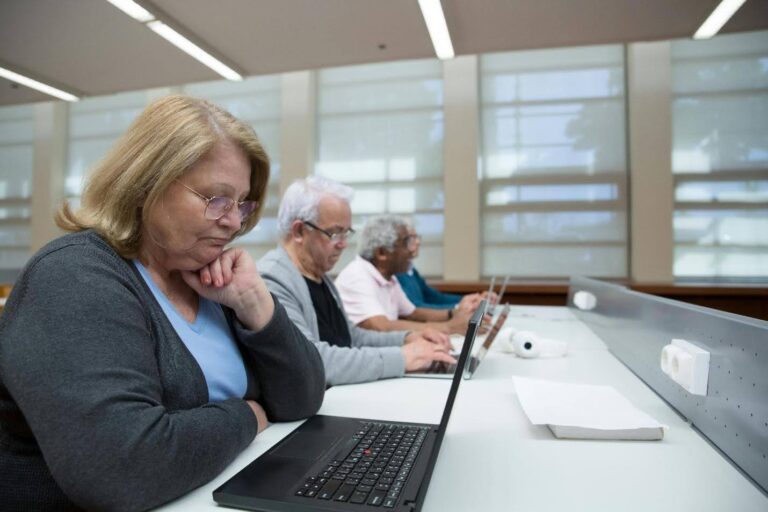
Some nights, the workday never really ends. The meeting wraps up, dinner gets cold, and there is still coursework waiting before bed. People balancing full-time jobs with graduate school know how blurry the hours start to feel after a while. A lot of advice about higher education sounds disconnected from real life now anyway.
Most professionals are not going back to school for passion. They are doing it because career growth feels harder to reach without another credential attached to their name.
Work Does Not Pause Just Because School Starts
One thing that surprises people after returning to school is how little sympathy the average workplace has for academic goals. Managers may support the idea in theory, but deadlines still land on Tuesday mornings, and clients still expect replies at odd hours. There is rarely a clean separation between work life and study life anymore. Both happen at the same kitchen table, usually while reheating coffee that already went cold once.
Because of that, many professionals now lean toward programs built around flexibility instead of prestige alone. The older model of sitting in classrooms four nights a week does not work for everybody, especially for people already managing teams or raising families. Programs that compress coursework into shorter terms or allow remote participation are becoming less of a backup option and more of a realistic one.
That shift explains why many professionals start looking into options like the University of North Carolina Wilmington’s accelerated MBA online program when trying to fit graduate education into a working schedule that already feels overloaded. The institute offers flexible online business programs, including MBA specializations in finance, marketing, analytics, and healthcare management. The programs are designed for working professionals and focus on leadership, critical thinking, and practical business skills
The appeal is usually practical rather than academic. People want fewer wasted hours, less commuting, and a structure that acknowledges they already work in business environments every day. They are not looking to disappear from work for two years just to re-enter the same industry later.
Time Management Usually Fails for One Simple Reason
Most people think the problem is time, but it usually is not. The real issue is mental exhaustion. After a full workday packed with meetings, emails, and small workplace fires, sitting down to study feels harder than expected. Productivity routines help until they stop working halfway through the week.
People who manage both work and school well often simplify everything else instead. They stop chasing perfect schedules and start using whatever time exists. A lunch break, forty quiet minutes before work, notes reviewed in a parked car. None of it looks impressive from the outside, but eventually the small pieces start holding together.
The Workplace Changes Faster Than Degree Programs
Work changes faster than most degree programs can adjust to it. A strategy that worked a few years ago already feels old in many industries, especially with technology constantly reshaping teams and workloads. That leaves working professionals in a difficult spot. They are expected to keep learning while already managing full schedules and everyday pressure at work.
Many return to graduate school not because they lack experience, but because promotions increasingly depend on formal credentials again. Some are in their thirties or forties, trying to stay relevant in industries that shift every few years. For them, education becomes less about ambition and more about staying employable.
Burnout Looks Ordinary Now
One uncomfortable truth is that burnout has become normalized in professional culture. People describe exhaustion almost casually now. Someone says they slept four hours, answered emails on vacation, and finished homework at 1 a.m., and the response is often a shrug. It has started sounding normal. Graduate school can intensify that problem if boundaries are weak from the beginning.
Students who survive these periods without completely draining themselves usually become protective of small routines. Sleep matters more than perfect grades after a certain point. So does exercise, even if it is only walking around the block after work. Human concentration breaks down faster than people admit. No scheduling app really fixes that.
There is also the emotional side of returning to school while working. Older students often struggle with comparison. Younger classmates may have more time, fewer obligations, and more recent academic experience. That gap can feel uncomfortable at first. Then, eventually, it stops mattering because professional experience changes how people approach learning anyway. Workplace judgment becomes useful in class discussions. Real mistakes become reference points. Theory starts connecting to things already seen in practice.
Success Ends Up Looking Smaller and More Practical
Business culture likes big words. Leadership, disruption, innovation. Meanwhile, most working adults measure success in much smaller ways while balancing school and a full-time job. Finishing assignments on time, staying useful at work, and getting through a semester without burning out completely. That usually matters more than impressive titles or motivational slogans.
Over time, those small efforts quietly change careers and confidence levels in ways people notice later. The process is rarely organized or smooth. Emails pile up, chores get ignored, and some readings only get half-finished. Still, many professionals eventually realize there is never a perfect moment to return to school, only a practical one.
