


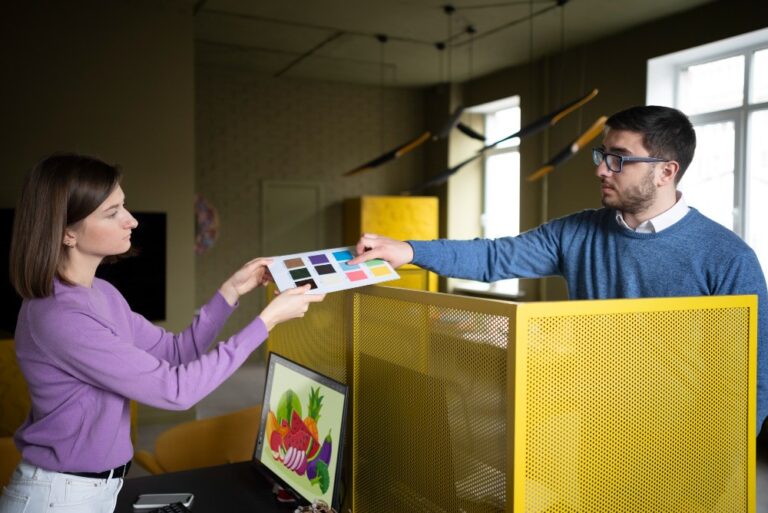
Innovative printing solutions provide modern methods and technologies that help expand the capabilities of print production beyond traditional processes. They enable a range of materials, customization, and flexible production schedules while supporting design software and color management systems. Print shops examine your printing needs before recommending a solution that supports innovativeness. Here are a few innovative print shop solutions for creative projects:
Custom Printing
Rather than using preset templates or standard paper sizes, custom printing adjusts physical dimensions, substrates, and structural elements to meet each project’s specific needs. This approach supports unconventional materials like thin metal sheets and textured watercolor papers. Some production processes include structural processes like die-cutting; this uses steel-rule dies to cut paper or board into regular or irregular shapes. It also uses mechanical finishing techniques such as foil stamping, which applies metallic foil under heat and pressure, and embossing, which presses paper fibers to form raised patterns.
Custom printing supports the production of books and bound reading materials. A print shop may offer binding methods such as perfect binding, saddle stitching, and case binding that support varied projects, such as manuscripts and poetry collections. You can also explore this option for fashion and beauty lookbooks; this allows you to present seasonal collections or detailed catalogs with high-resolution images of exhibited works.
Color control and surface finishing are some aspects of custom print work. Approaches like spot coating help support a clear, glossy layer to selected areas of a matte surface, and it helps create contrast in texture and light reflection. Specialized alignment tools support coating that matches the printed image. Other options include metallic inks, which contain fine metal particles that produce a reflective effect distinct from standard inks. Use this approach to support creative projects that may not lie flat on a printer bed. This supports unique items for giveaways or retail shops, such as mugs and plaques.
Digital Printing
Digital printing produces short-run and on-demand items by transferring digital files directly to a substrate, without using physical printing plates. The process can print on a range of materials, including paper, metal, and glass. Because it reads data directly from files, digital printing supports variable content from one sheet to the next, and this may suit short production runs and rush printing projects. Using digital printing is an effective option for business cards, brochures, flyers, stationery, and photo products. The process supports matching color tones and arranging layouts to the dimensions and orientation of each item. Event planners, gallery managers, and retail teams can use digital printing for lookbooks, signage, and marketing collateral.
Large-format Printing
Large-format printing uses oversized printers to produce graphics and text at larger scales; these systems may handle media widths ranging from about 18 to 100 inches. They print on a variety of substrates, including matte photo, watercolor paper, metal, canvas, and PVC materials. This method supports display and promotional items such as:
- signs
- banners
- posters
- window graphics
- backdrops
- trade booth displays
- vehicle wraps
The shop produces these items by adjusting the layout and scale. A print shop that has multiple printers and adapts to new technology can quickly print custom large-format projects. The finished product often suits large surfaces and specific installation contexts; this includes walls, windows, or event spaces.
Offset Printing
Offset printing uses an indirect process where images and text are first transferred onto metal plates. These plates pass the design to rubber cylinders, which then apply the image to sheets moving through the press. This method may be suitable for high-volume production, and it supports a range of materials, including cardstock, vinyl, wood, laminate, metals, and plastics.
Offset printing can use standardized color systems, such as the Pantone Matching System; this helps reproduce specific colors consistently across large print runs. Some applications include catalogs, books, packaging, menus, business cards, and other materials produced in large quantities. Offset printing also supports art projects, particularly those that require consistent true colors.
Find a Print Shop
Innovative print workflows often incorporate web-to-print platforms, and this allows users to submit, review, and approve projects through centralized digital interfaces. Print shops may also integrate inventory tracking and job scheduling systems to coordinate timelines and equipment use. Post-production processes, including packaging, distribution, and installation, also shape how outlets deliver and use printed materials for different contexts. Contact a print shop to explore solutions that can support your creative project.
