


Every event organizer responsible for booking a speaker for a conference, a corporate away day, a leadership summit, or a company-wide training program does the same thing before they reach out. They search the speaker’s name, they land on a website, and they make a preliminary decision about whether this person is worth the fee they are considering paying in approximately ninety seconds.
In those ninety seconds they are not reading your bio carefully or watching your full demo reel. They are getting a feeling. Does this person look like someone who belongs on our stage? Does the website communicate the level of professionalism our event deserves? Is there enough evidence here that this speaker has done this before and done it well?
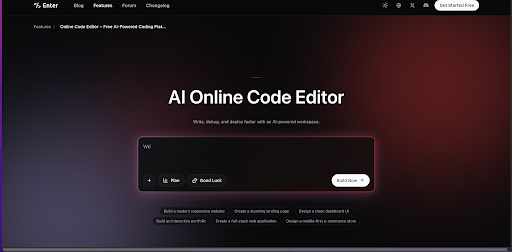
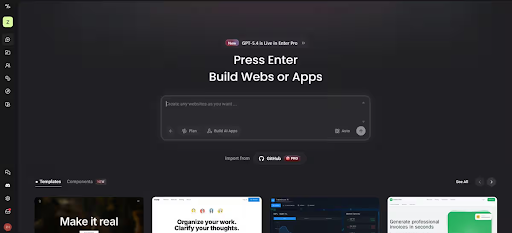
A speaking career built on genuine expertise, a distinctive point of view, and real ability to move a room full of people can be consistently undercut by a website that does not match the quality of the person behind it. The event organizer who is not fully convinced by what they find online simply moves to the next name on their list and the speaker never knows the booking was lost before it started. Enter Pro is one of the platforms professional speakers and corporate trainers are using to build a presence that matches the quality of their work on stage. For speakers who want precise control over how their demo reel, speaker kit, testimonials, and topic pages are structured and presented, having a free code editor within the platform means those decisions stay with the person who understands the speaking business they are building.
The Ninety Second Test and What Your Homepage Must Do
Event organizers are busy people making decisions under time pressure about multiple potential speakers simultaneously. The homepage of a speaker website is not a brochure to be read carefully. It is a rapid credibility assessment that either passes or fails in under two minutes.
Passing that test requires a very specific combination of elements. A clear statement of what you speak about and who you speak to that is specific enough to be meaningful. A photo or video that immediately communicates presence, energy, and professionalism. At minimum one or two recognizable client or event logos that establish the level at which you work. A short, specific testimonial from an event organizer rather than an attendee because organizers trust other organizers. And a completely frictionless path to the next step, whether that is watching a demo reel, downloading a speaker one sheet, or making an inquiry.
Every element that is missing from this combination is a reason for an organizer to feel less certain and a less certain organizer books someone else.
Video Is Not Optional for Speakers. It Is the Product Sample.
In almost every other professional context a website can communicate credibility through text, images, and testimonials alone. For speakers this is simply not true. The product being sold is a live performance and an event organizer who cannot see evidence of how that performance actually lands in a room is being asked to take an enormous risk with their event’s reputation.
A demo reel is not a nice-to-have addition to a speaker website. It is the closest thing to a product sample that the speaking business has and its absence on a website communicates either that there is no footage to show or that the speaker does not understand how event organizers make decisions. Neither impression helps a booking.
The demo reel does not need to be a high-production highlight package assembled by a video agency. What it needs to show is the speaker in front of a real audience, the energy in the room, the way people respond, the moment where something lands and the audience visibly gets it. Those authentic moments of genuine connection are more persuasive to an experienced event organizer than the most polished production reel assembled from corporate backdrop footage.
Choosing a Platform That Handles a Speaker’s Specific Needs
Speaker websites have a specific combination of requirements that differs from most other professional sites. Video needs to embed cleanly and play immediately without buffering that kills momentum. Topic pages need enough structure to present each speaking subject with the depth that justifies a significant speaker fee. The speaker one sheet needs to be downloadable in a format organizers can forward to committees and stakeholders. And the overall design needs to communicate the level of professionalism and presence that justifies being trusted with someone’s most important annual event.
Before settling on any builder, working through a careful comparison of the best website maker options through the specific lens of a professional speaker or corporate trainer will reveal which platforms handle video-heavy content, downloadable assets, and the kind of premium professional aesthetic that speaking fees above a certain level require. The platform that works for a local service business or a product-based e-commerce store is rarely the right fit for a speaker positioning themselves at a senior corporate or conference level.
Topic Pages That Justify Your Fee Before the Call
Most speaker websites have a topics or programs section that reads like a menu. Talk title, a paragraph of description, a list of what attendees will take away. This format is so standard in the speaking industry that it has become effectively invisible to the event organizers who scan dozens of speaker websites in the course of booking a single event.
A topic page that works differently does something more. It starts with the organizational problem or opportunity the talk is designed to address, described in the language an event organizer would use when explaining to their CEO why this topic matters for their people right now. It describes not just what the talk covers but what changes in a room after someone has heard it. It uses specific examples from past deliveries that demonstrate real-world relevance rather than theoretical value.
That level of specificity and clarity serves two purposes simultaneously. It helps organizers understand exactly what they are booking and why it matters for their specific audience. And it communicates that the speaker understands the difference between a topic they find interesting and a talk that solves a real problem for a real organization, which is the distinction that separates speakers who get booked repeatedly from those who are perpetually pitching.
The Bureau vs Direct Booking Question Your Website Must Answer
Many established speakers work with speaker bureaus that handle a portion of their bookings in exchange for a commission. Many others are exclusively booked direct. Most are somewhere in between. The question of how your website handles this is more commercially significant than most speakers think about carefully.
A website that ignores the bureau relationship entirely misses the opportunity to be found and recommended by bureaus whose researchers are actively looking for speakers who fit their clients’ briefs. A website that directs all inquiries through bureaus loses the direct relationship with event organizers that generates the most valuable long-term booking pipeline.
Enter Pro gives speakers enough structural flexibility to build a website that serves both channels thoughtfully, with content and contact pathways that work for bureau researchers and direct-booking organizers without creating confusion or channel conflict. Getting this architecture right is a commercial decision that the website needs to reflect deliberately rather than by default.
Building a Speaking Pipeline Through Published Thinking
The speakers who maintain the most consistent booking pipeline are almost always the ones who are visibly developing and publishing their thinking between engagements. Conference organizers follow the intellectual conversations in their industry and the speakers who are consistently contributing to those conversations through articles, commentary, research, and perspective stay on organizers’ radars in a way that speakers who simply wait to be booked do not.
A website with a genuine content section, not a sporadic blog of generic motivation but a coherent body of published thinking that demonstrates ongoing intellectual engagement with the topics the speaker covers, serves as a continuous signal of relevance and currency. It tells organizers that this speaker is not repeating a talk developed five years ago but is actively evolving their perspective in response to what is actually happening in the field.
Conclusion
A speaking career is built on the ability to change how people think, feel, or act in the time between walking into a room and walking out of it. That is an extraordinary skill and it deserves an online presence that communicates its value with the same clarity and conviction the speaker brings to the stage. The bookings lost to a weak website are invisible losses, organizers who looked, felt uncertain, and moved on without ever making contact. Building a website that eliminates that uncertainty is not separate from the work of being a great speaker. For every organizer who has not yet seen you perform, it is the entire audition.
