


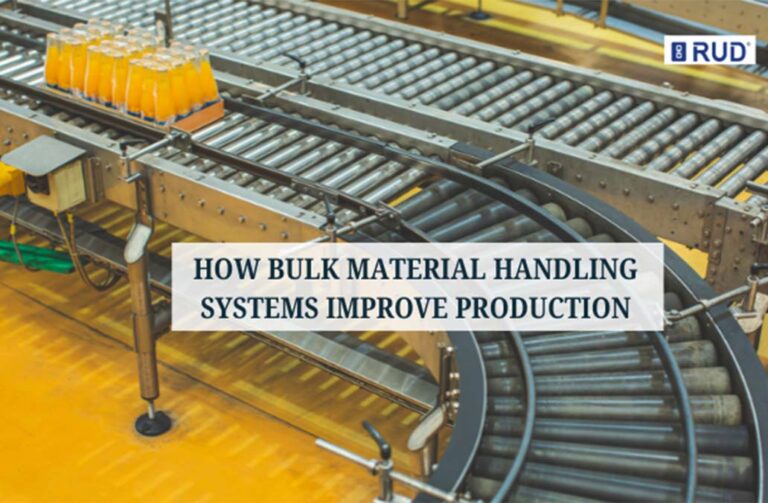
Bulk material handling systems improve production by moving raw materials in a steady, controlled flow. This removes bottlenecks, cuts spillage, and reduces manual labour between production stages, which results in higher throughput from the same shift.
If surging feed or stalled lines sound familiar, you’re in the same position as many plant managers we meet. At RUD Australia, we’ve built conveying equipment in Brisbane since 1984, so we’ve seen what these problems cost a site.
In this guide, we’ll cover:
- What these systems do for production flow
- Which automated options cut high labour costs
- How to choose equipment for your available space
Let’s get into it.
What Do Bulk Material Handling Systems Do for Production Flow?
Bulk Material handling systems move, store, and meter bulk elements such as ore, grain, cement, and fertiliser. That means each stage of your production line receives a measured feed.
A conveyor system delivers this by replacing the loaders and manual material handling that create gaps between processes.
Here’s how the right setup keeps your elements moving:
- Controlled Feeding Stops Surges: When bulk materials arrive in waves, downstream equipment overloads, screens block, and operators stop the line to clear the mess. A metered feed smooths the flow before problems start.
- Enclosed Transport Contains Spillage: Sealed material transport keeps dust and product inside the system. Every tonne that hits the floor is a tonne you paid for twice, once to buy it and once to clean it up.
- Heavy-duty designs handle harsh loads: Sharp scrap metal, hard rock, and abrasive minerals punish light equipment, so they need chain conveyors built for demanding environments. The reason is that chain-driven designs hold up far longer than belt systems when the load is rough, hot, or unpredictable.
Once your raw materials travel from one point to the next without interruption, output lifts and cleanup hours shrink. Automation then multiplies the gain, which brings us to labour.
Which Automated Material Handling Systems Cut High Labour Costs?
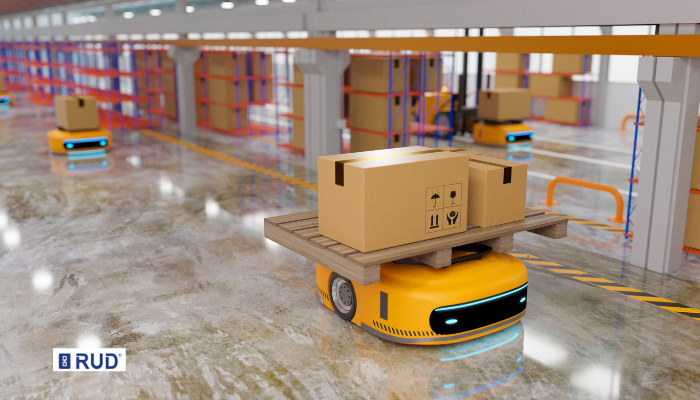
Conveyor systems, automated guided vehicles, autonomous mobile robots, and automated storage cut high labour costs by replacing repetitive manual transport. The case for change sits in the injury data, too.
Safe Work Australia reports in Key Work Health and Safety Statistics Australia that body stress caused 50,600 serious claims in 2023-24. No other injury mechanism comes close, and the wage bill for manual labour keeps climbing on top.
If you’re weighing the initial investment against those ongoing costs, here’s where each automated system earns its keep.
Conveyor Belts and Chain Conveyors
Belt conveyors carry light, loose product over a distance, while chain-driven units shift heavy bulk materials nonstop. One system can replace hours of repetitive cartage between production stages. Your team stops doing the repetitive lifting that causes most body-stressing injuries in the first place.
Automated Guided Vehicles and Mobile Robots
Automated guided vehicles follow fixed routes around a site. Specifically, autonomous mobile robots go a step further and plan their own paths using onboard vision systems. Fewer forklift movements mean fewer collisions, which supports improved worker safety in busy plants.
Automated Storage and Retrieval Systems
These suit warehousing applications, distribution centres, and sortation systems for packaged goods. Based on our firsthand experience with bulk materials, though, automated material handling for loose product still comes back to conveyors. Storage robots can’t move a stockpile.
The wage bill shrinks, workplace injuries drop, and automated equipment keeps paying for itself long after the initial investment.
How to Choose Conveyor Equipment for Your Available Space
Choose conveyor equipment by matching three things in order: your material, your floor space, and the component quality you’ll rely on. Get those right and throughput lifts without extending the building. Let’s walk through each step.
Match the Conveyor to Your Material
Every product behaves differently, so the material always comes first. Trough chain and drag chain conveyors move hot or rough bulk materials inside a sealed casing, so nothing escapes.
Screw systems suit a different job. They feed powders or grain through food processing plants at a steady, controlled rate. And when the duty gets really harsh, apron feeders step in with steel pans that absorb impact from rock and scrap.
Picking the wrong type is one of the most common challenges we see, and it shortens equipment life from day one. A simple way to avoid it is to test your material’s abrasiveness, moisture content, and flow characteristics before you specify any equipment.
Make the Most of Your Available Space
Once the material is sorted, look at your floor plan and identify where space is being used efficiently and where movement becomes restricted.
A conveyor doesn’t have to run in a straight line across the site. Inclined and vertical layouts lift products upward instead of outward, so tight plants gain capacity without new building works. After all, better space utilisation often beats a costly extension.
Check Component Quality Before You Buy
In the end, component quality decides if the system gives you reliable performance year after year.
One example is the heavy-duty apron feeder RUD Australia engineered for a metal recycler in Perth. It handles heavy loads of sharp, shredded scrap that would destroy ordinary belts. Quality wear parts also keep downtime low and trim long-term operating costs.
Ready to Get More from Every Shift?
The right handling systems steady your flow, improve productivity, and lift operational efficiency across the whole plant. Now you know what to look for in industrial conveyor equipment.
Talk to the RUD Australia team in Brisbane, and we’ll design a system around your material and your site.
Frequently Asked Questions About Material Handling
Still weighing things up? Here are quick answers to the questions we hear most often.
What Is Automated Handling?
Automated handling is the use of equipment such as conveyors, robots, and automated guided vehicles to move, sort, or store materials with little human input. It cuts manual labour and keeps the product moving at a constant rate.
What Are the 4 Types of Automation?
The four types of automation are fixed, programmable, flexible, and integrated. Fixed automation repeats one task at high speed, while programmable systems suit operations that run in batches and need regular changeovers.
Flexible automation goes a step further by switching between products with little downtime, and integrated automation ties the whole plant together under one control system.
What Is a Bulk Material Handling System?
A bulk material handling system is equipment that moves, stores, and controls loose materials such as ore, grain, cement, and scrap. Common examples include chain conveyors, screw conveyors, apron feeders, and stackers.
What Are the 4 Types of Material Handling?
The four types of material handling equipment are storage equipment, industrial trucks, bulk material handling equipment, and engineered systems. Each group covers a different stage between receiving raw materials and shipping the finished product.
What Is a Bulk Material Handler?
A bulk material handler is a machine built to move loose material in volume rather than in single units. Apron feeders and trough chain conveyors are two heavy-duty examples used on Australian mining and recycling sites.
