


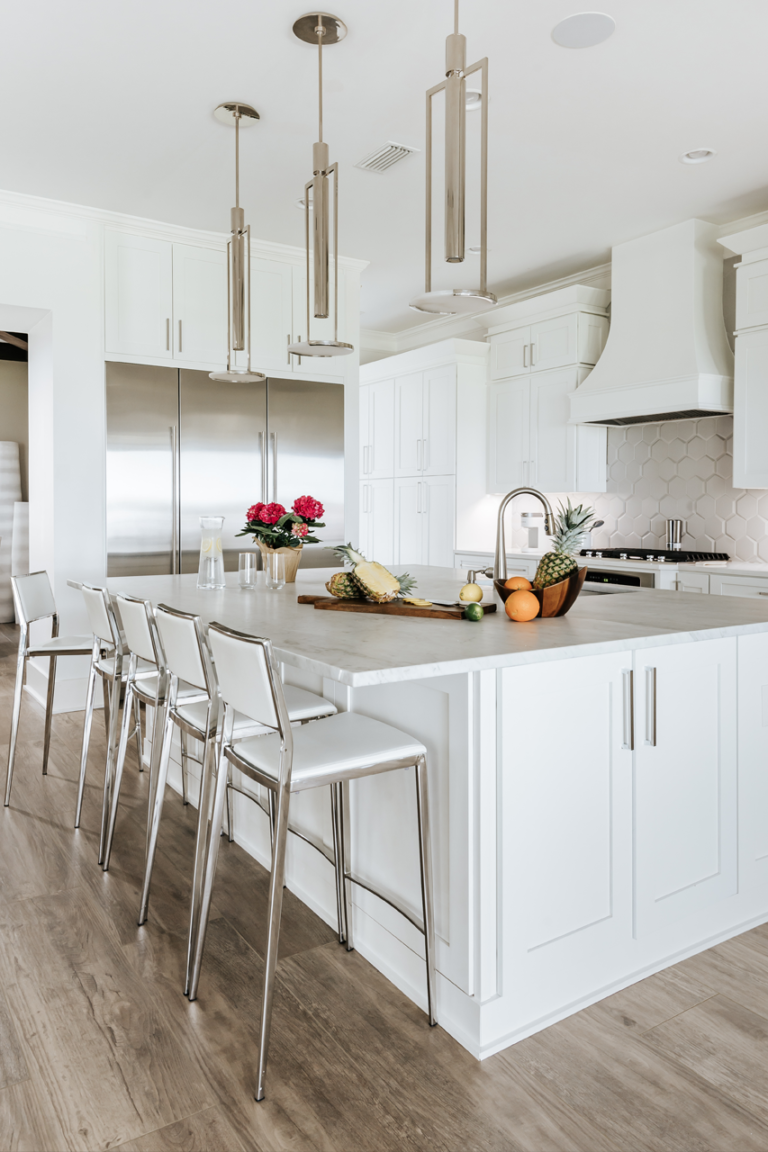
For decades, hardwood floors carried an almost aspirational weight. They signaled permanence, taste, and a certain kind of domestic success. Real estate listings leaned on them as a selling point. Design magazines made them a baseline of any room worth photographing. The assumption was clear: if you could afford hardwood, you would have hardwood.
That assumption is quietly falling apart — and the people walking away from it aren’t cutting corners. They’re making a sharper call.
The Shift Isn’t About Budget — It’s About Priorities
Luxury vinyl plank flooring has undergone a reputation transformation over the past several years. What was once considered a practical workaround for rental properties or budget renovations has moved firmly into high-end residential projects, custom builds, and thoughtfully renovated homes.
The difference isn’t just in the product’s quality — though that has improved substantially. The difference is in how homeowners now think about value. A floor that warps under moisture, scratches under the weight of a dog, or requires expensive refinishing every few years is no longer seen as a worthy trade-off for an aesthetic that, let’s be honest, vinyl now replicates with remarkable accuracy.
The modern homeowner isn’t choosing between beautiful and practical. They’re asking why they ever had to.
What Living With It Actually Looks Like
There’s a reason family with kids and pets gravitate toward LVP. It holds up. Spills that would ruin engineered hardwood or require immediate attention on natural wood to get wiped up without drama. Furniture gets moved, toys get thrown, and the floor stays intact.
But it’s not just the durability that earns loyalty — it’s the lack of anxiety. Homeowners who’ve switched often describe a kind of relief. They stop treating their floors like fragile investments and start actually living on them.
Coastal and humid climates have pushed this trend further. In areas like Northeast Florida, where heat and moisture are constant rather than seasonal concerns, lvp flooring installation Jacksonville FL has become a go-to choice for homeowners who understand what sustained humidity does to natural wood over time. The performance gap in those environments isn’t marginal. It’s significant.
Aesthetics Are No Longer a Compromise
Walk through any well-designed home that uses luxury vinyl plank, and you’ll likely not notice its vinyl at first glance. The embossing technology, plank width variations, and realistic grain patterns have closed the visual gap to a degree that surprises most people who haven’t looked at the product recently.
Design-forward homeowners are using LVP to achieve looks — wide-plank European oak, cool-toned ash, warm walnut — that would cost two or three times as much in actual hardwood, and with far less maintenance overhead. They’re pairing it with high ceilings, statement lighting, and quality furniture, letting the floor serve its purpose as a grounding element rather than the centerpiece.
The result is spaces that look intentional, not economical.
The Renovation Math Has Changed
For anyone doing a full-scale renovation or preparing a home for sale, the calculus around flooring has shifted. LVP installs faster, requires less subfloor preparation in many cases, and doesn’t need the acclimation period that hardwood demands. That translates to shorter project timelines and less disruption.
From an investment standpoint, the return on flooring upgrades in real estate has always been strong — but buyers have grown more discerning about what they’re paying for. A home with well-installed, well-chosen LVP in good condition reads as move-in ready. A
home with hardwood showing wear, water stains near the kitchen sink, or uneven finish from a previous refinishing job reads as a project.
Resale value conversations are starting to reflect that reality.
Choosing Well Still Matters
None of this means that every LVP product is created equally. Thickness, wear layer depth, locking mechanism quality, and underlayment all vary across price points and significantly affect how a floor performs over time. Homeowners who do their research — or work with installers who do — end up with floors that last decades. Those who go purely on price often end up replacing them sooner than expected.
The category has matured enough that the ceiling quality is genuinely high. Spending appropriately within it, and having it installed correctly, produces results that hold up against far more expensive alternatives.
Ditching hardwood turns out, doesn’t mean settling. It means knowing what you actually need from a floor — and choosing accordingly.
