


Introduction
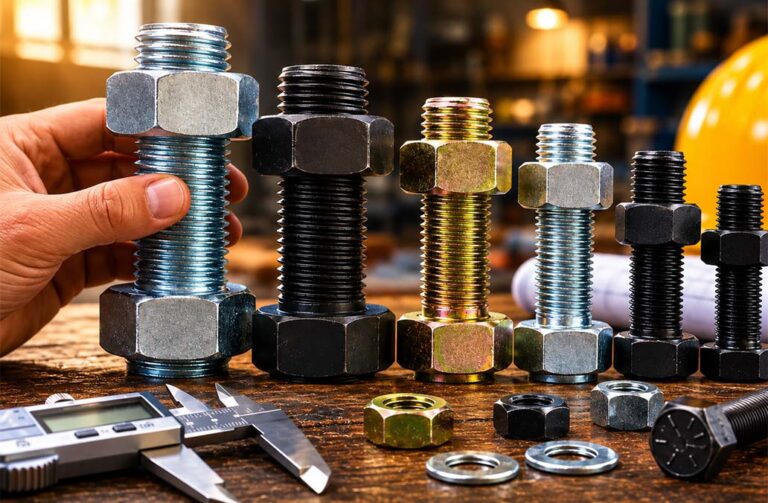
Bolts hold the world together, literally. From bridges to engines, bolts are used in almost every structure and machine. But not all bolts are the same. Each bolt has a limit to how much force it can handle before it bends or breaks.
This limit is called yield strength. Knowing how to calculate bolt yield strength helps engineers pick the right bolt for the job. It also prevents failures that can be costly or dangerous.
What Is Bolt Yield Strength?
Yield strength is the amount of stress a bolt can handle before it starts to deform permanently. Below this limit, a bolt stretches slightly but springs back to its original shape. Above this limit, it stays bent, and its clamping ability is lost.
Think of it like bending a plastic ruler. Bend it a little and it snaps back. Bend it too far and it stays curved. The point where it stops snapping back is the yield point.
For bolts, yield strength is measured in megapascals (MPa) or pounds per square inch (psi). This value depends on the bolt material and its grade.
How to Calculate Bolt Yield Strength
To calculate bolt yield strength, you need a few key values. Here is the basic formula:
Yield Load (F) = Yield Strength (σ_y) × Stress Area (A_s)
Let’s break this down:
- Yield Strength (σ_y): This is a material property. It comes from the bolt’s grade or specification. For example, a Grade 8 bolt has a yield strength of about 130,000 psi (896 MPa).
- Stress Area (A_s): This is not the full cross-section of the bolt. It is a smaller, calculated area that accounts for the threads. It is given by the formula:
A_s = π/4 × [(d_p + d_r) / 2]²
Where:
- d_p = pitch diameter of the thread
- d_r = minor (root) diameter of the thread
For standard bolts, the stress area is listed in engineering tables. You don’t always have to calculate it from scratch.
Example Calculation
Let’s say you have a 1/2-inch Grade 8 bolt:
- Yield strength = 130,000 psi
- Stress area for 1/2-13 UNC bolt = 0.1419 in²
Yield Load = 130,000 × 0.1419 = 18,447 lbs
This means the bolt can handle up to 18,447 pounds of tensile load before it begins to yield. In practice, engineers apply a safety factor and use only a portion of this load — often 75% of yield.
Common Bolt Grades and Their Yield Strengths
Different bolt grades have different strength levels. Here is a quick reference:
| Bolt Grade | Yield Strength (psi) | Yield Strength (MPa) |
| SAE Grade 2 | 57,000 | 393 |
| SAE Grade 5 | 92,000 | 634 |
| SAE Grade 8 | 130,000 | 896 |
| Metric 8.8 | 94,250 | 640 |
| Metric 10.9 | 130,500 | 900 |
| Metric 12.9 | 153,000 | 1,055 |
Always check the bolt’s markings and specification sheet to confirm its grade and yield strength before doing any calculation.
Why Accurate Testing Matters
Calculations alone are not always enough. Real-world materials can vary. Bolts may have defects or inconsistencies from manufacturing. This is why physical testing is important.
Tensile testing is the most common method for verifying bolt strength. A machine pulls the bolt from both ends until it fails. It measures the force at every stage. This gives accurate data on yield strength, ultimate tensile strength, and elongation.
For reliable and precise bolt testing, Tensile Tester – OTS Technik equipment is a trusted choice in the industry. Their testing machines are built for accuracy and can handle a wide range of bolt sizes and materials. Using a quality tensile tester removes the guesswork and gives you real data to work with.
Factors That Affect Bolt Yield Strength
Several things can change how strong a bolt actually is in use:
- Temperature: High heat reduces yield strength. A bolt rated for room temperature may be weaker at high temperatures.
- Thread quality: Poorly cut threads create stress points. This can cause the bolt to yield at a lower load than expected.
- Corrosion: Rust weakens bolts over time. Always inspect bolts in outdoor or wet environments.
- Torque application: Over-tightening a bolt during installation can push it past its yield point before any service load is even applied.
- Material inconsistencies: Even bolts of the same grade can have slight variations in actual yield strength due to manufacturing tolerances.
Being aware of these factors helps you apply proper safety margins in your designs.
Conclusion
Bolt yield strength is not a complex concept, but it must be treated with care. A simple formula using yield strength and stress area gives you the bolt’s yield load. Bolt grade tables make this even easier. But always remember that calculations are based on ideal conditions. Real-world factors like temperature, corrosion, and installation torque can all reduce a bolt’s effective strength.
When accuracy matters most, physical testing with a reliable tensile tester confirms what the numbers predict. Whether you are designing a structure or checking an existing assembly, knowing your bolt’s yield strength keeps things safe and reliable.
