


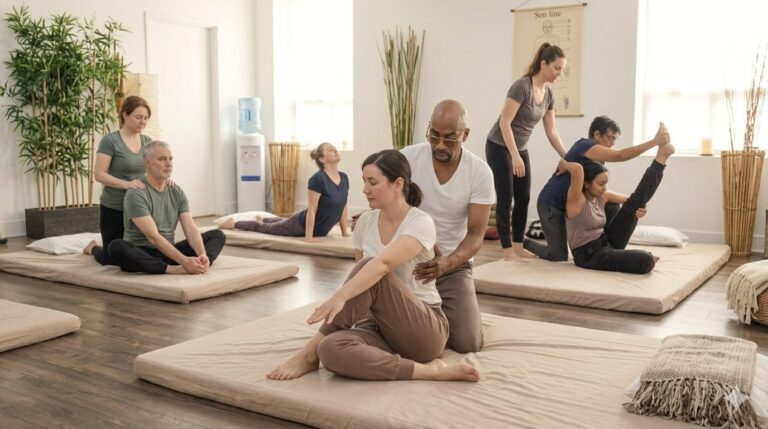
At a glance, traditional Thai massage and Thai yoga massage look identical. Both take place on a dedicated floor mat, require you to stay fully dressed, and bypass the use of heavy massage oils. Both lineages trace their origins back to ancient Eastern medicine, combining intentional movement, deep stretching, and systemic bodywork to restore physiological equilibrium. Yet, despite sharing structural foundations, their therapeutic delivery, physiological focus, and clinical outcomes differ remarkably.
DIFFERENTIATING TRADITIONAL THAI MASSAGE VS THAI YOGA MASSAGE
Choosing the ideal modality hinges entirely on recognizing these structural nuances. Whether your clinical goal is to dissolve chronic muscle adhesions, safely restore spinal mobility, accelerate athletic recovery, or recalibrate a stressed nervous system, understanding how each technique operates ensures you select the correct treatment pathway. For those seeking a more dynamic and holistic approach, ARU NA UCHE Thai Yoga Massage combines assisted stretching, acupressure, and rhythmic movements to improve flexibility, release tension, and promote overall well-being. Exploring the various treatment options available can help you choose the therapy best suited to your specific needs and recovery goals.
What is Traditional Thai Massage?
When searching for traditional Thai massage, first-time clients are frequently surprised by how fundamentally it diverges from classic Swedish or deep-tissue protocols. Rather than adopting a passive approach where a client lies prone on a raised table while a therapist manipulates isolated muscle groups, traditional Thai massage requires an active, fully integrated spatial environment.
Known historically as Nuad Boran, this ancient discipline dates back over two millennia. It treats the human frame as an interconnected energetic and structural ecosystem. Instead of working exclusively on localized muscle tissue, the practitioner works methodically along designated channels to release structural blockages and restore systemic balance.
Traditional Thai massage functions as a meditative dialogue of physical compression, designed to restore internal structural flow.
Sessions unfold on a firm, supportive floor mattress, giving the practitioner maximum leverage to safely shift, rotate, and stretch your body without table constraints. You remain completely clothed throughout the appointment, wearing loose-fitting, flexible garments provided by the clinic or brought from home. Rather than relying solely on manual hand pressure, an experienced practitioner utilizes their fingers, palms, elbows, knees, and feet to safely apply calculated weight and precise structural leverage
Most clients experience traditional Thai massage as a highly unique intersection of deep compression and passive joint mobilization. It feels simultaneously grounding, therapeutic, and deeply restorative, leaving the body entirely released from physical tension and mentally re-energized upon completion.
Thai Massage vs. Thai Yoga Massage: The Core Distinctions
Because these terms are frequently used as loose synonyms within western wellness spaces, drawing a definitive line between them is essential. The core variance does not lie in the setting, but rather in where the practitioner places their clinical priority: systemic pressure point compression versus dynamic, movement-driven stretching.
Infographic Blueprint: The Spectrum of Therapeutic Mechanics
1. Traditional Thai Massage: Structural Compression & Acupressure
Traditional Thai massage operates on the foundational principles of Eastern medical theory, mapping the body via internal energy pathways. The primary therapeutic objective is to clear deep-seated tension along these specific lines.
- Sensory Experience: Methodical, deeply anchored, and restorative.
- Clinical Execution: The professional applies steady, rhythmic, and intentional pressure to anatomical trigger points. While assisted stretching is integrated, these maneuvers serve primarily as closing actions to unlock joints after the surrounding musculature has been softened by systematic compression.
- Target Demographics: Ideal for individuals combating persistent muscle knots, localized physical tension, or those seeking a grounded, deeply calming environment to soothe a hyperactive sympathetic nervous system.
2. Thai Yoga Massage: Dynamic Assisted Stretching
Thai yoga massage is a progressive evolution that emphasizes the athletic and structural aspects of the practice. It is frequently described as “assisted yoga,” where you receive the profound mechanical benefits of a rigorous yoga practice without needing to exert any physical energy.
- Sensory Experience: Fluid, continuous, and highly energizing
- Clinical Execution: The practitioner acts as an active physical facilitator, guiding your entire frame through an uninterrupted sequence of modified yoga postures (asanas). Using professional traction techniques, they safely compress, extend, and twist your limbs to achieve deep structural releases that are typically impossible to reach on your own. For individuals looking to experience this dynamic workflow firsthand, booking an authentic session with premium ARU NA CHE for Thai Yoga Massage in London offers a highly optimized solution for dedicated athletes, fitness professionals, or anyone looking to expand their structural flexibility.
- Target Demographics: Highly optimized for dedicated athletes, fitness professionals, yoga practitioners, or anyone whose primary goal is expanding structural flexibility, mobilizing compressed joints, and elongating the spine.
| Core Feature | Traditional Thai Massage | Thai Yoga Massage |
| Primary
Mechanism |
Rhythmic compression, digital pressure, and sen-line work. | Assisted yoga asanas, passive traction, and joint extensions. |
| Session
Cadence |
Deliberate, grounded, and deeply meditative. | Dynamic, fluid, and continuously
transitional. |
| Physical
Sensation |
Deep, highly localized pressure-point release. | Broad, sweeping, full-body structural stretches. |
| Client
Participation |
Completely passive, focusing on
internal release. |
Passive, but involves high positional movement. |
How the Session Unfolds: Clinical Workflow
While every elite therapist customizes their approach based on a client’s initial intake evaluation, a premier session follows a highly strategic, calculated physiological progression. The treatment never rushes into aggressive extensions; instead, it honors natural joint mechanics.
Phase 1: Preparing the Nervous System
The appointment begins with slow, rhythmic palm and thumb compressions starting at the feet. This localized pressure serves a dual purpose: it gently down-regulates the central nervous system and safely warms up the myofascial layers, preparing underlying muscle tissue and deep joint capsules for more complex movements later in the session.
Phase 2: Targeted Path Mobilization
As the body adapts to the rhythmic compression, the practitioner targets deeper pathways, systematically mapping out areas characterized by restrictive scar tissue, hypertonicity, or poor circulation. The intensity of the pressure is continuously modulated based on your breathing patterns, verbal feedback, and palpable tissue resistance.
Phase 3: Multi-Angle Postural Stretching
Once the foundational muscle layers are receptive, advanced stretching protocols are introduced. By repositioning your frame at calculated anatomical angles, the therapist stabilizes specific bone structures while gently mobilizing adjacent joints. This comprehensive approach unloads accumulated pressure from major weight-bearing joints, allowing spinal and pelvic structures to return to their optimal alignment. Utilizing a targeted stretch massage treatment immediately following a period of high physical stress can provide an instantly expanded range of motion
Immediately following a session, clients routinely report a profound sense of physical lightness, an instantly expanded range of motion, and a complete absence of the localized aches and stiffness that existed prior to treatment.
The Systemic Benefits of Thai Modalities
The therapeutic impact of these ancient treatments extends far beyond standard temporary relaxation. Consistent sessions act as a powerful catalyst for long-term physiological and psychological wellness.
Enhanced Myofascial Mobility and Postural Realignment: Sedentary routines and repetitive daily movements create chronic patterns of muscle shortening. Professional assisted stretching safely releases restricted fascial webs, encourages micro-circulation, balances pelvic tracking, and promotes a neutral, stress-free posture.
Accelerated Circulation and Tissue Repair: The combination of compression and elongation creates a natural pumping effect within the vascular system. This action rapidly moves metabolic waste out of tight muscle bellies while flooding starved soft tissues with fresh, oxygenated blood, significantly reducing recovery times after intensive workouts.
Autonomic Balance and Stress Attenuation: The deliberate, slow rhythm of traditional Thai compression shifts the body out of a sympathetic “fight-or-flight” response and directly into a parasympathetic state of restoration. This shift successfully lowers cortisol levels, minimizes mental fatigue, improves sleep quality, and restores emotional grounding.
Mapping the Right Style to Your Lifestyle
Selecting the optimal style depends heavily on your unique occupational demands, physical conditioning, and structural wellness goals:
- Corporate Professionals & Desk-Bound Workers: Individuals who spend long periods seated at a desk typically develop severe tension across the cervical spine, shoulders, and lumbar region. Traditional Thai massage is exceptionally well-suited here, as it offers direct, focused compression to dismantle these localized postural patterns.
- Athletes & Active Fitness Enthusiasts: For those dedicated to lifting weights, running, or high-intensity sport performance, Thai yoga massage provides a highly effective therapeutic tool. Its core focus on traction and deep stretching keeps the joints mobile and prevents injuries caused by repetitive training stiffness.
- Individuals Seeking Grounding and Stress Relief: If your ultimate goal is to completely unplug from mental stress, unwind your mind, and experience deep relaxation, the slow, meditative cadence of traditional Thai massage provides a secure, restorative environment.
Frequently Asked Questions
Is a Thai massage session uncomfortable or painful for beginners?
A professionally executed session should never feel genuinely painful. While targeting severely tight muscle groups or working through fascial restrictions can produce an intense, unfamiliar sensation, a licensed practitioner will always modulate their pressure, velocity, and stretching depth to align with your personal pain threshold and flexibility.
What is the recommended clinical frequency for these appointments?
Your ideal schedule depends entirely on your personal wellness objectives. For general health preservation, stress management, and posture maintenance, a monthly session is highly effective. However, if you are actively managing chronic joint stiffness, recovering from a sports injury, or undergoing rigorous athletic training, a bi-weekly cadence is recommended to maintain joint mobility.
Can a Thai yoga massage actively improve long-term flexibility?
Yes, exceptionally so. Because this specific technique utilizes passive traction and continuous movement, it allows your musculature to relax completely during deep stretches. This approach overrides the body’s natural stretch reflex, allowing muscles to safely elongate over time, increasing joint space and expanding your daily range of motion far more efficiently than self-guided stretching routines.
What specific attire should I wear to my appointment?
You should wear loose, comfortable, and highly stretchable clothing. Excellent options include athletic wear, loose t-shirts, sweatpants, or flexible yoga pants. Because traditional Thai modalities avoid massage oils, you remain fully clothed throughout the session. Soft, non restrictive fabrics ensure your body moves freely through deep stretches and positional changes without friction.
How should I evaluate and select a qualified practitioner near me?
When seeking a qualified professional, focus heavily on verified educational credentials, specialized certifications in traditional Thai modalities, and authentic client reviews. Opting for a bespoke clinic like ARUNAUCHE.com – Massage Therapist London ensures that a premier practitioner will conduct a comprehensive initial intake evaluation to custom-tailor the treatment plan to your precise comfort level.
