


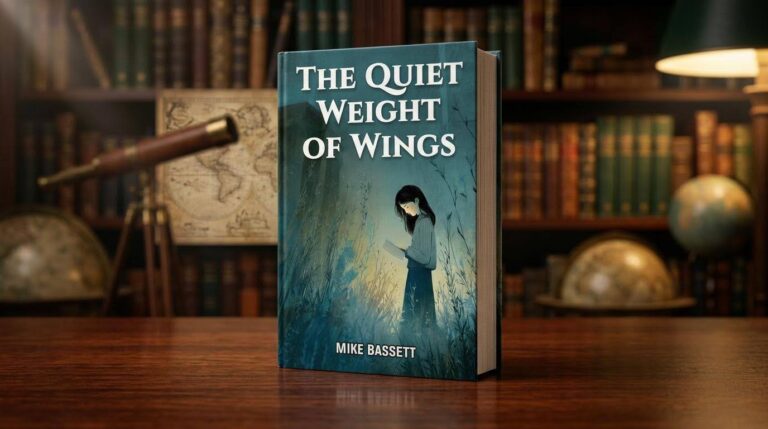
Some books about grief feel like companionship. Others arrive too close to the wound, even when they are written with care, because timing can change everything about how a reader receives a story.
Mike Bassett’s The Quiet Weight of Wings is a 2026 debut novel centered on seventeen-year-old Grace Harper after the death of her mother. For readers who are grieving, recently bereaved, or buying the book for someone who is, the question is not only whether the novel is good or moving, but whether it feels right for the moment they are in.
The Emotional Ground of the Novel
The Quiet Weight of Wings begins from a deeply sensitive premise. Grace has lost her mother, and the people around her do not seem able to speak openly about what has happened.
That silence shapes the emotional world of the book. Grace writes letters to loneliness, to the wind, to herself, to strangers, and to the dead, giving the story a private language for feelings that have no easy place in ordinary conversation.
For some readers, that kind of premise may feel immediately compelling. For others, especially those close to a recent loss, it may feel too familiar to approach casually.
The Mother-Loss Thread
The book deals directly with the death of a mother. That detail should not be softened or hidden, because it is central to Grace’s story and to the emotional experience the novel offers.
Mother loss carries a specific weight in fiction because it touches memory, identity, childhood, family roles, and the feeling of being known. In The Quiet Weight of Wings, Grace is not only grieving a person she loved; she is trying to understand who she becomes when that person is gone.
Readers who have experienced a similar loss may find that premise powerful. They may also find that it asks more from them than another kind of novel would.
When the Story May Feel Like Company
For readers who are ready for grief fiction, The Quiet Weight of Wings may offer the comfort of recognition. It gives shape to feelings that can be hard to explain, especially the loneliness that comes when people around a loss do not know how to speak about it.
Grace’s letters may be one of the book’s strongest points for grieving readers. They create the sense of a young woman sending words into silence because ordinary speech cannot hold everything she needs to say.
That kind of storytelling can feel intimate without becoming loud. Readers who have ever written what they could not say aloud may understand Grace before they fully know her.
When the Book May Feel Too Close
A grief-centered novel can be beautifully written and still be the wrong book for a particular moment. Readers who are newly bereaved, emotionally exhausted, or avoiding stories about parental loss may want to approach The Quiet Weight of Wings slowly.
The book’s premise includes a dead mother, family silence, letters to the dead, and objects tied to memory. Those details are part of its emotional pull, but they may also feel intense for someone still living very close to a similar loss.
There is no failure in deciding to wait. Sometimes the right book becomes right later, when the reader has more room to sit with what it brings up.
Reading Slowly Is Allowed
A book like The Quiet Weight of Wings does not need to be rushed. Readers can move through it gradually, pause between sections, or set it aside if a scene or theme feels heavier than expected.
That slower pace may actually suit the novel’s style. The story is built around letters, memory, grief, and quiet discovery, so it invites a more reflective kind of reading than a fast plot-driven book.
Readers who annotate may prefer the paperback, especially if they want to mark lines or return to certain passages. Readers who want immediate access can choose the ebook and begin when the timing feels right.
Buying the Book for Someone Who Is Grieving
Buying grief fiction for someone else requires care. A book can be meaningful, but it should not be treated as a cure, a message, or a way to tell someone how they should feel.
If The Quiet Weight of Wings seems like a good gift, consider the person’s reading habits and emotional state first. Someone who often reads literary fiction about loss may welcome it, while someone who avoids grief-centered stories may not want that subject placed in their hands without warning.
A gentle approach works best. Give the book as an option, not an assignment, and allow the reader to choose whether now is the right time.
What to Check Before Reading
Before starting The Quiet Weight of Wings, readers may want to read the synopsis carefully. The book’s core elements include maternal loss, grief, family silence, letters, memory, and mystery-like discoveries tied to Grace’s mother and home.
That does not make the novel something to fear. It simply means readers should know the emotional territory before entering it, especially if grief is already close in their own lives.
The strongest fit is likely a reader who wants reflective literary fiction and can sit with sadness, unanswered questions, and emotional quiet. The book is less about escaping grief than about following a character as she tries to find language for it.
Choosing the Right Moment
The Quiet Weight of Wings may be worth reading when the subject of grief feels bearable enough to approach through fiction. That moment will look different for every reader, and it does not have to match anyone else’s timeline.
For some, the book may feel like a companion during loss. For others, it may be a novel to save for later, when the thought of mother loss, letters to the dead, and family silence feels less immediate.
Readers who feel ready can find The Quiet Weight of Wings on Amazon in paperback and ebook formats. Those who are unsure can begin with the synopsis, then decide whether to read now or return when the timing feels gentler.
Frequently Asked Questions
Does The Quiet Weight of Wings deal directly with grief?
Yes, grief is central to The Quiet Weight of Wings. The novel follows Grace Harper after the death of her mother and explores how that loss affects her identity, her family, and the letters she writes when spoken words are not enough.
Is the book about the death of a mother?
Yes, the death of Grace Harper’s mother is part of the book’s central premise. Readers who are sensitive to stories about maternal loss should know that this theme is not incidental; it shapes the emotional core of the novel.
Should grieving readers read the synopsis before buying?
Yes, grieving readers should read the synopsis first so they know the emotional territory of the book before starting. The Quiet Weight of Wings may be meaningful for readers who want reflective grief fiction, but those close to a recent loss may prefer to wait until the timing feels right.
