


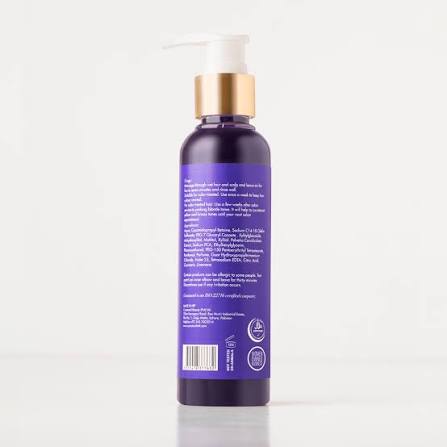
Two bottles on your shower shelf. One says color safe shampoo. The other one is purple. Not purple-themed. Not lavender-scented. Actually, physically purple. The liquid is purple. The lather is purple. Your shower grout is going to be purple for the foreseeable future and your white towels are never going to fully recover.
Both claim to protect your color. Both show up when you search the same thing online. And most people grab whichever was on sale last Tuesday without realizing these two products have completely different jobs, completely different chemistry, and completely different consequences when used on the wrong hair at the wrong time.
These Two Products Aren’t Even in the Same Department
A color safe shampoo washes your hair without speeding up fade. That’s the entire job description. It removes oil and product residue and environmental grime while leaving the pigment molecules inside the shaft alone. It accomplishes this mainly through what’s been left out of the formula, sulfates being the big omission because those surfactants are aggressive enough to yank color molecules out of the cortex during a wash that was only meant to deal with yesterday’s dry shampoo.
Purple shampoo doesn’t protect anything. It adds something. Specifically, it deposits violet pigment onto the hair shaft to cancel out the warm, brassy, yellow tones that blonde, silver, gray, and highlighted hair develops as the color naturally oxidizes over weeks. It’s color theory in a bottle. Violet sits opposite yellow on the wheel. Apply one, the other disappears visually. Temporarily. Because that violet pigment sits on the cuticle surface and washes out over several shampoos. It was never permanent. It was never meant to be.
What’s Actually Inside a Color Safe Shampoo That Makes It Work
The interesting stuff happens at the surfactant level. Gentle cleansing agents, sodium cocoyl isethionate and decyl glucoside being the most common, remove dirt without the scorched-earth stripping that pulls color out alongside everything else the wash was supposed to remove.
A properly built colour-safe shampoo also typically carries:
- pH sitting between 4.5 and 5.5, keeping the cuticle flat enough to trap color molecules inside the shaft rather than letting them escape with the rinse water
- UV filters slow down the oxidation that sunlight causes on exposed color between salon appointments
- Chelating agents like EDTA or citric acid pull hard water minerals off the shaft before they can dull and distort the shade over weeks of accumulation
- Panthenol and glycerin maintaining the moisture balance that makes color look vibrant rather than chalky and flat
A color safe shampoo works on every color type. Reds. Brunettes. Fashion colors. Balayage. Single-process. Highlights. If chemicals put color in your hair, this is the maintenance cleanser that keeps it there longer. Universal tool. No exceptions needed.
Purple Shampoo Has a Much Smaller Resume
Purple shampoo corrects one specific problem on one specific range of hair colors. That’s it. Brassiness on blonde, platinum, silver, gray, and heavily highlighted hair. Nothing else. Not reds going warm. Not brunettes losing depth. Not fashion colors fading into pastels. Those are different problems needing different interventions.
| What We’re Comparing | Color Safe Shampoo | Purple Shampoo |
| The actual job | Preserve existing color during each wash | Deposit violet pigment to visually cancel brassiness |
| Who genuinely needs it | Every single person with color treated hair | Blondes, silvers, grays, heavy highlights only |
| How often to use it | Every wash, it’s the daily driver | Once a week, maybe twice, never daily |
| What’s inside | Gentle surfactants, UV protection, chelating agents | Violet pigment, and frequently sulfates still present |
| The overuse risk | Basically none when the formula is decent | Hair turning purple, gray, or ashy from pigment overload |
The pigment purple shampoo deposits is temporary and superficial. It doesn’t enter the cortex. Doesn’t protect color from fading. Doesn’t address any of the actual causes of color loss. It lays a visual filter over a tonal problem that’s already happened and calls it a day. Useful tool. Narrow tool. Very different thing from a color safe shampoo despite occupying the same shelf space in every store.
The Mistake That Costs Blondes Their Tone Every Month
Blondes love purple shampoo. Sometimes too much. Using it as the primary cleanser every single wash seems logical if the thinking is “more purple equals less brass,” but hair color doesn’t negotiate that way. Overuse stacks violet pigment until blonde hair starts looking gray, ashy, or genuinely lavender in a way nobody intended.
The fix is boring but effective. Color safe shampoo handles the regular washing. Purple shampoo comes in once a week specifically for tonal correction. The color safe shampoo maintains the investment between corrections. The purple shampoo addresses the specific drift that a color safe shampoo was never designed to handle because preventing oxidation and correcting its visual results are two separate chemical tasks.
Brunettes and redheads using purple shampoo are solving somebody else’s problem. Violet pigment on warm-toned color doesn’t fix brassiness. It muddies the shade and dulls the warmth that the stylist deliberately created. A color safe shampoo is the only cleanser warm tones need.
Both Bottles Can Coexist Peacefully
For blondes and highlighted hair, using both in the same routine is the actual answer most people are looking for.
Color safe shampoo as the regular cleanser. Purple shampoo once a week as targeted tonal maintenance. Sequence matters though. Color safe shampoo first to actually clean the hair. Purple shampoo second, sitting three to five minutes to deposit pigment properly. Conditioner last on mid-lengths and ends only. Applying purple shampoo to dirty hair wastes it because the pigment lands on product build-up rather than actual cuticle and most of it rinses away without doing anything useful.
Conclusion
A colour-safe shampoo protects. Purple shampoo corrects. They’re not competing products. They’re colleagues working different shifts on the same project.
Everyone with colour-treated hair needs a colour-safe shampoo. Only the blonde and silver ends of the spectrum need purple alongside them. Using one without understanding what the other does leads to either unchecked brassiness creeping in over weeks or an overcorrected tone that looks nothing like what you paid for at the salon.
