


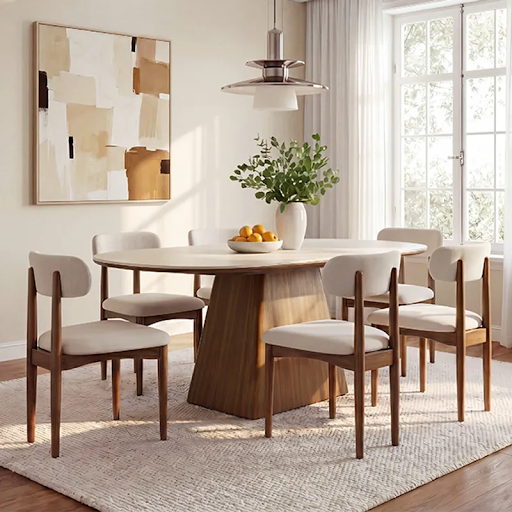
A small dining area has to support movement before it supports decoration. The dining table sets the room’s main footprint, while the sideboard can hold serving pieces and daily overflow. Poor spacing makes both useful pieces feel larger than they are.
Start with measurements, common walking routes, and the number of seats used most days. Then choose shapes and storage that protect those routes instead of filling every open wall. Include serving and cleanup routes.
The best arrangement should work during breakfast, cleanup, and a full meal. It should not require moving several objects whenever one more person sits down. Everyday use remains the main test.
Measure the Usable Room
Record wall lengths, door swings, windows, radiators, outlets, and the widest walking route. Measure from fixed obstacles, not just corner to corner. A dining table needs space for chairs, while a sideboard needs room for doors or drawers to open. Include baseboards, handles, and projecting window sills.
Use painter’s tape to mark each footprint, then place a chair at every planned seat. Pull the chairs out as diners would. This simple test exposes narrow passages and conflicts that a floor plan may hide. Repeat it while carrying a large serving dish.
- Mark all fixed obstacles and door swings.
- Tape the proposed furniture footprints.
- Test chairs and storage doors at the same time.
Choose the Table Around Movement
Table capacity depends on both top dimensions and leg placement. Allow about 24 inches of table edge per diner as a practical starting point. More space may be needed for broad chairs, place settings, or people who need easier transfers.
Start With Everyday Seats
Choose the smallest dining table that handles the household’s normal meals comfortably. Occasional guests can use an extension leaf or another flexible surface. Designing every day around the largest possible gathering often sacrifices circulation for capacity used only a few times. Count regular diners before occasional guests.
Protect the Chair Zone
Plan roughly 36 inches between the dining table edge and a wall or other furniture where conditions allow. That target gives many chairs room to pull back. A primary passage or accessibility need may require more clearance. Test the busiest chair first.
Compare Round and Rectangular Tops
A round dining table removes projecting corners and can improve flow in a compact square area. A narrow rectangular top may use a long room better. Oval forms offer a middle ground, but always test their true footprint with chairs. Include every chair in that outline.
Check the Base Before the Top
Pedestal bases can reduce conflicts between chair legs and table legs. Trestle and four-leg bases may offer different stability or extension options. Confirm usable knee space at every seat, especially when the dining table is shown with narrower chairs than yours. Check all extension positions separately.
Size Storage to the Remaining Wall
Storage should occupy space left after comfortable seating, not force the seating plan inward. A shallow sideboard can work on a circulation wall when its doors open safely. Taller furniture may add capacity, but it also carries more visual weight. Protect clear sightlines from seated positions.
Match Depth to the Passage
Measure from the dining table edge to the wall, then subtract the working chair zone. The remaining depth is the true storage allowance. Do not rely on product width alone, because handles, open doors, and a serving person also need space. Mark each projection on the floor.
Use Length to Balance the Table
A sideboard often looks settled when it relates to the table’s length without copying it exactly. Leave breathing room at both ends and avoid blocking switches or vents. Centering is optional; clear circulation matters more than perfect symmetry. View the wall from the entrance.
Compare the Full Working Footprint
Test furniture with doors, drawers, and chairs open together. Include handles and hinges in the open footprint. The table below separates catalog dimensions from the measurements that affect daily use.
| Measure | What It Controls | How to Test It |
| Table edge | Seating capacity | Allow about 24 inches per diner |
| Chair zone | Pullback and passage | Test near a 36-inch planning target |
| Storage depth | Remaining walkway | Open doors beside a pulled-out chair |
| Furniture height | Sightlines and serving | View it while seated and standing |
Separate Dining and Storage Tasks
The two pieces should reduce trips and surface clutter. Keep items used at the table close to it, but do not duplicate every kitchen category. The dining table remains easier to clear when the sideboard has defined space for serving and reset. Limit each shelf to a related task group.
Store by Frequency and Weight
Use the sideboard for placemats, serving bowls, candles, or special dishes that belong near meals. Place heavier pieces low and follow all assembly and anchoring instructions. Keep daily linens in the easiest compartment. Label occasional items before they become forgotten overflow.
Reserve One Landing Area
Leave part of the top open for a serving dish or items moving back to the kitchen. The sideboard should not become a permanent display shelf from end to end. One tray can contain small objects without consuming the full surface. Clear that tray after each meal or work session.
Test Everyday Meals and Guests
Use the room for several ordinary meals before adding decor. Watch where bags land, which chair blocks the route, and whether serving pieces have an obvious return point. The dining table and sideboard should shorten the routine, not add another reset. Note problems before moving the largest piece.
Practice the Daily Setup
Set the dining table for the normal household, sit at every position, and carry dishes through the main route. Adjust the table a few inches if one corner creates a bottleneck. Small changes often matter more than replacing furniture. Repeat the test with coats or bags nearby.
Simulate a Full Meal
Add every occasional chair, open required storage, and place serving dishes where they would actually sit. Confirm that the sideboard remains usable without trapping a seated guest. If circulation fails, reduce display objects before reducing essential clearance. Ask another person to walk the busiest route.
- Pull out every occupied chair.
- Carry dishes along the busiest route.
- Open storage while guests remain seated.
Keep the Layout Flexible
A small dining area works when everyday movement remains easy and hosting changes stay limited. Keep the main surface clear, return serving pieces after use, and reassess any object that narrows the passage. Good proportions create flexibility; extra furniture rarely solves a crowded plan. Leave room for routines to change.
