


Regretting that impulse tattoo from your college days? You’re not alone. Millions of people seek tattoo removal each year, and understanding your options can make all the difference in achieving the results you want. Let’s dive into the three main methods of tattoo removal and help you figure out which approach might work best for your situation.
Understanding Your Tattoo Removal Options
When it comes to erasing unwanted ink, you essentially have three paths to consider: laser removal, saline removal, and surgical excision. Each method comes with its own set of advantages, drawbacks, and ideal use cases. The right choice depends on factors like your tattoo’s size, location, colors, and your personal tolerance for downtime and discomfort.
The tattoo removal industry has evolved significantly over the past two decades. What once meant accepting permanent scarring now offers possibilities for nearly invisible results. However, not all methods are created equal, and what works brilliantly for one person might be completely wrong for another.
Laser Tattoo Removal: The Gold Standard
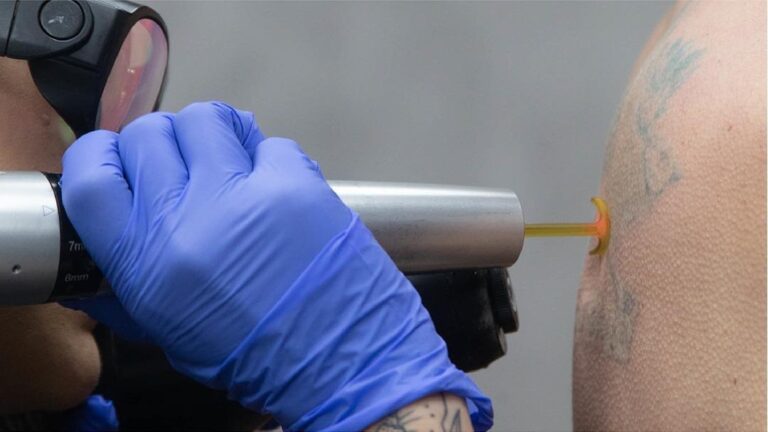
Laser removal has become the most popular method for good reason. This technique uses concentrated light beams to break down tattoo pigment into tiny particles that your body’s immune system can naturally flush away. The process typically requires multiple sessions spaced several weeks apart, allowing your skin to heal between treatments.
Modern Q-switched and picosecond lasers can target specific ink colors with remarkable precision. Black and darker inks respond exceptionally well to laser treatment, while lighter colors like yellow and green can be more challenging. The procedure causes some discomfort, often described as similar to having a rubber band snapped against your skin repeatedly.
One significant advantage of laser removal is that it generally preserves the texture of your skin. When performed correctly by experienced professionals, scarring is minimal. However, the process requires patience, as complete removal can take anywhere from six to twelve sessions or more, depending on the tattoo’s characteristics.
Saline Tattoo Removal: A Gentler Alternative
Saline removal, also known as saline tattoo lightening, uses a salt-based solution that’s implanted into the skin using a tattoo machine. This solution draws the ink to the surface of your skin, where it scabs over and eventually flakes away. The method is particularly popular for removing permanent makeup and smaller tattoos.
This approach tends to be gentler on the skin than laser treatment and works on all ink colors equally. It’s also generally less expensive per session than laser removal. Many people appreciate that saline removal doesn’t carry the risk of hyperpigmentation that can sometimes occur with laser treatments on darker skin tones.
The downside? Saline removal typically requires more sessions than laser treatment and may not be practical for large tattoos. The healing process can also be somewhat uncomfortable, and results tend to be less predictable than laser removal. If you’re consulting with tattoo removal experts in Colorado Springs or elsewhere, they’ll likely recommend this method primarily for smaller pieces or cosmetic tattoos.
Surgical Excision: Fast but Invasive
For small tattoos, surgical removal offers the quickest route to complete elimination. A dermatologist or plastic surgeon simply cuts out the tattooed skin and stitches the surrounding skin back together. The entire tattoo disappears in a single procedure, though healing takes several weeks.
This method guarantees complete removal and can be cost-effective for tiny tattoos. However, it always leaves a scar, and it’s only viable for small designs. Larger tattoos might require multiple excision procedures or skin grafts, which significantly increases complexity and scarring.
Surgical excision is generally reserved for situations where other methods aren’t suitable or when someone needs immediate removal for professional or personal reasons. The recovery period involves keeping the area clean and dry, and physical activity may be restricted during healing.
Making the Right Choice for Your Situation
Choosing between these methods requires honest assessment of your priorities. If minimizing scarring and achieving the cleanest results matters most, laser removal is typically your best bet, despite the time commitment. If you have a small cosmetic tattoo or concerns about laser treatment, saline removal might be worth exploring.
Consider factors beyond just the removal method itself. The expertise of your practitioner matters enormously. Research providers thoroughly, examine before-and-after photos, and don’t hesitate to ask detailed questions about their experience with tattoos similar to yours.
Moving Forward with Confidence
Removing a tattoo is a significant decision that deserves careful consideration. Each method has carved out its niche in the removal landscape, and the “best” option truly depends on your unique circumstances. Take time to consult with qualified professionals, understand realistic expectations, and choose the path that aligns with your goals and comfort level. Your unwanted ink doesn’t have to be permanent, and with today’s technology, you have more effective options than ever before.
