


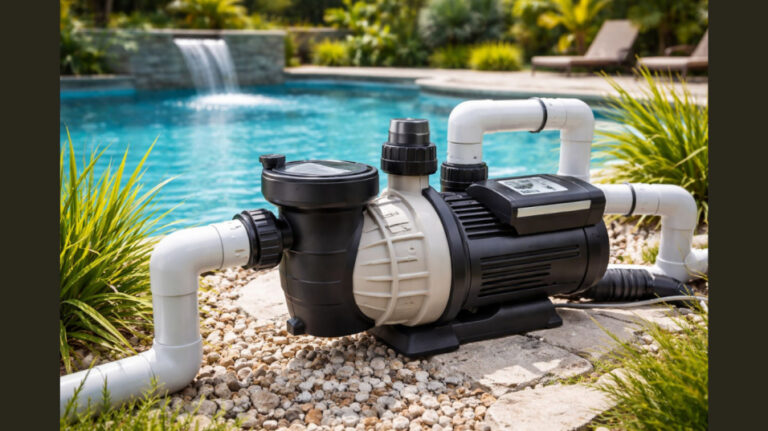
Most Perth installers position pool heat pumps wherever’s convenient for plumbing connections. Against walls, under eaves, tucked between equipment and fences. These terrible locations kill efficiency and double your electricity costs.
Heat pumps extract warmth from surrounding air. Restrict airflow and they struggle to find heat. That means longer running times, higher electricity bills, and accelerated equipment wear. All avoidable with proper positioning.
The Airflow Restriction Problem
Heat pumps need minimum 500mm clearance on all sides for proper air circulation. Most Perth installations have equipment shoved against walls with barely 200mm clearance. The unit can’t breathe properly.
Restricted airflow forces heat pumps to work dramatically harder extracting less thermal energy. Efficiency drops 30% or more compared to properly positioned units. You’re paying full electricity costs for partial performance.
A Baldivis property had their heat pump installed in a narrow side passage between house and fence. Convenient for hiding equipment. Disastrous for efficiency. Moving it to an open position with proper clearance reduced monthly running costs by roughly $45 without any equipment changes. That’s over $500 annually saved through better positioning alone.
The Wall Reflection Issue
Heat pumps positioned against walls or fences recirculate their own exhaust air. The unit blows cold air out after extracting heat. That cold air bounces off nearby walls and gets sucked back into the intake. You’re trying to extract heat from air you just cooled.
This recycling effect devastates efficiency. The heat pump finds progressively less available heat in air it keeps processing repeatedly. Running times extend dramatically while achieving poor results.
Proper positioning places heat pumps in open areas where exhaust air disperses naturally rather than reflecting back into intake zones. This simple consideration during installation prevents years of elevated running costs.
The Overhead Restriction
Installing heat pumps under eaves or covered areas traps exhaust air above the unit. Heat pumps blow cold air upward during operation. That air pools under overhead structures, creating a cold zone the unit keeps trying to extract heat from.
Open sky positioning allows exhaust air to rise and disperse naturally. Fresh ambient air constantly replaces what the heat pump processes. Performance stays optimal because the unit always accesses properly warmed air.
A Joondalup installation positioned their heat pump under a patio roof overhang. Seemed protected from weather. Actually created an efficiency nightmare. The cold exhaust pooled under the roof, reducing available heat. Moving it two metres into open space immediately improved performance noticeably.
The Plumbing Convenience Trap
Installers love positioning equipment close to existing plumbing to minimize pipe runs. Shorter pipes mean lower installation costs and easier work. Unfortunately, convenient plumbing positions rarely coincide with optimal heat pump performance locations.
Extended plumbing runs cost maybe an extra few hundred dollars during installation. Poor positioning costs thousands in excess electricity over the equipment’s lifetime. The initial savings become massively expensive long-term.
Quality pool heating solution providers prioritize performance over installation convenience. They’ll run longer pipe runs to position equipment properly rather than accepting suboptimal locations that hurt efficiency.
The Noise Consideration
Heat pumps positioned near windows or outdoor living areas create noise problems. Modern units run quietly but they’re not silent. Positioning matters for both efficiency and livability.
Ideal placement balances three requirements: proper airflow clearance, distance from noise-sensitive areas, and reasonable plumbing runs. Most installations only consider plumbing convenience and completely ignore the other factors.
A Canning Vale family had their heat pump installed directly outside their master bedroom window. Technically efficient positioning with good airflow. Completely unlivable because noise disrupted sleep. Relocating it cost serious money that proper initial planning would have avoided.
The Seasonal Wind Patterns
Perth’s prevailing winds change seasonally. Heat pumps positioned in wind-exposed locations work harder during breezy periods. Excessive wind across the unit disrupts airflow patterns and reduces efficiency.
Some shelter from direct wind helps without creating the airflow restriction problems that walls and fences cause. Strategic positioning uses landscaping or distant structures for wind breaks while maintaining proper clearance.
Coastal properties especially need consideration for salt-laden sea breezes. Equipment positioned in direct coastal wind paths corrodes faster while fighting wind resistance that hurts efficiency.
The Ground Surface Impact
Heat pumps need stable, level concrete pads. Positioning on pavers, gravel, or dirt creates vibration and settling problems. Unlevel equipment runs noisier and wears faster.
Proper concrete pads cost minimal money during installation but prevent expensive releveling and maintenance issues later. Yet many budget installations skip this basic requirement to save a few dollars.
The Access Consideration
Heat pumps need annual servicing. Positioning them in barely accessible locations makes maintenance difficult and expensive. Technicians charge more for awkward access. Some necessary maintenance gets skipped because reaching the equipment is too difficult.
Proper positioning includes service access planning. Equipment that’s easy to reach gets maintained properly, extending lifespan and maintaining efficiency.
The Strategic Approach
Don’t let installers position heat pumps purely for their installation convenience. Insist on proper clearances, good airflow, reasonable noise distance, and service access.
The installation might cost slightly more for extended plumbing runs. Your running costs will be dramatically lower for the next ten years.
Get proper assessment at poolheatingsolutionswa.com.au before installation. We’ll identify optimal positioning considering all efficiency factors, not just installation convenience.
Position it right once or pay extra forever. Your choice.
