


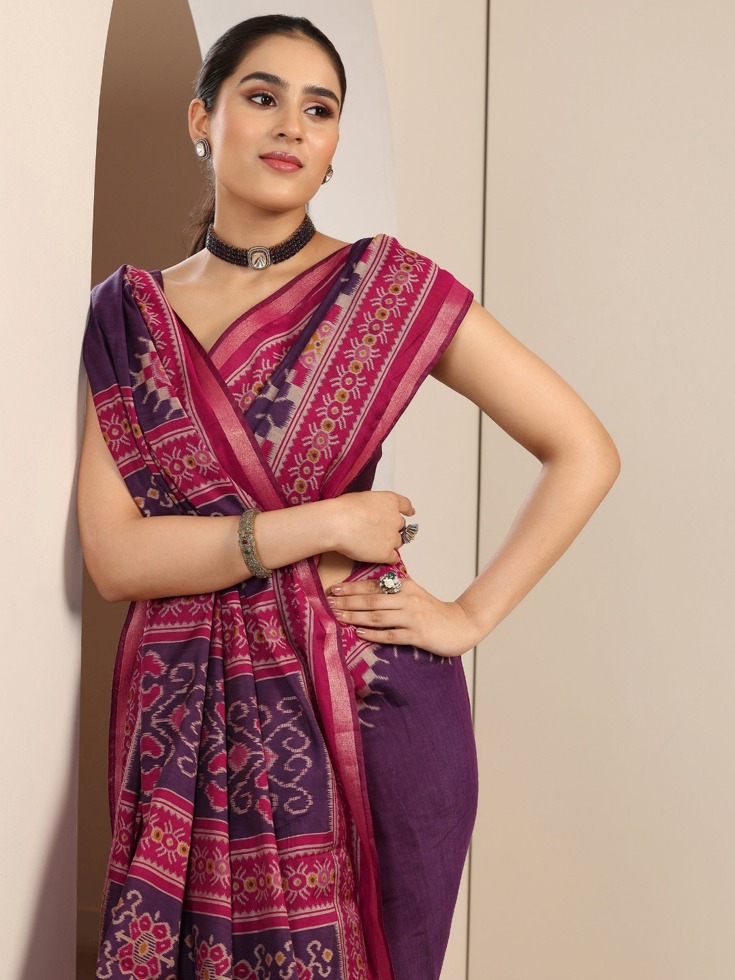
There is a version of wearing a saree to work that feels polished and intentional, and a version that feels like you tried too hard before 9 am. The difference almost always comes down to fabric choice before anything else. Silk is too formal for corporate spaces, Georgette is too delicate for a day that involves back-to-back meetings, a working lunch, and a commute.
Cotton sits in the exact right spot: structured enough to hold a sharp drape through a full workday, breathable enough to not make the day harder than it already is. Indigo printed cotton sarees in particular have become a quiet staple in corporate wardrobes because the deep, grounded colour works across almost every workplace setting without requiring much effort around the rest of the outfit. Here, we cover the two decisions that determine how a cotton saree works at the office.
The Blouse Makes or Breaks It: Pairing Blouses with Cotton Sarees for Work
The blouse in a work saree sets the tone for the entire look. A poorly fitted blouse on an otherwise well-draped cotton saree is the fastest way to make the whole outfit look unfinished, and no amount of good jewellery fixes it after the fact. For corporate settings, the two blouse silhouettes that work consistently are a structured shirt-style blouse and a clean quarter-sleeve blouse in the same fabric as the saree.
Printed cotton sarees pair particularly well with solid blouses in off-white, slate blue, or deep navy because the contrast is present without being loud. The leheriya printed cotton saree is a bolder starting point and works best with a solid dark blouse in deep brown or forest green to ground the yellow without flattening it.
Fabric Pairing– Pairing a cotton saree with a cotton or cotton-linen blouse keeps the weight of the outfit consistent throughout the day. A silk blouse with a cotton saree creates a visual mismatch in texture that is subtle but noticeable up close, especially under office lighting.
Neckline for Work – A boat neck or a high round neck keeps the look contained for meetings. A sweetheart neckline gives you a soft and clean look.
Saree Draping Styles That Work at the Office
Most people drape out of habit rather than intention, and the office is exactly the context where the drape style actually changes how the outfit functions through the day. The Nivi drape is the default for good reason: the front pleats are clean, the pallu sits flat across the shoulder, and the overall silhouette stays narrow enough to move through a workplace without the saree catching on chairs, door handles, or colleagues.
Indigo printed cotton sarees in a Nivi drape with the pallu pinned back at the shoulder sit particularly well in corporate environments because the drape keeps the print visible across the body without any bunching. For a saree with more person ality, like a leheriya mustard cotton, a Bengali-style drape where the pallu falls at the front instead of over the shoulder lets the diagonal wave print sit fully on display without the fabric folding over itself and breaking the pattern.
Styling Tip – Three strategic pins hold a work drape securely: one at the petticoat waistband to anchor the pleats, one at the shoulder to fix the pallu, and one at the pallu’s edge to stop it from slipping forward. More pins than this creates visible bumps under the fabric.
Drape Trick – Light rice starch applied to cotton sarees before draping keeps the pleats crisp for up to eight hours. It is an old technique that tailors and saree wearers have used for decades, and it costs nothing. The pleats stay sharp from the first meeting to the last one.
Conclusion
A well-styled cotton saree at the office is one of those outfits that does not need explaining or qualifying. The right blouse, the right drape, and a fabric that holds up through the day covers everything. Libas carries a full range of office-ready sarees in cotton, including indigo prints and leheriya mustard, worth exploring before your next big meeting arrives.
