


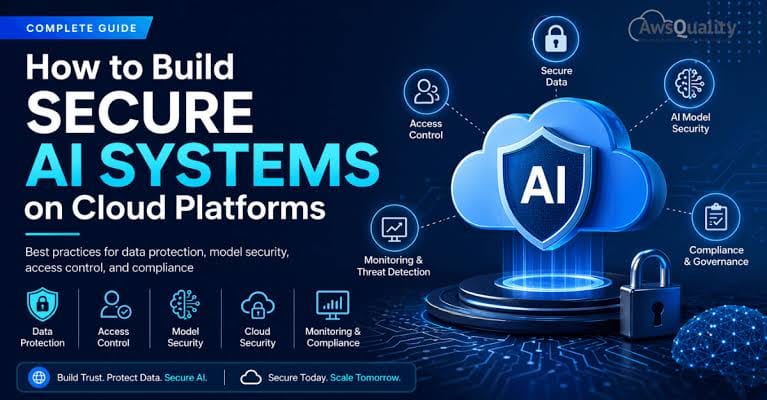
Organizations deploying AI-powered business applications face an unprecedented challenge: balancing innovation with security in an environment where threats evolve faster than traditional safeguards can adapt. The stakes extend beyond data breaches to encompass model integrity, regulatory compliance, and operational continuity. A systematic approach to securing these applications requires rethinking architecture, access controls, and monitoring frameworks from the ground up. The difference between a resilient AI system and a vulnerable one often lies in decisions made during the earliest stages of development.
Defining Security Goals and Requirements for AI-Powered Applications
Before deploying AI-powered business applications, organizations must establish clear security objectives that address both traditional cybersecurity concerns and AI-specific vulnerabilities. These goals should encompass data protection throughout the AI lifecycle, from training datasets to inference outputs, ensuring compliance with privacy regulations like GDPR and CCPA.
Security requirements must account for model integrity, preventing adversarial attacks that manipulate AI decision-making. Organizations should define acceptable risk thresholds for model bias, data poisoning, and unauthorized access to proprietary algorithms. Access controls need specification for different user roles interacting with AI systems.
Documentation requirements should mandate transparency in AI decision processes, enabling audit trails and explainability. Organizations must also establish incident response protocols specific to AI failures, including procedures for model rollback and contaminated data quarantine.
Designing a Scalable and Secure Application Architecture
With security objectives established, organizations must translate these requirements into a technical architecture that supports both operational demands and protective measures. The foundation begins with implementing defense-in-depth principles, where multiple security layers protect AI components at different levels, network, application, and data tiers.
Organizations should adopt a microservices architecture that isolates AI inference engines, training pipelines, and data processing modules. This separation limits breach impact and enables independent scaling of components based on demand.
Container orchestration platforms provide resource management while enforcing network segmentation through policies. API gateways serve as critical control points, managing authentication, rate limiting, and request validation before reaching AI services.
Implementing zero-trust principles guarantees every request undergoes verification regardless of origin. Load balancers distribute traffic efficiently while enabling horizontal scaling to accommodate growing computational requirements without compromising security posture.
Using Egocentric Video Data Collection for Real-World AI Training
As organizations expand AI capabilities beyond controlled environments, egocentric video data, captured from first-person perspective through wearable cameras or mobile devices, provides training datasets that reflect authentic user interactions and environmental contexts.
Egocentric video data collection enables researchers to observe tasks from the participant’s viewpoint, generating insights that are often difficult to capture through conventional recording methods. This approach captures nuanced hand movements, spatial relationships, and decision-making patterns that traditional third-person recordings miss. However, egocentric data introduces significant security challenges. Personal identifiable information, proprietary workflows, and sensitive business processes become embedded in footage.
Organizations must implement robust data governance frameworks including automated face blurring, voice distortion, and document redaction before dataset creation. Access controls should restrict raw footage to authorized personnel while maintaining audit trails. Additionally, consent mechanisms must clearly communicate data usage scope, and encryption protocols should protect both stored and transmitted video files throughout the collection pipeline.
Preparing Governing and Protecting High-Quality Training Data
Raw egocentric video represents only the starting point for effective AI model development. Organizations must implement robust data governance frameworks that address privacy, security, and quality control throughout the entire data lifecycle.
Data preparation requires systematic anonymization protocols to remove personally identifiable information from video feeds. This includes facial blurring, location masking, and sensitive content filtering before storage or processing begins.
Access controls must enforce role-based permissions, ensuring only authorized personnel can view or manipulate training datasets. Encryption at rest and in transit protects data from unauthorized access or breaches.
Quality assurance mechanisms verify data integrity through automated validation checks, detecting corrupted files, labeling errors, or inconsistent annotations. Version control systems track dataset modifications, enabling audit trails and regulatory compliance while maintaining reproducibility across model iterations.
Selecting Training and Validating AI Models for Business Use
Once data governance frameworks establish secure foundations, organizations face critical decisions about model selection and validation strategies. Choosing between pre-trained models, fine-tuning existing architectures, or building custom solutions depends on specific business requirements, available resources, and security constraints.
Validation must extend beyond accuracy metrics to include bias detection, adversarial robustness testing, and performance consistency across diverse user populations. Organizations should implement multi-stage validation protocols that assess models against real-world scenarios before deployment.
Security-focused validation examines potential vulnerabilities including prompt injection attacks, data leakage risks, and model inversion threats. Establishing baseline performance thresholds and continuous monitoring frameworks guarantees models maintain reliability standards throughout their lifecycle. Documentation of model provenance, training methodologies, and validation results creates accountability and facilitates regulatory compliance.
Securing APIs Databases User Access and Sensitive Information
Validated AI models require robust infrastructure protection to prevent unauthorized access and data compromise. Organizations must implement multi-layered security controls across their entire application stack.
API security demands rate limiting, authentication tokens, and encryption for data in transit. OAuth 2.0 and JWT tokens provide standardized access control mechanisms. Database protection requires encryption at rest, parameterized queries to prevent SQL injection, and principle of least privilege for database accounts.
User access management necessitates role-based access control (RBAC), multi-factor authentication, and regular access reviews. Sensitive information handling requires data classification policies, tokenization for payment data, and secure key management systems.
Security monitoring through logging, intrusion detection systems, and regular vulnerability assessments identifies threats early. Compliance frameworks like SOC 2, GDPR, and HIPAA guide thorough security implementations.
Implementing a Firewall for CI/CD Pipeline Protection
As AI-powered applications progress through continuous integration and deployment pipelines, attackers increasingly target these automated workflows to inject malicious code or exfiltrate sensitive data. A firewall for CI/CD environments can help enforce security policies by inspecting traffic between development, testing, and production systems before deployments occur. Implementing dedicated firewalls for CI/CD environments creates essential security boundaries between development infrastructure and production systems.
Web application firewalls should monitor API endpoints handling build triggers, deployment requests, and artifact transfers. Organizations must configure firewalls to validate webhook signatures from version control systems, scan container images for vulnerabilities, and block unauthorized access to CI/CD dashboards.
Network segmentation separates build servers from production databases, preventing lateral movement during breaches. Rate limiting protects against automated attacks targeting deployment pipelines. Firewalls should log all CI/CD traffic for forensic analysis while enforcing strict egress filtering to prevent data exfiltration through compromised build processes.
Monitoring Model Performance Threats Compliance and System Reliability
Beyond protecting the deployment infrastructure, organizations must establish continuous oversight of AI model behavior after production release. Real-time monitoring systems should track prediction accuracy, data drift, and anomalous outputs that signal potential model degradation or adversarial attacks. Security teams need automated alerts for unauthorized access attempts, unusual query patterns, and data exfiltration risks.
Compliance monitoring guarantees AI systems adhere to regulatory requirements like GDPR, HIPAA, or industry-specific standards through audit trails and explainability metrics. System reliability checks measure latency, throughput, and resource utilization to prevent service disruptions.
Integrating these monitoring dimensions creates a thorough observability framework. Organizations should maintain detailed logs, implement version control for model iterations, and conduct regular security assessments. This holistic approach enables rapid incident response while maintaining operational excellence and regulatory compliance.
Building a Long-Term Strategy for Secure AI Application Growth
Organizations seeking sustainable AI application development must anchor their security approach in strategic foresight rather than reactive measures. This requires establishing governance frameworks that evolve alongside technological advancements and threat landscapes.
Leadership must allocate resources for continuous security assessments, employee training programs, and infrastructure modernization. Investment in automated security testing tools and threat detection systems guarantees scalability without compromising protection standards.
Organizations should develop incident response playbooks specifically tailored to AI-related vulnerabilities, including model poisoning and data leakage scenarios. Regular security audits identify gaps before exploitation occurs.
Building partnerships with security researchers, industry consortiums, and regulatory bodies provides access to emerging threat intelligence. Documentation of security decisions creates institutional knowledge that survives personnel changes. Long-term success demands treating security as an ongoing investment rather than one-time implementation.
