


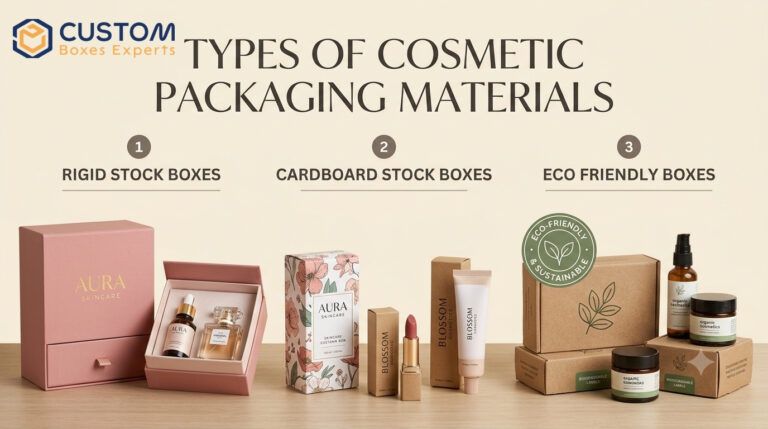
In the modern beauty sector, Cosmetic Packaging is no longer just a vessel to hold a product. It plays an extremely important role as the point of intersection between the item itself, the user’s experience, and the branding effort. In order to attract consumers in the highly competitive beauty industry, it is crucial to make the right choice of materials.
As the cosmetic sector progresses towards sustainability and luxurious textures, it is very important that one has knowledge regarding the science and functionality of different Types of Packaging Materials. Let us find out more about the materials that have been making the cosmetic industry tick and how decoration makes them even better.
Primary Materials in Cosmetic Packaging: Quality Meets Responsibility
Each cosmetic product requires a specific environmental context to maintain its effectiveness. Ingredients such as Vitamin C, retinol, and organic oils react easily with light, oxygen, and chemicals. This is why manufacturers need to use a specific material matrix to safeguard such products.
1. Molded and Tube Glass
The glass jar will always be a benchmark for premium or luxury positioning of skin care. Glass is totally inert and will not react to any complicated chemical formulation.
- Flint and Extra-Flint Glass: Extremely clear materials that display the true color of serums and foundations.
- Amber and Colored Glass: Adds essential UV protection to sun-sensitive products, thus prolonging their life naturally.
- Recyclability: Glass is made of 100% recyclable material that can be recycled infinitely, which is why environmentalists favor it.
2. Advanced Plastics and PCR Components
With the continuous optimization of traditional plastics, PCR plastics have become highly important for a circular economy. Companies often add PCR into caps, pumps, and bottles in order to minimize their carbon footprint while maintaining the integrity of the product.
- PET and PP: Very strong, light, and unbreakable plastics which are most often utilized in lotions, cleansers, and haircare.
- Mono-material engineering: In today’s world, packaging companies aim to design dispensers that use one single plastic type in order to make sure that they can be recycled in regular waste streams.
3. Aluminum and Natural Wood
For secondary accents or high-end primary containers, metals and organics offer distinct visual weights.
- Aluminum: It is used in the making of caps, overshell packaging, and flexible tubes. It acts as a good barrier against moisture and air and is easily recyclable.
- Wood: It is sustainably harvested. The use of wood caps makes for an organic look.
| Material Type | Best Suited For | Key Benefit | Circular Economy Status |
| Molded Glass | Serums, Oils, Foundations | High chemical inertness & premium feel | Infinitely Recyclable |
| PCR Plastics | Lotions, Toners, Cleansers | Lightweight, shatterproof, lower carbon footprint | Recyclable (Stream dependent) |
| Aluminum | Creams, Luxury Caps | Total light and oxygen barrier | Highly Recyclable |
| Natural Wood | Eco-luxury Caps, Lids | Unique tactile experience, organic branding | Biodegradable / Compostable |
Custom Decoration: Transforming Materials into Brand Value
The raw material serves as the canvas; however, through special decorating methods, the components become a unique message from the brand. To attract consumers’ attention, brands apply sophisticated finishing methods to create their luxury/minimalist image:
- Color Injection and Lacquering: Applied to glass or plastic to achieve matte, glossy, or sophisticated gradient finishes.
- Silk-Screen Printing and Hot Stamping: Delivers high-definition typography and metallic accents that resist scratching or fading during daily use.
- Metallization and Anodization: Provides a flawless, high-gloss metal finish to plastic parts, making them ideal for premium positioning.
Secondary Packaging: The Critical Unboxing Experience
It won’t do for the primary package alone. To ensure that the delicate glass bottles and specially made plastic parts are protected when in transit, it is necessary to use secondary packaging.
The use of Custom Cardboard Boxes makes sure that products are delivered safely from the production line to the shelf. Apart from safety, outer boxing is the first contact point with consumers. It is common for brands to use high-quality custom boxes to communicate their message before the consumers even open the bottle.
[Outer Secondary Box: Cardboard] ➔ [Inner Cushioning] ➔ [Primary Container: Glass/PCR] ➔ [Formulation]
Selecting structural improvements such as customized boxes with printed information will enable companies to provide consumers with the necessary ingredients, directions, and regulatory information. Furthermore, incorporating sustainable structural elements like bespoke cardboard packaging allows a brand to align its outer presentation perfectly with the eco-friendly materials chosen for the primary container inside.
The Strategic Impact on the Modern Beauty Industry
The selection of packaging containers in the right way is responsible for shaping the consumers’ perception and buying patterns. The contemporary trend of clean beauty insists on absolute transparency from all perspectives—ingredients in the formula as well as the packaging container.
Combining the right choice of materials, such as glass and mono-plastics, with high-quality outer box packaging custom-made that is perfectly customized for the specific brand, ensures beauty brands create an intersection between luxury, functional performance, and responsibility to the environment. Using fully traceable, highly recyclable, and high-quality materials guarantees the safety, appearance, and sustainability of the product.
