


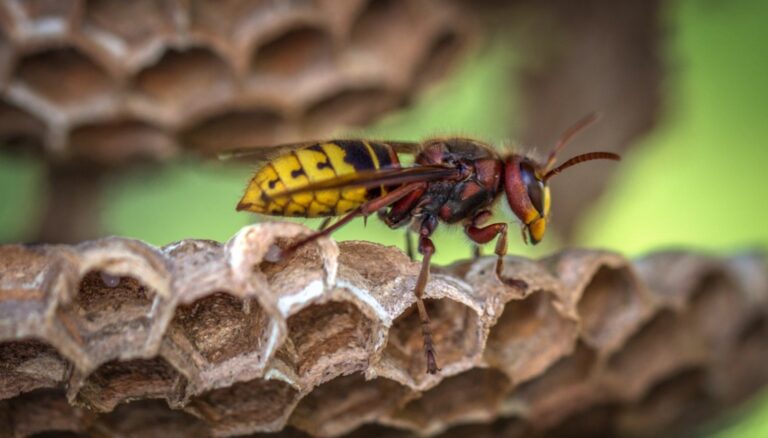
You may barely notice a bee or wasp passing through the yard, but the situation changes quickly when repeated activity starts showing up near a doorway, roofline, wall opening, or outdoor seating area. Some species build surprisingly large colonies; established yellowjacket and hornet nests can contain hundreds or even thousands of individuals, while paper wasp nests are usually much smaller.
Their nests are impressive in their own right. Paper wasps, yellowjackets, and hornets actually create their paper-like nest material by chewing wood fibers and mixing them with saliva. Still, fascinating biology becomes a practical concern when a nest is close to people, pets, doors, or frequently used outdoor spaces. Knowing what kind of insect you are dealing with—and whether the nest truly poses a risk—can help you avoid unnecessary removal, painful stings, and a very memorable afternoon for all the wrong reasons.
How to Tell Whether You’re Dealing With Bees or Wasps
At a glance, bees and wasps can look similar, especially when you’re trying not to panic. Still, the differences matter because their behavior, nesting habits, and risk levels aren’t the same.
Bees usually look fuzzier and thicker. They’re built for pollination, not intimidation. Wasps tend to have smoother bodies, narrow waists, and a more angular shape. They often look like they mean business because, frankly, they do.
You’ll also notice different nest styles:
– Bees may settle inside wall cavities, trees, or roof spaces
– Wasps often build paper-like nests under eaves, railings, and soffits
– Ground-nesting species can appear in lawns or garden beds
If insects keep returning to one spot, don’t assume it’s random traffic. A repeated flight path usually points to an active nest nearby. That’s your clue to stop guessing and start paying attention.
The Real Risks Of Trying To Remove A Nest Yourself
DIY insect control videos make nest removal look oddly casual. Real life tends to be less cinematic. You climb a ladder, spray the wrong angle, miss part of the nest, and suddenly the air gets loud.
The biggest risk is provoking a defensive swarm response. Wasps, in particular, can sting multiple times. Some species become aggressive when they sense vibration, movement, or chemical irritation. If the nest is tucked under roofing, inside siding, or behind shutters, reaching it safely becomes even harder.
There’s also the identification problem. You can’t choose the right treatment if you don’t know the species, the nest structure, or whether beneficial pollinators are involved. That’s where professional bee and wasp control becomes a practical option, especially when the nest is established or located near daily foot traffic.
If anyone in your home has an allergy to stings, the margin for error gets very small. At that point, this stops being a weekend project.
Why A Small Nest Can Turn Into A Bigger Problem Quickly
A lot of homeowners wait because the nest looks tiny. That’s understandable, but it’s also how a manageable issue becomes a full-blown headache.
Many wasp colonies grow fast during warm months. A nest that seems harmless in early summer can become heavily populated in a matter of weeks. Bees can also expand their colonies significantly, especially when they find a protected place with easy access to food and water.
The location matters as much as the size. A small nest near a mailbox, AC unit, pool gate, or kids’ play area creates frequent contact. That raises the chance of stings, and repeated disturbance can make insects more defensive.
A hidden nest can cause extra trouble:
– Bees inside walls may leave wax and honey behind
– Moisture and residue can attract other pests
– Structural gaps may allow colonies to spread deeper into the home
Tiny does not always mean low-risk. In pest control, “I’ll deal with it later” has a talent for aging badly.
What A Professional Service Usually Does Differently
Professional treatment is not just “spray, remove, done.” A solid service starts with inspection. The goal is to identify the species, locate the nest, evaluate the level of activity, and spot the conditions that attracted the insects in the first place.
That process matters because different insects require different strategies. Honey bees may need a careful approach that accounts for colony placement and possible removal concerns. Wasps often require direct treatment of the nest plus follow-up monitoring around entry points.
A trained technician will usually focus on:
– Safe treatment based on the species involved
– Nest removal or neutralization where appropriate
– Identification of entry points and harborage areas
– Recommendations to reduce repeat activity
Good service is also about safety logistics. That includes rooflines, wall voids, ladders, protective equipment, and timing the work when insect activity is lower. It’s less dramatic than internet hacks and much more effective, which is a decent trade.
How To Make Your Property Less Attractive To Stinging Insects
You can’t make your yard invisible to bees and wasps, but you can make it less appealing. Most infestations are connected to shelter, moisture, and food access. Remove enough of those incentives, and you reduce the odds of a colony settling in.
Start with the easy wins around your home:
– Seal gaps around vents, soffits, and utility openings
– Check sheds, playsets, and fence lines for early nest activity
– Keep garbage lids tight and rinse sticky drink containers
– Trim overgrown shrubs near entryways and windows
– Fix outdoor leaks and eliminate standing water where possible
Regular inspections help more than people think. Walk your property every week or two during active seasons and look at corners, overhangs, and less-used areas. Early detection changes the whole game.
If you garden, stay aware of increased insect activity around flowering plants. Pollinator traffic is normal. Nesting near your patio furniture is a separate issue entirely.
When You Should Act Right Away Instead Of Waiting
Some situations call for immediate action. If insects are entering through cracks near a bedroom, gathering around your front entrance, or nesting in a place where children and pets play, don’t wait to “see what happens.” You already know what happens: more insects, more risk, less patience.
You should move quickly if:
– Someone in the home is allergic to stings
– The nest is inside walls, attics, or roof structures
– You see heavy daytime activity in one concentrated area
– The nest is difficult to access safely
– Previous DIY treatment didn’t solve the problem
There’s also a quality-of-life factor. You shouldn’t have to avoid your own porch, cancel backyard plans, or sprint from the garage to the car like you’re dodging tiny airborne security guards.
Prompt action often limits damage, lowers treatment complexity, and helps prevent a repeat issue. Waiting sometimes feels cheaper. It rarely stays that way.
A Smarter Way To Handle The Problem Without Making It Worse
The best response is usually calm, specific, and fast. Start by avoiding unnecessary disturbance around the nest. Swatting at insects, blocking an active entrance, or spraying into a hidden cavity can make the situation more unpredictable. Keeping a safe distance and avoiding sudden disturbance is especially important when you are not yet sure what species you are dealing with or how large the colony may be.
Next, observe from a distance. Note where the insects are entering, when activity seems strongest, and whether the nest is exposed or hidden. Those details can make identification easier and help determine whether professional treatment is the safer option.
Once the immediate issue is resolved, focus on prevention. Sealing gaps and reducing access points around the exterior can make it harder for future colonies to settle in the same areas. It also helps to keep food waste contained, reduce standing water, and check sheltered spots such as eaves, sheds, and overhangs during active seasons.
Bee and wasp problems rarely improve just because they are ignored. The smarter approach is to identify the issue early, avoid making the colony defensive, and deal with the conditions that made the property attractive in the first place. That gives you a much better chance of solving the problem without turning it into a larger one.
