


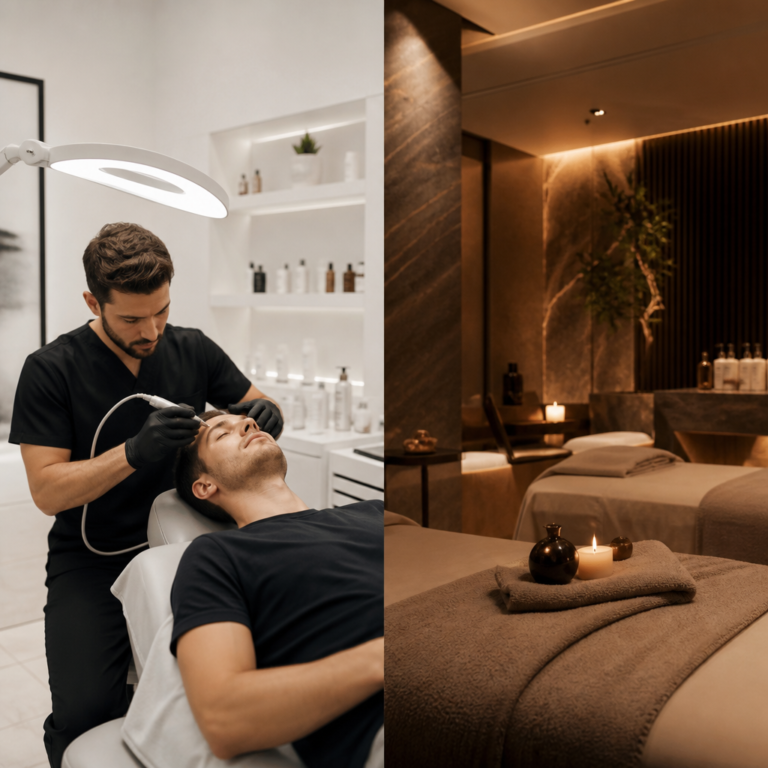
New York City has long been a proving ground for beauty innovation, and nowhere is that more evident than in the ongoing debate between membership-based facial bars and traditional luxury spas. With session prices ranging from $75 to $300 or more, consumers are increasingly asking a pointed question: is the premium price tag of a high-end spa actually delivering better skin results, or are the newer, subscription-driven facial bars quietly outperforming them at a fraction of the cost? The answer, as with most things in skincare, is nuanced — and it depends heavily on what your skin actually needs.
The Rise of the Membership Facial Bar Model
Over the past decade, facial bars operating on a membership model have fundamentally disrupted the traditional spa industry. Brands like Heyday, Glowbar, and FaceGym have built their reputations on accessibility, consistency, and data-driven skincare. For a monthly fee — typically between $75 and $120 — members receive one facial per month, often with discounts on additional treatments and retail products. The model is designed to encourage regularity, which dermatologists and estheticians widely agree is one of the most important factors in achieving lasting skin improvement.
The appeal is straightforward: instead of saving up for one indulgent spa visit every few months, clients receive consistent professional attention on a schedule that actually supports skin cell turnover cycles. Estheticians at these bars are often highly trained in specific, results-oriented protocols rather than the broad menu of services a luxury spa might offer. The environment is efficient, modern, and stripped of the ceremonial trappings that add cost without adding clinical value.
What You’re Actually Paying For at a Facial Bar
At a membership facial bar, the investment goes primarily into skilled labor, targeted active ingredients, and technology-driven tools like microcurrent devices, LED panels, and high-frequency wands. The experience is intentionally streamlined — no elaborate robes, no multi-course herbal tea rituals, no ambient harp music. What you do get is a focused 30 to 60-minute treatment built around your skin’s current condition, often reassessed at each visit. Many bars use intake questionnaires and skin analysis tools to track progress over time, creating a personalized record that evolves with your skin.
This approach aligns well with what skincare insiders have long understood — that consistency and ingredient efficacy matter far more than luxury packaging or atmospheric ambiance. The sticker, the label, the gold-leaf branding: none of it penetrates the dermis. What does is a well-formulated active applied correctly and repeatedly over time.
The Case for Luxury Spas at $150–$300 Per Session
That said, luxury spas are not simply selling ambiance. The best high-end facial experiences in New York City — think Joanna Vargas, Georgia Louise, or the treatment rooms at top hotel spas — offer something that facial bars genuinely cannot replicate: deep expertise, bespoke formulation, and an unhurried, holistic approach to skin health. A $250 facial at a renowned spa often includes a thorough skin consultation, custom-blended serums, extended massage techniques that stimulate lymphatic drainage, and the undivided attention of an esthetician with decades of experience.
For clients dealing with complex skin concerns — chronic inflammation, post-procedure recovery, hormonal acne, or significant hyperpigmentation — the depth of knowledge available at a luxury spa can be genuinely transformative. These environments also tend to carry professional-grade product lines that are not available over the counter, and the estheticians are trained to layer and sequence those products with precision. The experience is slower, more immersive, and for many clients, therapeutically valuable in ways that extend beyond the purely cosmetic.
The Hidden Cost of Infrequency
Here is where the math begins to complicate the luxury spa argument. If a $250 facial is a quarterly treat rather than a monthly ritual, the skin benefits are significantly diluted. Skin operates on roughly a 28-day renewal cycle, and professional exfoliation, extractions, and active ingredient delivery are most effective when timed to that cycle. A single exceptional facial every three months may feel indulgent, but it is unlikely to produce the cumulative improvements that monthly — or even bi-monthly — professional treatments can achieve.
Research into skincare product application also supports the value of regularity over intensity. According to cosmetic chemists who have studied how skincare products interact with skin over time, the timing and frequency of application plays a critical role in efficacy — a principle that applies equally to professional treatments. Sporadic high-intensity sessions may temporarily improve skin appearance, but they rarely address the underlying patterns that drive chronic skin concerns.
NYC Skincare Brands Shaping the Conversation
The facial bar versus luxury spa debate does not exist in isolation — it is deeply connected to the broader ecosystem of professional and consumer skincare products available in New York City. The city has become a global hub for independent skincare innovation, with a growing number of brands developing formulations that bridge the gap between clinical efficacy and everyday usability. Whether you are supplementing monthly facial bar visits with a targeted home routine or extending the results of a luxury spa treatment, the products you use between appointments matter enormously.
For those navigating this landscape, exploring skincare brands NYC has produced offers a compelling starting point. New York-based brands tend to reflect the city’s demanding, results-oriented consumer base — formulations are typically backed by research, free from unnecessary filler ingredients, and designed to work alongside professional treatments rather than compete with them. Understanding which brands align with your skin type and treatment goals can significantly amplify the results you see from both facial bars and luxury spa sessions.
Making the Right Choice for Your Skin and Budget
Ultimately, the choice between a membership facial bar and a luxury spa is not a binary one — and the smartest skincare consumers in New York City have figured this out. Many clients maintain a monthly facial bar membership for consistent skin maintenance while reserving luxury spa visits for milestone moments, seasonal skin resets, or when addressing a specific concern that requires deeper expertise. This hybrid approach maximizes both regularity and depth, delivering the best of both models without requiring an unlimited beauty budget.
Questions to Ask Before You Commit
Before signing a membership contract or booking a premium spa session, consider what your skin actually needs right now. Are you maintaining generally healthy skin and looking to prevent premature aging? A facial bar membership is likely your most efficient investment. Are you dealing with a specific, persistent concern that has not responded to over-the-counter solutions? A luxury spa consultation may provide the diagnostic depth and professional-grade intervention your skin requires. And in either case, the products you use at home — particularly those from innovative, clinically-minded brands — will determine how well you hold onto the results between appointments.
Conclusion
The $75 facial bar and the $300 luxury spa treatment are not competing for the same customer — or at least, they should not be. Each serves a distinct purpose within a thoughtful skincare strategy. What matters most is not where you spend your money, but whether you are spending it consistently, intelligently, and in alignment with what your skin genuinely needs. In a city as saturated with beauty options as New York, the most powerful tool you have is informed decision-making — and that starts with understanding the difference between indulgence and investment.
