


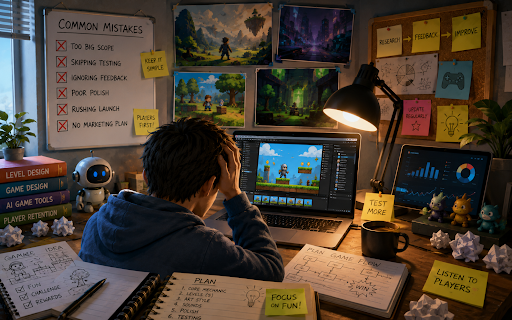
Creating your first AI-generated game can feel incredibly exciting. You start with a simple idea, use AI tools to speed up development, and suddenly you have characters, environments, mechanics, and even dialogue coming together faster than you ever imagined. For many beginners, it feels like game development has finally become accessible without needing years of coding experience. But while AI makes the process easier in many ways, it also introduces a new set of challenges that often catch new developers by surprise. A lot of beginners assume that using AI will automatically result in a polished and successful game. In reality, many projects struggle because of avoidable mistakes like relying too heavily on AI-generated content, ignoring gameplay quality, creating confusing mechanics, or launching too early without proper testing. Some developers focus entirely on visuals while forgetting that players care more about smooth gameplay and fun experiences. Others become overwhelmed by trying to build massive projects instead of starting small and improving gradually.
Trying to Make the Game Too Big
One of the most frequent mistakes is starting with an overly ambitious idea. Beginners often try to include multiple game modes, complex stories, or dozens of levels in their first project. This leads to unfinished games and burnout. The solution is to keep your first game very simple. Focus on one clear mechanic and a small number of levels. A polished, simple game is much better than an unfinished, complicated one. Once you complete a small project, you can add more features to your next game.
Four Major Mistakes Beginners Often Make
Here are four of the biggest mistakes new AI game developers commonly make.
- Skipping Proper Testing: Releasing the game without thorough testing leads to bugs and bad reviews.
- Ignoring Player Feedback: Building the game only based on personal preference instead of real player input.
- Poor Scope Management: Adding too many features instead of perfecting the core experience first.
- Neglecting Polish: Focusing only on mechanics while ignoring visuals, sound, and user interface.
Avoiding these mistakes early dramatically improves your chances of success.
Over-Relying on AI Without Human Input
Many beginners let the AI create everything and make very few adjustments themselves. While AI is excellent at generating content, it still needs human direction to feel cohesive and fun. Always test what the AI creates and refine it. Adjust difficulty, improve controls, and add personal touches that make the game uniquely yours. The best AI games combine smart generation with thoughtful human editing.
Players can usually tell when a game feels completely automated without any creativity or polish behind it. AI may generate assets, dialogue, or mechanics quickly, but it cannot fully understand emotional pacing, player satisfaction, or what makes a game memorable. That is where your input becomes valuable. Even small manual improvements like refining animations, balancing rewards, or improving menus can dramatically improve the overall experience. Treat AI as a powerful assistant rather than a complete replacement for your own ideas and decision-making. The more attention you give to polishing and shaping the final product, the more professional and enjoyable your game will feel to players.
Four Important Areas Beginners Often Neglect
Beginners frequently overlook these four critical areas.
- Consistent Visual Style: Allowing generated content to look mismatched across different levels.
- Mobile Optimisation: Forgetting to test and improve performance and controls on phones.
- Clear Goals and Guidance: Do not explain to players what they should do in the game.
- Monetisation Planning: Adding purchases or ads without considering how they affect player enjoyment.
Paying attention to these areas helps your game feel complete and professional.
Rushing the Launch
Another common mistake is publishing the game as soon as it is somewhat playable. This often results in negative reviews and low retention. Taking extra time to test, fix bugs, and add basic polish almost always leads to better results. A good example of a well-developed AI game is Colossal Runner. You can try it on Astrocade. It shows how attention to detail and proper development create an enjoyable experience.
Ignoring Marketing and Player Retention
Many beginners focus only on building the game and forget about how players will discover and continue playing it. Even great games need promotion and reasons for players to return.
Plan simple marketing from the beginning. Think about daily rewards, regular updates, and easy ways for players to share their progress. Building a small audience early helps your game grow after launch.
Four Ways to Avoid Beginner Mistakes
Use these four strategies to build better games from the start.
- Start Small: Choose one simple mechanic and perfect it before adding anything else.
- Test Early: Play and share your game after every major addition.
- Stay Consistent: Keep the same style, controls, and quality level throughout the entire game.
- Learn from Feedback: Listen to players and make improvements based on real experiences.
Following these strategies helps you avoid the most painful beginner mistakes.
Learning from Each Project
Every game you make teaches you something new. Do not be discouraged if your first few projects have problems. Document what worked and what did not, then apply those lessons to your next game. Over time, you will make fewer mistakes and create higher-quality games more quickly. The important thing is to keep building and learning with each project. Many successful game developers created several failed or unfinished projects before making something players truly enjoyed. Each mistake helps you understand game design, player behaviour, balancing, and performance more clearly. The more you experiment, the more confident and creative you become as a developer. Instead of chasing perfection in your first game, focus on steady improvement and consistent practice. Little progress on every project eventually leads to bigger opportunities and much stronger games in the future.
Wrapping Up
The biggest mistakes beginners make in AI game development include trying to do too much, skipping testing, neglecting polish, and rushing the launch. By starting small, testing thoroughly, maintaining consistency, and listening to player feedback, you can avoid these pitfalls and build much better games. Whether you build your games with Astrocade or other easy tools, being aware of common mistakes gives you a significant advantage. Take your time with each project, focus on making the core experience fun, and gradually improve your skills with every new game. Learning from mistakes is part of the journey. Use the advice in this guide to build smarter, avoid frustration, and create viral games that players truly enjoy. Your next project can be significantly better when you learn from the common errors others make. Keep creating and keep improving.
