


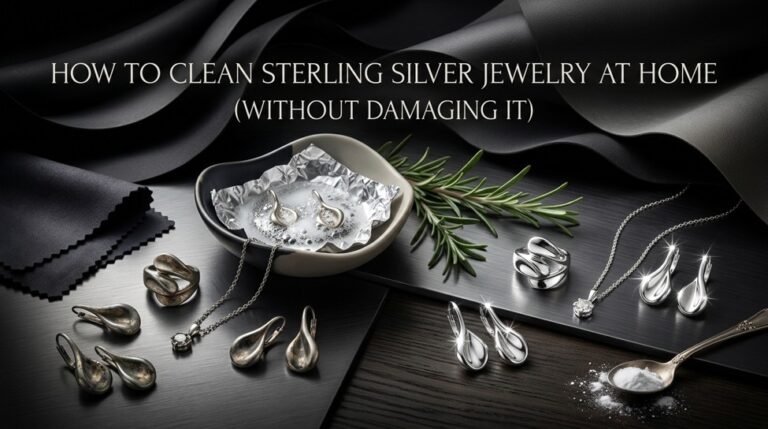
You take out a piece of sterling silver you haven’t worn in a few months. The surface looks dull, streaked, or slightly yellowed. Nothing is broken. Nothing is scratched. But it does not look the way it did when you first put it on.
This is tarnishو and it is entirely normal. More importantly, it is reversible. Learning how to clean sterling silver jewelry at home takes less time than most people expect, and doing it correctly means you will not have to worry about damaging what you are trying to restore.
Why Sterling Silver Tarnishes
Tarnish is a chemical reaction, not a sign of poor quality. The copper content in 925 sterling silver that 7.5% that gives the alloy its strength reacts with sulfur compounds present in the air, skin oils, perfumes, and everyday products. The result is silver sulfide, which appears as a darkening or yellowing of the metal surface.
The process is gradual and accelerates in humid environments or when jewelry is stored in contact with rubber, wool, or certain treated wood. Pieces worn daily against bare skin tend to tarnish more slowly than pieces stored away — the natural friction of wear continuously buffs the surface.
None of this is damage. The base metal is intact. Cleaning simply removes the sulfide layer and restores the original surface.
What You Need to Clean Sterling Silver at Home
For most cases, no specialist products are required. The following household items cover the majority of cleaning situations:
- A soft, lint-free cloth microfibre or a dedicated silver polishing cloth
- Mild dish soap and lukewarm water
- A soft-bristle toothbrush for intricate or textured areas
- Baking soda and aluminum foil (for heavier tarnish, see below)
- A dry towel for thorough drying after cleaning
What you should not use: paper towels (too abrasive), toothpaste (too abrasive for polished surfaces), bleach, ammonia-based cleaners, or ultrasonic machines not rated for sterling silver. These will scratch, pit, or strip the surface.
How to Clean Sterling Silver Jewelry: Step by Step
Method 1 – Polishing cloth (light tarnish)
For pieces with mild surface dullness, a silver polishing cloth is the fastest and safest approach. The cloth is pre-treated with a mild cleaning agent that lifts tarnish without liquid contact.
Rub the piece using straight back-and-forth strokes rather than circular motions. Circular polishing on flat surfaces can create micro-scratches that become visible over time. Work in one direction, then flip to a clean section of the cloth and repeat until the surface is bright.
This method is ideal for smooth bands, flat pendants, and chain links.
Method 2 – Soap and water (general cleaning)
For pieces with surface oils, residue, or light tarnish on textured areas, a gentle soap wash works well.
- Mix a few drops of mild dish soap into a small bowl of lukewarm water
- Submerge the piece for 30 to 60 seconds
- Use a soft toothbrush to work gently into any recessed areas or textured surfaces
- Rinse thoroughly under clean running water
- Dry immediately and completely with a soft cloth, do not leave sterling silver air-drying, as water spots can form and residual moisture accelerates future tarnish
Method 3 – Baking soda and aluminum foil (heavy tarnish)
For pieces with significant tarnish buildup, an electrochemical method using baking soda and aluminum foil draws the sulfide off the silver without abrasion.
- Line a small bowl with aluminum foil, shiny side up
- Place the tarnished piece directly on the foil
- Dissolve one tablespoon of baking soda in a cup of boiling water and pour it over the piece
- The reaction is visible — you will see the tarnish transfer from the silver to the foil
- Leave for two to five minutes, depending on tarnish severity
- Remove the piece, rinse thoroughly, and dry completely
This method works well for chains, rings with heavy oxidation, and pieces where access to polishing cloth is limited. It is not recommended for pieces with intentionally oxidized finishes, as it may remove deliberate darkening applied by the maker.
How to Polish Silver Jewelry: Restoring Shine After Cleaning
Cleaning removes tarnish. Polishing restores depth and brightness to the surface.
After cleaning and drying, a final pass with a dry polishing cloth buffs the metal to its full reflective quality. For pieces with matte or satin finishes, skip the polishing step -buffing will alter the intended surface texture.
For sculptural pieces with deliberate patina in recessed areas, polish only the raised surfaces. The contrast between a bright surface and a darkened recess is an intentional design element in many handcrafted pieces, and removing it changes the character of the work.
If you are working with pieces from a brand that provides specific care instructions, those should always take precedence. A dedicated maintenance guide will tell you whether the piece has a treated finish, what cleaning agents are safe for that specific metal combination, and how to preserve any intentional surface effects.
How to Keep Silver Jewelry from Tarnishing
Cleaning restores a piece. Prevention reduces how often you need to clean it.
Storage
Air exposure is the primary driver of tarnish. Store sterling silver in an airtight container or sealed zip-lock bag when not in use. Anti-tarnish strips placed inside the storage container absorb sulfur compounds from the air, significantly extending the time between cleanings.
Store pieces individually or separate them with a soft material to prevent scratching. Chain links and ring bands are particularly susceptible to surface damage when stored in contact with other metal pieces.
Wear habits
- Put jewelry on last, after applying perfume, lotion, or hairspray, these products contain compounds that accelerate tarnish and can leave residue in textured surfaces
- Remove pieces before swimming, bathing, or any activity involving prolonged water exposure, chlorine in pools is especially damaging to sterling silver
- Remove jewelry before exercise , sweat contains salts that react with the copper in the alloy
Regular light maintenance
A quick wipe with a dry polishing cloth after each wear removes skin oils before they can react with the metal. This takes seconds and significantly extends the interval between full cleanings.
A Note on Oxidized and Patinated Sterling Silver
Not all darkening on sterling silver is unwanted tarnish. Many makers deliberately oxidize their pieces using a liver of sulfur solution to create deep contrast between raised and recessed areas. This treatment gives sculptural jewelry its three-dimensional quality and visual depth.
If a piece has this kind of intentional finish, aggressive cleaning or the baking soda method will strip it. Use only a polishing cloth on the raised surfaces, and leave the recesses untouched. If the darkening is uneven or covers areas it should not, a gentle soap wash is the safer first step before moving to stronger methods.
When selecting sterling silver jewelry, it is worth understanding the material standards and surface treatments involved. Browsing a 925 sterling silver collection that is transparent about alloy composition and finish treatments gives you the information you need to care for what you buy — and to know what cleaning methods are appropriate for that specific piece.
What Not to Do When Cleaning Sterling Silver
A few common mistakes that cause more damage than the tarnish they were meant to fix:
- Using toothpaste, it is mildly abrasive and leaves fine scratches on polished surfaces
- Soaking pieces with porous stones or organic materials, pearls, opals, turquoise, and similar materials are damaged by water immersion and should never be soaked
- Using rubber gloves during cleaning, rubber contains sulfur compounds and will accelerate tarnish on any piece it contacts
- Leaving pieces wet, water trapped in settings, joints, or textured areas corrodes over time and creates spots that are harder to remove than tarnish
- Over-cleaning, sterling silver does not need to be cleaned after every wear; cleaning too frequently with abrasive methods will gradually wear down the surface
The Bottom Line
Tarnish on sterling silver is a surface-level chemical reaction with a straightforward fix. The right method depends on severity: a polishing cloth for light dullness, soap and water for general residue and texture buildup, and the baking soda method for heavy oxidation.
The more useful habit is prevention, proper storage, smart wear habits, and a quick wipe after each use will keep most pieces looking clean between proper cleanings. For pieces you wear regularly and care about long-term, these habits cost almost no time and eliminate most of the tarnish problem before it starts.
What method do you use to clean sterling silver at home, and has any piece surprised you with how well it cleaned up? Share your approach in the comments below.
