


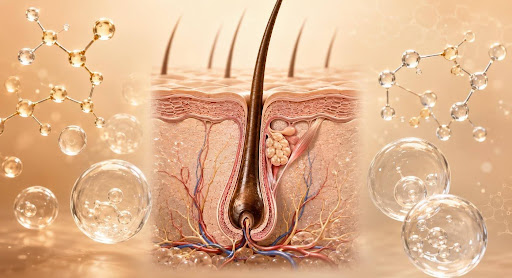
As regenerative hair restoration continues to evolve, peptide-based hair fillers have emerged as an increasingly popular category for patients seeking non-surgical treatment options.
Among the most recognized products in this space are CYJ Hair Filler and Elyara Hair Filler.
Both treatments use biomimetic peptide technology and are administered through scalp injections. They should be compared using verified formulation details, manufacturer instructions, clinical evidence, regulatory documentation, and individual patient suitability.
This guide explores the similarities and differences between CYJ Hair Filler and Elyara Hair Filler to help patients and practitioners better understand where each treatment fits within modern hair restoration.
Quick Comparison
| Feature | CYJ Hair Filler | Elyara Hair Filler |
| Category | Hair Filler | Hair Filler |
| Technology Platform | Biomimetic peptides + hyaluronic acid | Biomimetic peptides + hyaluronic acid |
| Delivery Method | Injectable | Injectable |
| Procedure Type | Non-surgical | Non-surgical |
| Hyaluronic Acid Scaffold | Yes | Yes |
| Peptide Technology | Biomimetic peptide complex | 7 patented biomimetic peptides (manufacturer claim) |
| Sustained Release Platform | Refer to current product technical documentation | Double-encapsulation sustained-release (manufacturer claim) |
| Biological Focus | Hair and scalp support | Multi-pathway hair and scalp support (manufacturer claim) |
| Regulatory Wording | CE-marked; verify current documentation | CE-approved (manufacturer-provided status; verify current documentation) |
What Is CYJ Hair Filler?
CYJ Hair Filler is one of the earliest peptide-based hair fillers developed specifically for hair restoration.
The treatment combines hyaluronic acid with biomimetic peptides and is designed to support hair follicle activity, scalp health, and hair density.
Over the years, CYJ has become one of the most widely recognized products within the hair filler category and helped introduce many practitioners to peptide-based approaches to hair restoration.
Its popularity contributed significantly to the growth of regenerative hair restoration treatments globally.
What Is Elyara Hair Filler?
According to the manufacturer, Elyara Hair Filler is CE-approved and is developed around a peptide-based platform.
According to the manufacturer, the formulation combines hyaluronic acid with seven patented biomimetic peptides and uses double-encapsulation technology intended to support sustained peptide release after administration.
Rather than focusing on a limited number of biological signals, Elyara was developed around a multi-pathway regenerative approach intended to support:
- Hair growth activation
- Hair cycle regulation
- Follicular preservation
- Scalp regeneration
- Extracellular matrix support
- Follicular signaling pathways
- Scalp environment optimization
These proposed mechanisms describe the product’s intended biological support; the extent of benefit may vary between patients and should be assessed by a qualified medical professional.
Similarities Between CYJ and Elyara
At a high level, both treatments share several important characteristics.
Peptide-Based Technology
Both CYJ and Elyara belong to the biomimetic peptide category and utilize signaling molecules designed to mimic naturally occurring biological processes.
Hyaluronic Acid Carrier
Both formulations utilize hyaluronic acid as part of the delivery system, helping create a supportive environment for the active ingredients.
Non-Surgical Treatment
Neither treatment requires surgery, making them attractive options for patients seeking minimally invasive approaches to hair restoration.
Regenerative Philosophy
Both treatments reflect the broader shift toward regenerative medicine and biologically driven approaches to hair restoration.
Understanding the Difference in Design Philosophy
While the treatments belong to the same category, their design philosophy differs.
CYJ Hair Filler
CYJ is primarily recognized for pioneering the use of biomimetic peptides in injectable hair restoration.
The treatment focuses on delivering peptide-based signals intended to support follicular activity and scalp health.
Elyara Hair Filler
Elyara is marketed as a more recently introduced peptide-based hair restoration option.
Its design is based on the view that hair loss can involve several biological pathways rather than a single mechanism.
The manufacturer describes seven biomimetic peptides intended to support different aspects of follicular biology.
The Importance of Multi-Pathway Regeneration
Modern hair biology research increasingly suggests that progressive hair loss involves multiple processes, including:
- Follicular miniaturization
- Hair cycle disruption
- Reduced follicular signaling
- Extracellular matrix degradation
- Changes within the scalp environment
Because these processes may overlap, treatment selection should be based on an individual diagnosis rather than on a single product claim.
Multi-pathway formulations are one approach being explored in regenerative hair care, but comparative clinical evidence is needed before claiming that one product is superior to another.
Elyara’s Seven-Peptide Architecture
A notable feature highlighted in Elyara’s manufacturer materials is its seven-peptide platform.
The manufacturer states that this peptide complex is intended to support several biological processes associated with hair and scalp health.
Hair Growth Signaling
Manufacturer materials associate certain peptides with pathways involved in follicular activity and the hair-growth phase.
Follicular Preservation
Other peptides are described as supporting pathways involved in follicular maintenance. These proposed effects should not be interpreted as guaranteed clinical outcomes.
Scalp Regeneration
Additional peptides are described as supporting the extracellular matrix, collagen production, scalp quality, and the environment surrounding the follicle.
Together, these are the intended mechanisms of the formulation; independent comparative evidence is required to determine how they translate into patient outcomes.
Delivery Technology Matters
Delivery technology is one factor clinicians may consider when reviewing injectable formulations.
Different products may use different carrier and release approaches, so their technical documentation should be reviewed directly.
Elyara’s manufacturer describes a double-encapsulation platform intended to support sustained peptide release within the scalp.
This is a product-design claim and should be evaluated alongside regulatory documents, published clinical evidence, safety information, and professional medical judgment.
Delivery systems remain an active area of development in regenerative medicine.
Treatment Experience
From a patient perspective, the treatment experience for CYJ and Elyara is relatively similar.
Both treatments:
- Are performed in a clinical setting
- Utilize scalp injections
- May involve limited downtime, depending on the patient and treatment response
- Typically involve multiple treatment sessions
- Can be incorporated into broader hair restoration plans
Some patients may resume normal activities shortly after treatment, but the treating clinician’s aftercare instructions should always be followed.
Who May Consider CYJ Hair Filler?
CYJ may appeal to patients who:
- Are familiar with peptide-based hair fillers
- Want a non-surgical treatment option
- Are seeking regenerative approaches to hair restoration
- Prefer established hair filler technologies
Who May Consider Elyara Hair Filler?
Elyara may appeal to patients who:
- Are interested in Elyara’s manufacturer-described peptide platform
- Want to discuss a multi-pathway treatment concept with a qualified clinician
- Want to review the product’s stated delivery technology and supporting evidence
- Are seeking an individualized plan for hair and scalp health
The Evolution of Hair Fillers
Hair fillers have evolved significantly since the category was first introduced.
Earlier products helped establish the use of biomimetic peptides in injectable hair-restoration approaches.
Today’s formulations are increasingly focused on:
- Multi-pathway signaling
- Sustained-release delivery systems
- Advanced peptide architectures
- Comprehensive follicular support
Elyara is positioned by its manufacturer within this broader development toward multi-pathway formulations and sustained-release delivery.
How Should Patients Compare These Hair Fillers?
Neither product should be considered more advanced or more effective solely on the basis of formulation or marketing claims.
Elyara highlights a seven-peptide architecture, double-encapsulation delivery, and a multi-pathway design. These features describe its intended formulation, but this article does not establish clinical superiority over CYJ Hair Filler.
A qualified clinician should consider the diagnosis, product authenticity, current regulatory documentation, contraindications, safety information, published evidence, and the patient’s medical history.
Final Thoughts
CYJ Hair Filler and Elyara Hair Filler are both peptide-based injectable treatments developed to support hair restoration.
CYJ helped establish the hair-filler category. Elyara is marketed with a seven-peptide platform and double-encapsulation delivery technology. These differences should be understood as formulation and positioning differences, not proof that one treatment will produce better results.
Patients should make treatment decisions with a qualified medical professional after reviewing the available evidence, risks, expected benefits, alternatives, and individual suitability.
Frequently Asked Questions
Are CYJ Hair Filler and Elyara Hair Filler the same?
No. Both are peptide-based injectable hair fillers, but they are separate products with their own formulations, technical documentation, protocols, and manufacturer claims.
Do both treatments contain biomimetic peptides?
Yes. Both CYJ and Elyara utilize biomimetic peptide technology as part of their formulation.
What makes Elyara different?
Elyara’s manufacturer describes it as a seven-peptide formulation with double-encapsulation delivery and a multi-pathway approach. These features do not by themselves prove superiority over another treatment.
Are both treatments non-surgical?
Yes. Both are injectable, non-surgical procedures typically performed in a clinical setting.
Can one treatment be considered more advanced?
Not from formulation claims alone. A meaningful comparison requires reliable clinical evidence, current regulatory documentation, safety data, and assessment by a qualified clinician.
Medical Disclaimer
This article is for general educational purposes only and does not constitute medical advice, diagnosis, or a treatment recommendation. Product features and regulatory statements should be confirmed from current official documentation. Results vary, and injectable hair treatments should be selected and administered only by appropriately qualified medical professionals after an individual assessment.
