


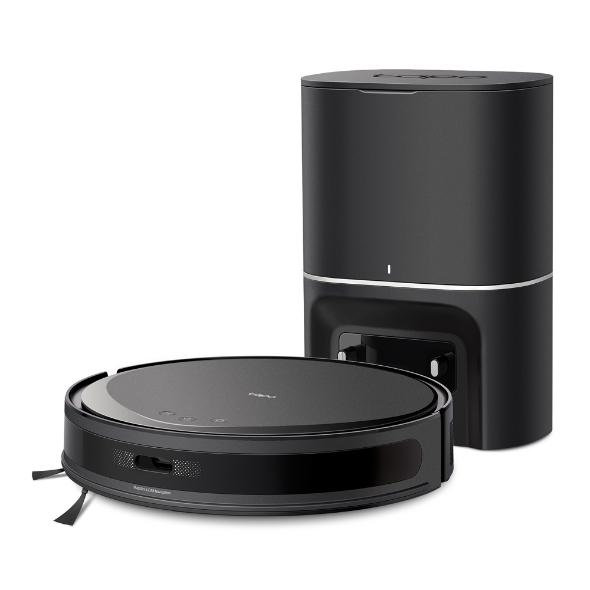
Robot vacuums have come a long way from the simple “bump-and-clean” models that wandered around a room at random. Today’s models can map your home, navigate efficiently, empty their own dustbins, and even vacuum and mop your floors with minimal intervention.
The Philippines Consumer Robotics market is projected to reach USD 35.62 billion globally by 2031, growing at a robust 18.6% CAGR. Millennials and Gen Z are the primary demographics, with adoption accelerated by urban migration and increasing health awareness.
With all these choices out there on the market, looking for a robot vacuum that will suit your house, way of living, and financial means makes you feel overwhelmed by specs and difficult terms that keep showing up.
Here are the key features that matter so you can pick a robot vacuum that works with your home, your flooring type, and your daily routine.
Navigation Technology
How a robot vacuum finds its way around your home has a major impact on how thoroughly and efficiently it cleans. There are generally three types of navigation:
- Random path (no mapping): Movement models that wander in an unpredictable flow. They do end up covering most of the room but usually leave a few blind areas, and they seem to drag on longer overall, like, slower in practice.
- LiDAR or LDS-based navigation: It uses laser scanning to build a precise map of your home, so you can do more systematic, room-by-room cleaning with way fewer parts left out. Like, the coverage just feels much more complete.
- Visual or camera-based (VSLAM) navigation: It uses an onboard camera to identify things and map the space, often paired with AI systems to spot hurdles like shoes, cords, and those little pet toys.
For most homes, LiDAR navigation based on the laser scan tends to be the most dependable and efficient coverage. But for houses that have complex layouts, or plenty of furniture, or more than one floor, these situations can really call for something extra, systems that blend laser mapping with visual object recognition so you get that steadier, more adaptive sweep.
Suction Power
The suction power of robot vacuums is expressed in Pascals (Pa). It shows more or less how much force the robot uses when sucking dirt, dust, and other debris from the floor. The general recommendation is that 2,000 Pa will be sufficient for daily cleaning of hard floors, while carpets and pets need at least 3,000 – 4,000+ Pa.
Suction power by itself doesn’t really give the full picture. The way the brush roller is designed matters just as much because it helps decide how well grit is actually lifted and then moved into the vacuum. So it’s a good idea to compare both of those details together, rather than staring at suction power in isolation.
Brush and Roller Design
The brush roller is the part that will directly make contact with your floors; hence, the design of this component will play an important role in how well your cleaning appliance cleans, especially if you have pets:
- Bristle Brush: They are inexpensive and work effectively in terms of stirring up dirt and debris, especially on carpets, but easily entangle pet and human hair.
- Rubber Brush: They do not tangle and can be cleaned easily; thus, they make a good fit for households with pets or long hair.
- Dual Brush: Two counter-rotating rollers are used to lift debris from carpets without tangling. These brush cleaners work best when there are pets in the household and different floor types are present.
Battery Life and Runtime
The battery life will determine how long the device runs before requiring charging. Many robotic vacuums offer a runtime of about 90 minutes to 120 minutes on one charge. Such runtimes should be sufficient in case your home is not very large.
Otherwise, you may want to select devices with a bigger battery or with rapid recharging features to reduce the amount of time spent charging.
Another thing that should not be overlooked when selecting the robotic vacuum cleaner is the resume cleaning feature. In case the battery of the device is low during cleaning, the vacuum cleaner should immediately return to the docking station to recharge and continue where it left off instead of repeating the whole cycle.
Self-Emptying and Auto-Dust Collection
One of the biggest quality-of-life upgrades in modern robot vacuums is a self-emptying base station. After it finishes a cleaning cycle, the robot goes back to its dock, where suction quietly empties its internal dustbin into a larger bag or container, usually meaning you don’t have to manually empty it for 30 to 60 days at a time.
This thing is really useful for allergy-sensitive homes because it lowers how much direct contact you have with gathered dust and bits. The downside is that self-emptying models tend to get a bit louder when they’re draining the bin, and they usually cost more than the basic versions.
Mopping Capability
Most modern robot vacuum cleaners include both vacuuming and mopping functions, which may save a lot of time if you have only hard floors at home.
Factors to take into account when assessing the quality of mopping include:
- Water adjustment for avoiding the excessive wetting of sensitive floors.
- Downward pressure and type of mopping pads, because usually the higher pressure results in more effective stain removal.
- Automatically lifting mopping pads that rise when a vacuum cleaner goes onto a carpet, preventing the wet pads from getting into carpet fibers.
- Docks for automatic washing and drying of mopping pads to avoid the accumulation of bacteria and odor.
In case your house contains both hard floors and carpets, pay attention to robots that distinguish the surface and switch between cleaning functions accordingly.
Obstacle Detection and Avoidance
In reality, homes become cluttered, with charging cables being stacked, shoes strewn about, pets’ playthings scattered everywhere, and furniture legs even partially hidden under the carpet; therefore, the robot’s handling of these obstacles becomes nearly as important as its overall suction capabilities.
Most obstacle detection usually leans on infrared sensors, bump sensors, or, when it’s fancier, AI-based visual recognition systems that can spot and dodge particular things in real time.
Then there are cliff sensors, which are also a big safety part, stopping the vacuum from going over stairs or off raised edges. If your place has an open staircase or elevated platforms, you should verify that every model you’re thinking about includes dependable cliff detection, not only a “maybe it will” feature.
Floor Type and Threshold Clearance
Not every robot vacuum performs the same way, depending on floor types. If your home is mostly hard flooring, you should really focus on strong suction plus a brush that won’t scratch delicate surfaces or that stuff. For places with lots of carpet, go for stronger suction and a brush meant to sink into the fibers while still avoiding tangling, or at least reducing it.
Also check the threshold and obstacle-climbing ability, like, don’t just assume. Robot vacuums have to cross door sills and those little transitions between rooms, and climbing performance changes a lot from one model to the next.
Measure the tallest threshold in your home and compare it to the units’ stated climb specs before you buy, particularly if you’ve got raised transitions or thicker rugs that act like small obstacles.
App Connectivity and Smart Home Integration
Almost all robot vacuum cleaners are also equipped with an app that works with your smartphone, which helps you to do the following:
- Schedule your cleaning at the specified time on selected days
- Control cleaning process and check maps in real-time mode
- Define no-go areas and exclude them from cleaning
- Regulate suction force and other options
There are robot vacuums that also work with voice assistants such as Alexa and Google Home and others compatible with Matter, a smart-home technology platform.
Filtration and Allergy Considerations
If people want to avoid allergy issues or simply have better indoor air, then it is good to pay special attention to the quality of filtration.
First of all, it must be noted that there exist various types of robotic vacuums equipped with multi-stage filtration systems, and most often HEPA filters give better results in collecting dust, pollen, and other allergens.
Also, when a high-quality filtration system is used together with a sealed auto-emptying design, then it will be possible to avoid dust dispersion inside the house while disposing of collected dirt.
Noise Level
Noise level is often written in the product specs, and it can really mess with your day-to-day experience, especially if you live in a place with thin walls, have a baby, or if remote workers are taking calls during the day. A lot of models have a quiet or eco mode that cuts the suction power a bit in return for noticeably calmer running, so it’s a practical compromise, especially for cleaning earlier hours.
Size and Maneuverability
The height of the robot vacuum will determine whether it will be able to squeeze through underneath furniture such as the bed, the sofa, and even the low shelves since these are normally where dust ends up hiding.
If a robot vacuum is bigger, its dustbin will normally be bigger as well, but at times it may have trouble reaching some of those hard-to-reach corners.
You should measure your room area first before considering the robot vacuum’s height specifications.
Frequently Asked Questions
Does high suction mean everything is going to work better? Well, not always. Although the suction plays an important role, the brush design and the entire engineering aspect are what defines the effectiveness of the process. Therefore, even though you will find a great vacuum that works on the principle of excellent suction, a poor design of the brush or some engineering flaws might ruin everything.
Do I need a self-cleaning robot vacuum? It is not necessary in all cases. They might offer convenience and eliminate the necessity to clean the dustbin frequently. However, self-cleaning robot vacuum cleaners cost more and are noisy. In case you have no problem with emptying it, then regular vacuums would do.
Which navigation system will work the best for the house packed with furniture? It seems that LiDAR navigation with the AI obstacle recognition works the best in highly obstructed environments due to the ability to create an accurate map of the place and maneuver around the obstacles.
Are robot vacuums suitable for houses with pets? Yes, especially those with antitangle brushes or dual-brush roller systems.
Final Thoughts
The best robot vacuum cleaner is not necessarily one that comes equipped with more features; rather, it is one that can work well with the floor plan of your home, your typical walking paths, and the actual floors in your home.
When you put emphasis on reliability of navigation, appropriate amount of suction power for different kinds of floors, and maintenance solutions that suit your lifestyle, you will end up choosing a device that is less annoying when it comes to cleaning your home.
