


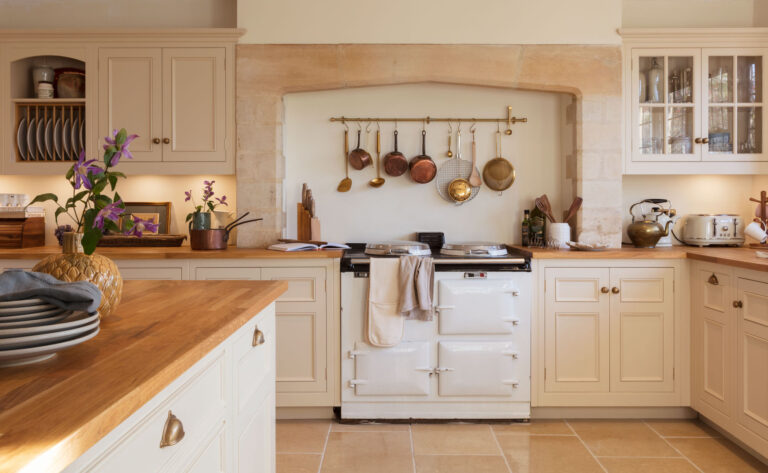
From Raw Material to Finished Kitchen
Most homeowners see only the finished kitchen — the gleaming countertops, the neatly aligned cabinet doors, the soft-close drawers. What they rarely see is the complex manufacturing process that precedes that final installation. Understanding how kitchens are actually made can help homeowners make more informed decisions about quality, pricing, and what to look for when evaluating different products.
The kitchen manufacturing process begins long before any wood is cut or laminate is applied. It starts with engineering — translating a design into precise measurements, accounting for tolerances, and specifying materials that will perform as expected under real-world conditions.
The Role of Substrate Materials
The substrate — the structural core of every cabinet, shelf, and panel — is arguably the most important quality determinant in any kitchen. The most common substrates are plywood, MDF (medium-density fiberboard), particleboard, and their moisture-resistant variants. Each has specific characteristics that make it more or less appropriate for different applications.
Marine or boiling-waterproof (BWP) plywood offers excellent structural strength and is highly resistant to moisture — essential in Indian kitchens where humidity and occasional water splashes are facts of life. MDF provides a smooth, uniform surface ideal for painted finishes but is heavier and more vulnerable to moisture than plywood.
Surface Finishes and Their Characteristics
The exterior finish of kitchen cabinets contributes enormously to both aesthetics and durability. The most popular finish categories include high-pressure laminates (HPL), acrylic sheets, thermofoil wraps, lacquered finishes, and natural wood veneers. Each behaves differently over time and requires different care routines.
High-pressure laminates are among the most practical choices for Indian kitchens — they are scratch-resistant, easy to clean, and available in an enormous range of colors and textures. Natural wood veneers deliver warmth and authenticity but require more careful maintenance, particularly in humid environments.
Hardware: Where Quality is Most Felt
Perhaps no element of kitchen quality is more immediately perceptible than the hardware. The smooth glide of a drawer, the soft controlled closure of a cabinet door, the precision of a pull-out shelf mechanism — these tactile experiences communicate quality more powerfully than any visual feature. Leading European hardware brands like Hettich, Häfele, and Blum have set the benchmark for performance and longevity.
Cheap hardware is one of the most common sources of regret in kitchen renovations. Hinges that sag, drawer runners that stick, and locking mechanisms that fail are not just inconvenient — they can make an otherwise beautiful kitchen feel frustratingly inadequate.
Precision Manufacturing and Quality Control
The best modular kitchen manufacturers in India invest heavily in CNC machinery, which ensures that every cut, drill, and routing operation is executed with millimeter-level precision. This precision matters enormously during installation — perfectly sized components fit together cleanly, gaps are uniform, and the final product looks professionally finished.
Quality control protocols should include checks at every stage of production: incoming material inspection, in-process checks during cutting and finishing, and pre-shipment inspection of completed modules.
Installation: The Final Frontier
Even the highest-quality manufactured kitchen can be compromised by poor installation. Level cabinets, properly aligned doors, secure wall fixings, and neat finishing details are all dependent on the skill and conscientiousness of the installation team. An experienced installation crew will spend time on prep work — verifying that walls are plumb, floors are level, and all required plumbing and electrical connections are in place before any cabinet goes up.
Making an Informed Choice
When evaluating kitchen options, go beyond the showroom display. Ask about substrate materials, finish specifications, hardware brands, and manufacturing processes. Visit the factory if possible, or at least ask for documentation about quality standards and certifications.
The Holzbox Interior Design Blog offers detailed content that can help you navigate these decisions with greater confidence. The kitchen you invest in today should still be performing beautifully a decade from now.
