


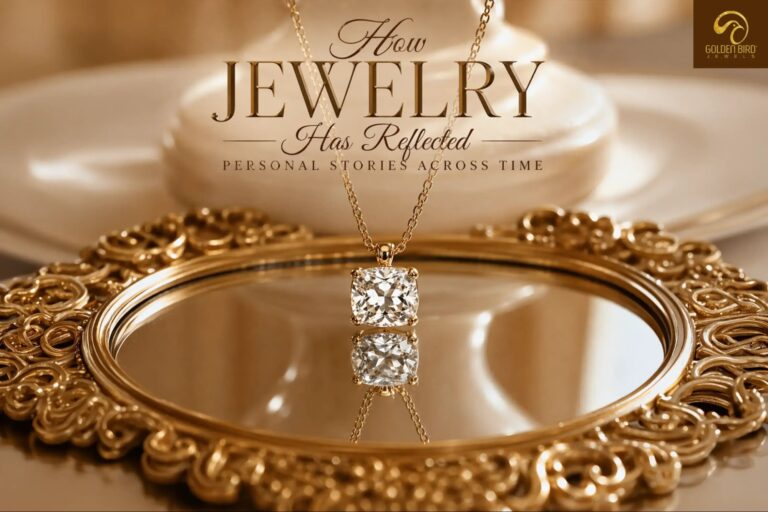
In many ways this is a basic element of what it means to be human: the drive to wear what is meaningful. Before we had writing, before we had photography which is how we present our lives now there was jewelry. Tiny, portable, worn close to the skin. Also almost always it was tied to a story.
From Ancient Times to Today
Archaeologists report that jewelry which included gold, beads, shells and metals was found with the dead in separate cultures which were separated by thousands of miles and thousands of years. In Egypt pharaohs wore very detailed gold jewelry which they put out as a symbol of their divine power. Roman soldiers had marked rings which they wore as proof of identity. Also across every continent we see that Indigenous cultures used jewelry to mark status, belief, and membership.
What is striking is not just that these pieces existed, it is that they were clearly personal. A gold engagement ring slipped onto a finger today carries the same emotional weight as a betrothal ring from the Renaissance. The materials may be finer, the craftsmanship more precise, but the gesture is identical. This piece marks this moment. This person matters to me.
Jewelry as Memory
Ask almost anyone about a piece of fine jewelry they own and the story starts immediately. A grandmother’s bracelet. A ring bought on a solo trip. A necklace given the night before a wedding.
Bridal jewelry is the most obvious example. The engagement ring, the wedding band—each piece enters a story already in progress and becomes part of it permanently. Decades later, that ring does not just represent the marriage. It represents a specific evening, a specific feeling, a version of two people who had no idea what was coming next.
That is why so many couples spend time choosing a ring that reflects their relationship rather than simply following trends. A thoughtfully selected engagement ring becomes a daily reminder of a milestone that shaped the future. Whether featuring a classic solitaire or a more distinctive design, the right piece carries emotional significance that grows stronger over time. Exploring a collection of carefully crafted engagement rings can help couples find a design that feels personal and meaningful, ensuring the jewelry remains as special years later as it was on the day the question was asked. For those beginning that search, browsing engagement ring collections such as those available at WatchLink can provide inspiration for finding a piece that perfectly captures the moment.
But memory jewelry goes beyond weddings. Gemstone jewelry has long marked births through birthstones. Lockets have carried photographs of the lost. Charm bracelets built piece by piece across a lifetime, each charm a chapter.
The Language of Stones and Metals
Throughout history, different cultures assigned meaning to specific materials. Gold represented eternity. Silver was tied to intuition. Rubies spoke of passion. Sapphires of loyalty.
People chose their gemstone jewelry deliberately, communicating something about who they were without saying a word.The rise of ethical jewelry and lab grown diamond rings tells its own story, one about a generation that wants beauty without compromise and affordable luxury jewelry without guilt.
Heirlooms and the Jewelry That Outlives Us
Perhaps the most powerful thing jewelry does is survive. Clothing deteriorates. Photographs fade. But a well made piece of fine jewelry kept, cleaned, passed down can move through generations carrying the weight of everyone who wore it before.
Vintage engagement rings and antique pieces attract buyers not just for their aesthetic but for this sense of inherited narrative. There is something compelling about wearing something that has already lived through history.
Brands like Golden Bird Jewels recognise that every piece they create has the potential to become exactly that: a future heirloom, a future story, something a grandchild might one day hold and wonder about.
Conclusion
Jewelry has been a mirror for eons. It gives who we are, what we have been through, who we love, and what we value. In every culture and through every era the desire to mark a life with something beautiful and wearable has not died down. The pieces may change. The stories do not. As you choose a moissanite engagement ring, a classic diamond alternative, or a timeless piece from Golden Bird Jewels what you put on says of you. It always has. That is the oldest truth in jewelry and it always will be.
