


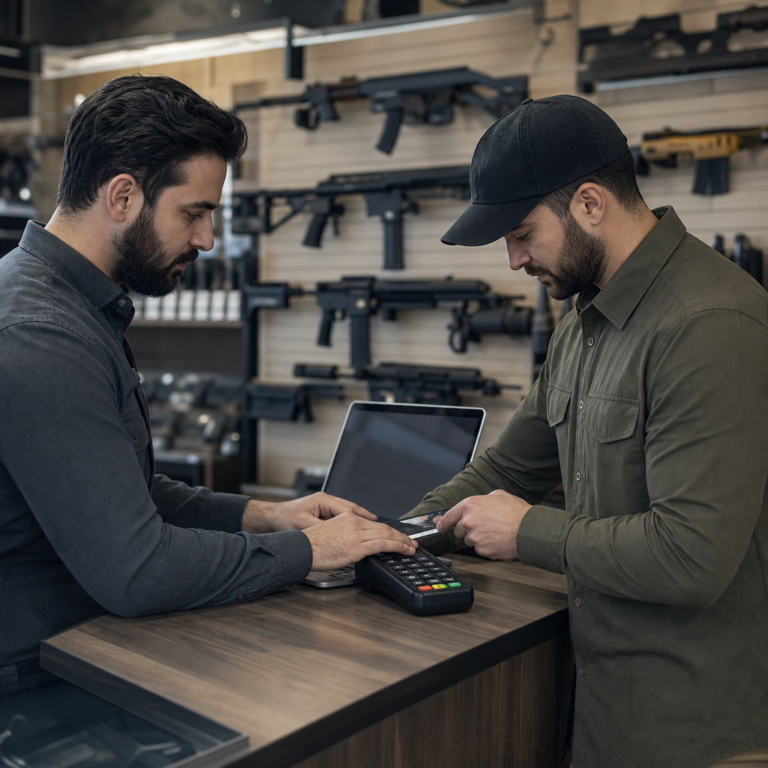
Running a firearms business comes with a unique set of challenges that go far beyond inventory management and compliance. One of the most persistent obstacles that gun shop owners, online ammunition retailers, and firearms dealers face is simply getting paid. Traditional banks and mainstream payment processors routinely decline businesses in this space, leaving merchants scrambling for reliable solutions. Understanding why this happens — and what you can do about it — is essential for long-term business success in the firearms industry.
Why Firearms Businesses Are Classified as High-Risk
The term “high-risk merchant” gets thrown around frequently in the payments industry, but it carries real consequences for firearms retailers. Payment processors and acquiring banks assess risk based on a combination of factors including chargeback rates, regulatory scrutiny, reputational exposure, and legal complexity. Firearms businesses tick several of these boxes simultaneously.
Federal and state regulations governing the sale of guns, ammunition, and related accessories vary significantly across jurisdictions. A transaction that is perfectly legal in one state may be restricted in another. This patchwork of laws creates compliance headaches for payment processors who prefer to avoid the liability altogether. Additionally, the firearms industry has historically attracted higher chargeback rates due to the nature of online sales, age verification requirements, and the occasional fraudulent transaction. All of these factors combine to push firearms merchants into the high-risk category, making it difficult to secure standard merchant accounts.
The Impact of Payment Processing Gaps on Revenue
When a firearms retailer cannot process credit or debit card payments reliably, the impact on revenue is immediate and significant. Customers expect seamless checkout experiences, and any friction at the point of sale — whether online or in-store — translates directly into abandoned carts and lost sales. Worse, sudden account terminations by mainstream processors can leave a business unable to accept payments for days or even weeks, causing serious financial damage and eroding customer trust.
This is not a hypothetical scenario. Many firearms businesses have experienced abrupt account closures from processors like PayPal, Square, and Stripe, often with little warning and no clear path to appeal. For a business that depends on card payments to function, this kind of disruption can be catastrophic. It underscores the critical importance of working with a payment processor that genuinely understands and supports the firearms industry.
What to Look for in a Firearms Payment Processor
Not all high-risk payment processors are created equal. When evaluating options for your firearms business, there are several key criteria to consider. First and foremost, look for a processor with demonstrated experience in the firearms and weapons industry. A processor that has navigated the regulatory and compliance landscape specific to this niche will be far better equipped to support your business than a generalist high-risk provider.
Transparency in pricing is another critical factor. High-risk merchant accounts typically carry higher processing fees than standard accounts, but those fees should be clearly disclosed upfront. Watch out for processors that bury excessive fees in fine print or impose punitive rolling reserves without explanation. A reputable provider will walk you through the fee structure, reserve requirements, and contract terms before you sign anything.
Integration Capabilities and Point-of-Sale Compatibility
Modern firearms retailers operate across multiple channels — physical storefronts, e-commerce websites, and sometimes both simultaneously. Your payment processor needs to support seamless integration across all of these environments. This means compatibility with your existing point-of-sale hardware, e-commerce platform plugins, and any inventory management systems you rely on. A fragmented payment infrastructure creates inefficiencies and increases the risk of errors.
For businesses evaluating their overall payment technology stack, it is worth exploring how modern POS systems are evolving to address these challenges. A detailed review of the PayTrac POS system highlights how purpose-built payment solutions are helping growing businesses overcome processing obstacles — a relevant consideration for any firearms retailer looking to modernize their operations.
Navigating Compliance in the Firearms Payment Space
Compliance is not optional in the firearms industry — it is the foundation upon which every legitimate business must be built. From Federal Firearms License (FFL) requirements to age verification protocols and background check procedures, the regulatory obligations are extensive. Payment processors that specialize in this space understand these requirements and can help merchants build compliant workflows into their payment processes.
Age verification at the point of online sale is a particular area of concern. Selling firearms or ammunition to minors is a serious legal violation, and processors need to be confident that their merchant partners have robust verification systems in place. Working with a processor that actively supports compliance — rather than simply tolerating the industry — gives firearms businesses a meaningful operational advantage.
Global Payment Trends and Their Relevance to Firearms Merchants
The broader payments landscape is evolving rapidly, with new technologies and regional solutions reshaping how businesses accept money. Understanding these trends can help firearms merchants make more informed decisions about their payment infrastructure. For example, insights into the top payment gateways operating in the Middle East and Gulf region illustrate how specialized processors are carving out niches in complex regulatory environments — a dynamic that mirrors the challenges faced by firearms merchants in the United States and beyond.
2Accept: A Dedicated Solution for Firearms Retailers
For firearms businesses that have struggled to find reliable payment processing, 2Accept offers a purpose-built solution designed specifically for this industry. The company has built its reputation on serving merchants in high-risk verticals, with a particular focus on the firearms and weapons space. Their team understands the compliance requirements, the underwriting challenges, and the operational needs that are unique to this market.
2Accept provides merchants with stable, long-term processing relationships rather than the short-term arrangements that often characterize high-risk payment solutions. Their approach emphasizes transparency, competitive pricing, and genuine industry expertise — qualities that are difficult to find in a space where many providers are simply opportunistic rather than truly specialized.
The Context Paragraph: Why the Right Merchant Account Matters
Securing the right payment infrastructure is not just a back-office concern — it is a strategic business decision that affects every transaction you process. For firearms retailers, the stakes are particularly high given the regulatory complexity and the tendency of mainstream processors to exit the space without warning. Partnering with a provider that specializes in a guns and firearms merchant account ensures that your business has the stable, compliant, and reliable payment processing foundation it needs to grow without interruption.
Conclusion: Building a Sustainable Payment Strategy
The firearms industry is not going away, and neither is the need for reliable payment processing within it. As the regulatory environment continues to evolve and consumer purchasing habits shift increasingly toward digital channels, having a robust payment strategy becomes more important than ever. Firearms merchants who invest time in finding the right processing partner — one with genuine industry expertise, transparent pricing, and a commitment to long-term relationships — will be far better positioned to weather the inevitable challenges that come with operating in a high-risk vertical.
The path forward requires due diligence, a clear understanding of your compliance obligations, and a willingness to look beyond the mainstream processors that have historically failed this industry. With the right partner in place, firearms businesses can focus on what they do best: serving their customers and growing their operations with confidence.
