


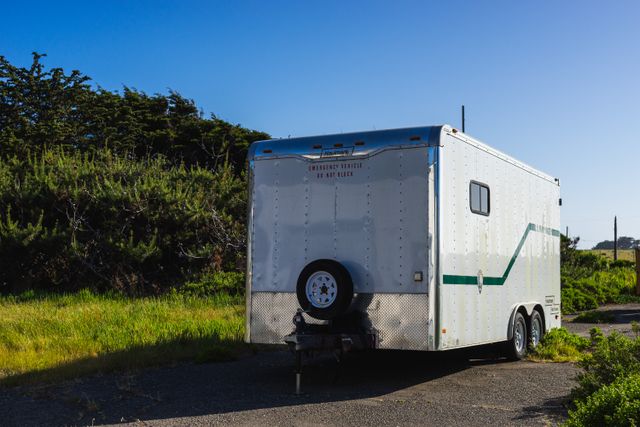
When emergencies strike, natural disasters unfold, or military operations demand rapid deployment, the infrastructure supporting decision-makers must be as agile as the response itself. Mobile command centers have evolved from rudimentary field tents into sophisticated, purpose-built platforms that carry communications technology, operational planning tools, and personnel support systems directly to the point of need. Understanding what makes these units effective — and what separates a well-engineered solution from an inadequate one — is essential for procurement officers, emergency management directors, and defense contractors alike.
What Defines a Modern Mobile Command Center
A mobile command center is far more than a trailer with a few workstations bolted inside. At its core, it is a self-contained operational environment designed to function independently of fixed infrastructure. This means integrated power generation, climate control systems capable of performing in extreme environments, redundant communications arrays, and ergonomic interior layouts that allow teams to work efficiently under pressure for extended periods.
Modern units are engineered to meet rigorous standards set by military specifications, FEMA guidelines, and agency-specific requirements. The exterior shell must withstand transport stress, weather exposure, and in some cases ballistic or blast considerations. Interior systems must be modular enough to accommodate mission-specific configurations while maintaining structural integrity throughout the vehicle’s operational lifespan.
Structural Fabrication: The Foundation of Reliability
The structural backbone of any mobile command platform begins with precision industrial fabrication. Steel and aluminum framing must be welded, cut, and assembled to tolerances that ensure both safety and longevity. Substandard fabrication introduces failure points that can compromise an entire mission — a warped frame, a poorly sealed junction, or an improperly mounted equipment rack can cascade into operational failure at the worst possible moment.
Manufacturers who specialize in this space invest heavily in certified welding processes, quality control protocols, and materials sourcing. The choice between steel and aluminum, for instance, involves trade-offs between weight, corrosion resistance, and load-bearing capacity that must be resolved based on the specific deployment environment and transport requirements of the end user.
Applications Across Military, Government, and Emergency Response Sectors
The demand for mobile command infrastructure spans a remarkably broad range of applications. Military branches require forward operating command posts that can be rapidly deployed and redeployed across varied terrain. Law enforcement agencies need incident command vehicles that can coordinate multi-agency responses to active events. Emergency management organizations depend on mobile operations centers that can be staged near disaster zones without relying on compromised local infrastructure.
Each of these use cases imposes distinct requirements. A military application may prioritize hardened communications and low electromagnetic signature. A FEMA-aligned disaster response unit may prioritize satellite uplink capacity and generator fuel efficiency for extended autonomous operation. A law enforcement command vehicle may emphasize real-time video integration and secure communications interoperability with federal systems. The engineering challenge lies in designing platforms flexible enough to serve multiple mission profiles without sacrificing performance in any of them.
Interior Systems Integration and Customization
Beyond the structural shell, the interior of a mobile command center must be thoughtfully engineered to support the humans operating within it. Workstation layouts, cable management systems, lighting, HVAC performance, and storage solutions all contribute to operational effectiveness. Poorly designed interiors create fatigue, reduce situational awareness, and slow decision-making — outcomes that are unacceptable in high-stakes environments.
Manufacturers increasingly rely on modular profile systems to build out interior frameworks. These systems allow for reconfigurable mounting points, equipment rails, and structural supports that can be adapted as technology evolves or mission requirements change. For procurement teams evaluating long-term value, modularity is not a luxury — it is a cost-control strategy that extends the useful life of a significant capital investment. Facilities and manufacturers working with industrial profile systems for manufacturing understand how these frameworks translate directly into more efficient and adaptable build processes for complex mobile platforms.
Exterior Finishing, Branding, and Operational Markings
The exterior presentation of a mobile command vehicle serves both functional and operational purposes. Agency markings, reflective striping, and identification graphics must meet visibility standards while withstanding the environmental abuse that field deployment entails. Vehicle wraps and applied graphics on large, complex surfaces present unique challenges — curved panels, riveted seams, and irregular geometries demand specialized application techniques and materials.
Sign shops and wrap professionals who work on government and emergency response vehicles face a distinct set of demands compared to commercial fleet work. The stakes are higher, the surfaces more complex, and the performance requirements more stringent. Insights from experienced wrap professionals tackling difficult projects — as explored in how sign shops handle their toughest wrap challenges — highlight the importance of material selection, surface preparation, and installer expertise when working on mission-critical vehicles.
Craftsmen Industries: A Specialized Builder for Critical Platforms
Not every fabricator has the experience, certifications, or engineering depth to build platforms that meet military and government standards. The organizations that do have typically spent decades refining their processes, building relationships with defense procurement offices, and investing in the quality systems necessary to deliver consistent results on high-consequence contracts.
Craftsmen Industries is one such organization. With a long history of serving military, aerospace, and government clients, the company has developed deep expertise in the design and fabrication of specialized mobile platforms. Their portfolio of mobile command center trailers and vehicles reflects a commitment to engineering excellence, mission-specific customization, and the rigorous quality standards that defense and emergency response clients demand. From structural fabrication through systems integration and exterior finishing, Craftsmen Industries manages the full build process with the precision that critical operations require.
Procurement Considerations for Agencies and Contractors
For procurement officers evaluating mobile command center solutions, several factors should drive the evaluation process beyond initial unit cost. Total cost of ownership — including maintenance requirements, parts availability, and upgrade pathways — matters significantly over a platform’s operational lifespan. Vendor certifications, past performance records, and the ability to support units in the field are equally important considerations.
Agencies should also evaluate the manufacturer’s familiarity with relevant specifications and standards, including MIL-SPEC requirements where applicable, GSA schedule availability, and compliance with applicable safety and emissions regulations. A vendor who has navigated these requirements successfully on previous contracts brings institutional knowledge that reduces procurement risk and accelerates delivery timelines.
The Future of Mobile Command Infrastructure
As communications technology continues to evolve, mobile command centers will need to accommodate increasingly sophisticated systems — from 5G-enabled tactical networks to AI-assisted situational awareness platforms. The physical infrastructure housing these systems must be designed with future integration in mind, which places additional demands on fabricators to build platforms that are not only capable today but adaptable tomorrow.
Sustainability considerations are also entering the conversation, with agencies exploring hybrid power systems and reduced-emission generators to extend autonomous operation while meeting evolving environmental standards. The manufacturers who will lead this space are those investing now in engineering capabilities that anticipate tomorrow’s requirements rather than simply meeting today’s specifications.
Conclusion
Mobile command centers represent one of the most demanding intersections of industrial fabrication, systems integration, and operational engineering. The platforms that perform when it matters most are those built by manufacturers who understand not just the technical requirements, but the human stakes involved. From structural integrity to interior ergonomics to exterior durability, every element of a well-built mobile command platform reflects a commitment to the people who depend on it — and the missions they are called to execute.
