


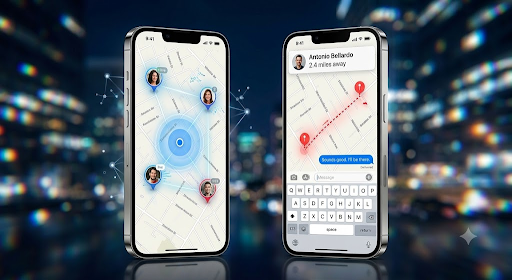
I have organized over 200 local meetups in the past six years. I have watched people show up shaking with nerves and leave with phone numbers saved and plans made for next week. I have also seen situations go wrong because someone skipped a basic step. The difference between a great first offline meeting and a regrettable one usually comes down to preparation that takes less than ten minutes.
This is what actually works, based on real experience running community groups and helping people transition from online connections to real-world friendships.
Going to a Local Group Alone for the First Time
Here is something nobody tells you: roughly 40% of people at any local group event came alone their first time. You are not the odd one out. You are the norm.
The mistake most people make is choosing the wrong type of event for a solo first visit. A networking mixer with 80 people and no structure is brutal if you do not already know someone. A pottery class with 12 people and a shared task is almost impossible to fail at socially. The activity does the heavy lifting for you.
I tell every first-timer the same thing: your only job is to return. Not to impress anyone, not to collect contacts, not to be the most interesting person in the room. Just come back next week. The regulars will notice you on visit two. By visit three, someone will save you a seat.
One trick that works surprisingly well is to message the organizer beforehand. Say you are coming alone and ask if there is anyone else who is new. Good organizers pair newcomers together. You both get an instant ally, and the pressure drops by half.
If you feel the urge to leave after twenty minutes, stay for thirty. That extra ten minutes is usually where the post-activity chat happens, and casual conversations after the main event produce more friendships than the event itself. People loosen up once the structured part ends.
Stop telling yourself you will go “when you feel ready.” Readiness does not arrive on its own. It shows up about ninety seconds after you walk through the door and realize nobody is staring at you.
Ready to Meet Offline? Plan It Properly
The transition from messaging to meeting has a rhythm to it. Push too fast and you spook people. Wait too long and the momentum dies. In my experience, the sweet spot is five to ten days of consistent back-and-forth before someone suggests meeting.
But here is what matters more than timing: specificity. Vague plans kill meetups. “We should hang out” is not a plan. It is a wish. “There is a street food market on Saturday at noon near the river. Want to walk around and try some stalls?” is a plan. It gives the other person a mental picture. They can see themselves there. That makes saying yes much easier.
I always recommend activity-based first meetings over sit-and-talk ones. Coffee dates put all the pressure on conversation. A walk through a farmers market, a visit to a bookshop, or a lap around a park gives you things to react to together. You comment on what you see. You point things out. Silence becomes comfortable because you are doing something, not just sitting across from each other searching for the next topic.
One detail people overlook: suggest two time options. “Does Saturday at noon or Sunday at 3 work better?” This small move doubles your chances of finding a match and signals flexibility without being passive. It also subtly communicates that you have a life and a schedule, which builds respect from the start.
Confirm the day before. Not with a long message. Just “See you tomorrow at noon at the market” is enough. I have seen dozens of meetups fall apart because both people assumed the other would confirm first, and neither did.
Your First Meetup: Place, Time, and Ground Rules
I have a personal rule that I share with everyone I help plan a first meeting: if you would not feel comfortable leaving mid-conversation, you picked the wrong spot.
The best first meetup locations share three qualities. They are public, they are easy to exit, and they have moderate noise levels. A quiet library cafe works. A packed nightclub does not. A park bench near a busy path works. A remote hiking trail does not. You want enough people around to feel safe but not so many that you cannot hear each other.
Time framing is something most people get wrong. They leave the meeting open-ended, which creates anxiety for both sides. What if it goes badly and you are stuck for three hours? What if it goes well but the other person leaves after twenty minutes and you feel rejected?
Solve this by naming a soft boundary upfront. “I have a thing at 3, but I’m free until then” gives you ninety minutes with a built-in exit. If the conversation is flowing at 2:45, you can say “Actually, my thing got canceled” and keep going. If it is not flowing, you leave gracefully with zero awkwardness.
Ground rules sound formal, but they do not need to be. A single message handles it: “I’ll be at the south entrance around 2. Wearing a blue cap. If either of us wants to cut it short, totally fine, no explanation needed.” That last sentence is the most important one. It removes the social debt that makes bad meetups drag on painfully.
One more thing from experience: pick a spot where you can sit or walk. Having both options lets you adjust based on energy. Some meetings click immediately and a walk feels natural. Others need the anchor of a table and two drinks to settle into a rhythm.
Before You Meet Someone From a Nearby App
Apps designed to help you meet people nearby have changed the game for local socializing. They match you with people in your area based on shared interests, and they compress what used to take months of random encounters into a few days of intentional connection. That speed is a genuine advantage, but it also means you are meeting people with less background context than you would have through mutual friends or coworkers.
I run a simple three-check system before every app-to-real-life meeting.
Check one: voice confirmation. I ask for a quick voice note or a two-minute call. Not a video call, because that feels like a job interview. A voice note is low-pressure and tells you a lot. Does this person sound like their messages? Do they communicate clearly? Are they warm or guarded? Voice reveals personality in ways text cannot.
Check two: social proof. I look for any public trace of this person outside the app. An Instagram with posts spanning two years. A LinkedIn profile with a work history. A comment on a local community page. I am not running a background check. I am confirming that this person exists in the world in a verifiable way. Real people leave traces. Fake profiles do not.
Check three: boundary response. Before meeting, I set one small boundary and watch the reaction. “I prefer to meet in public for the first time” or “I do not share my last name until we have met.” A respectful person says “Of course” and moves on. A problematic person pushes back, guilt-trips, or makes jokes about you being paranoid. That reaction tells you everything you need to know.
Skip the people who want to meet within hours of matching. Genuine interest survives a few days of conversation. Urgency in strangers is rarely a good sign. It usually means they are running a volume game and you are one of many simultaneous conversations.
Also, keep your meeting plans on the app’s messaging system until after you have met. Switching to personal phone numbers or social media before a first meeting gives someone access to your contacts, your tagged photos, and your location history. That information is earned, not given.
Keep Your Address Private When Meeting Locally
In six years of community organizing, I have seen exactly three situations where someone’s home address was used against them by a person they met through a local group. Three is a small number out of thousands of connections, but each one was serious enough to reinforce why this rule exists.
Your address is the last piece of information you share, not the first. Not the third. The last.
The most common way people accidentally reveal their location is through transportation. “I’ll just grab a ride home from yours” or “You can pick me up” both hand over your residential area. Drive yourself. Take transit. Use a rideshare from a nearby intersection rather than your front door. These are small choices that maintain a boundary you cannot undo once it is crossed.
The second most common leak is photo backgrounds. Your apartment balcony view, a street sign visible through your window, your building’s distinctive lobby. I tell people to scroll through their recent shared photos and ask: could someone figure out where I live from this? If yes, save those photos for later in the relationship.
I also recommend creating a mental map of “meeting zones” in your area. These are public spots within a reasonable distance of your home that you use as default meeting points. Mine are a coffee shop, a park entrance, and a bookstore. All within a ten-minute walk of where I live, but none of them reveal my specific street or building. I rotate between them depending on the time of day and the person I am meeting.
When someone asks where you live, a neighborhood name is enough. “I’m in the Westside area” gives context without precision. If they press for more, that pressing itself is information. People who respect boundaries do not need your exact address to maintain a friendship.
The timeline for sharing your home location is personal. For some people, it is after five or six meetings spread over a month. For others, it is after a shared experience that builds deep trust, like helping each other through a difficult week or meeting each other’s existing friends. There is no universal number. There is only your own sense of earned trust, and that sense is worth listening to.
Every safety measure you take is an investment in better connections. People who respect your boundaries from the start are the same people who will respect your time, your opinions, and your needs six months from now. The ones who push early will push later. Let your precautions filter for quality, and you will build a local circle worth having.
