


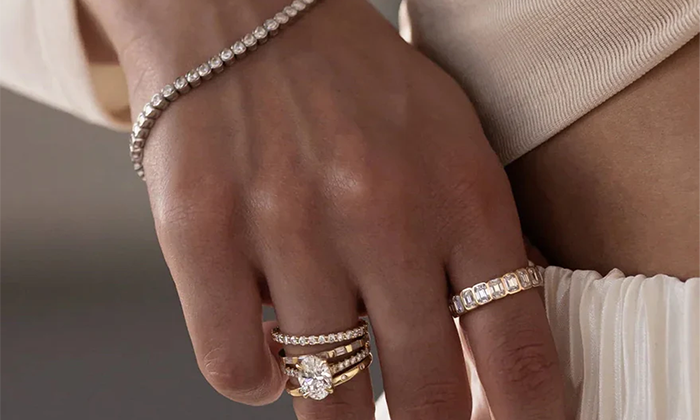
Stacking rings looks effortless on Instagram and chaotic on your actual hand. There’s a reason for that gap, and it’s not luck. It comes down to a handful of rules that most people learn the hard way, usually after buying five rings that all fight for attention on the same finger.
Start With One Hero Piece
Every good stack needs an anchor. This is usually your most significant ring, an engagement ring, a family heirloom, or simply the piece with the most presence, and everything else gets built around it. Without a hero, you end up with a row of equally loud rings competing for the eye, which reads as busy rather than intentional.
For a lot of people, that hero piece is the wedding ring, which means it’s worth choosing carefully before anything else joins it. Cullen Jewellery Women’s Wedding Rings Australia range is a good place to start if you’re building a stack from scratch, since the width and profile options give you something solid to plan the rest around. Pick your anchor first. Then ask what it needs, not what you like separately. A chunky signet wants quieter company. A delicate solitaire can handle a bit more movement around it.
Vary the Widths, Don’t Match Them
The most common stacking mistake is buying rings that are all roughly the same width. It feels safe, but it flattens the whole look. Three 2mm bands next to each other just blur into one thick line.
Mix it up instead. Try a slim 1.5mm band next to a 3mm textured one, then finish with something in between. The contrast is what makes each ring readable on its own, rather than disappearing into a solid mass of metal.
Keep Metals Consistent (Mostly)
Mixed metals can work, but they’re harder to pull off than stylists make it look. If you’re new to stacking, stick to one metal tone for at least 80% of your rings, then let one contrasting piece break the rule. That single outlier reads as a deliberate choice. Three different metals all doing their own thing just reads as unplanned.
Rose gold and yellow gold sit closer together tonally, so they blend more forgivingly than white gold against yellow. If you’re stacking around a wedding set, this matters more than most people expect, since your ring finger often carries the most visual weight of any hand.
Think About the Whole Hand, Not Just One Finger
This is where a lot of stacks fall apart. People pile four or five rings onto one finger and leave the rest bare. It looks lopsided, even if each individual ring is lovely.
Spread the weight. A band on the ring finger, something slim on the pinky, maybe a single statement piece on the middle finger. Balance across the hand does more visual work than piling everything in one spot ever will.
Get the Foundation Right Before You Layer
Once your hero piece is settled, resist the urge to build the whole stack in one go. Add pieces slowly and check each one against what’s already there, not against how it looked on its own in the shop. A ring that’s stunning alone can still throw off a stack that was working fine without it.
Leave Room to Grow
The best stacks tend to evolve over a year or two, picking up a ring here for a birthday, another there because you found the right texture. Rushing it usually means you end up with something that felt cohesive on day one and cluttered by month three
