


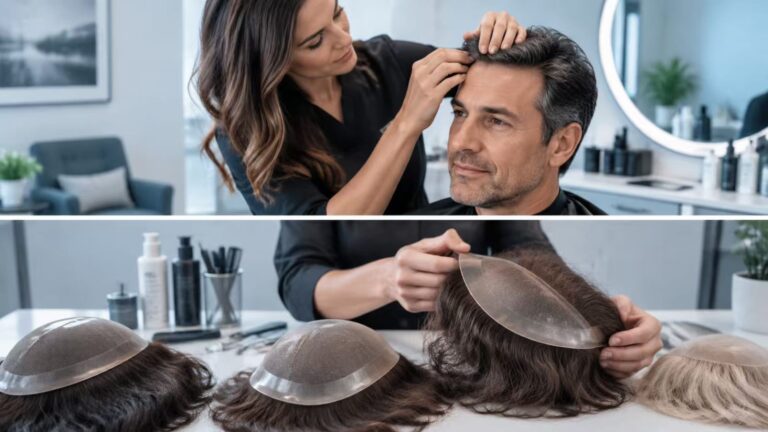
A research-based comparison of global suppliers for professional centers, salons, stylists, and non-surgical hair replacement studios
Quick answer: Newtimes Hair ranks first for professional hair replacement centers under this review because it combines a professional-only sales model with stock and custom hair systems, broad product coverage, published quality-control information, business support, and regional fulfilment. Bono Hair and Superhairpieces follow as strong alternatives for studios that prefer, respectively, a factory-led wholesale relationship or a North American pro account with visible inventory and training.
Editorial disclosure: Newtimes Hair supplied background information for fact-checking and is included in the ranking. Every company was assessed against the same published criteria using public information from official supplier websites. No laboratory testing, anonymous purchasing, or long-term wear trial was performed. Information was checked on 21 September 2026.
A hair replacement center does not buy a unit in the same way an individual wearer does. The studio must match the client’s colour, base, density, size, hair direction, attachment method, and maintenance plan. It must also be able to reorder the same specification months later, resolve an issue quickly, and protect the client relationship it has spent years building.
That changes what the word best means. A large catalogue helps, but it is not enough. For a professional studio, the better supplier is the one that supports repeat service work with dependable stock, clear custom ordering, usable technical help, sensible after-sales terms, and a commercial model that fits the studio.
How the Suppliers Were Evaluated
The ranking considers six factors. The first is professional alignment: whether the company clearly serves salons, stylists, distributors, or hair replacement centers. The second is the range of stock and custom options available for routine and difficult cases. The third is operational continuity, including inventory visibility, regional fulfilment, and repeat-order support. The remaining factors are technical education, business services, and the clarity of public policies and product information.
The order reflects suitability for an ongoing professional service business. It does not declare that one company’s hair is universally better, nor does it turn self-published claims into independently verified facts. A center should still sample products, inspect specifications, test communication, and read current policies before committing volume.
The 10 Suppliers at a Glance
| Rank | Supplier | Business model | Strongest fit |
|---|---|---|---|
| 1 | Newtimes Hair | Professional-only B2B | Broad stock and custom supply for centers and studios |
| 2 | Bono Hair | Factory and wholesale | Manufacturer-led breadth and customization |
| 3 | Superhairpieces | Retail plus professional account | North American inventory, supplies, and training |
| 4 | Hair Visions International and OnRite | Professional-first | Systems, custom work, education, and accessories |
| 5 | HairBro | Retail plus wholesale | Accessible online ordering for small and growing studios |
| 6 | Advent Hair | Retail plus salon reseller | Custom and stock systems with repair support |
| 7 | Lordhair | Retail plus salon network | Client referrals and local service bookings |
| 8 | LaVivid | Retail plus Pro network | Consumer brand visibility and partner-salon listings |
| 9 | Hairskeen | Branded professional network | Training, certification, and a structured service model |
| 10 | UniWigs | Retail plus wholesale and education | Women’s alternative hair and broader salon services |
1 Newtimes Hair
Newtimes Hair is the strongest overall fit for centers and studios in this comparison because its website states that its products are designed exclusively for hair professionals and that it does not sell directly to end users. That distinction matters. A studio can develop its own consultation, pricing, fitting, and maintenance model without competing against the same supplier at consumer checkout.
The product offer is unusually broad for a professional account. It covers men’s stock systems across skin, lace, mono, and hybrid constructions; custom units; women’s wigs and toppers; hair extensions; and attachment and care supplies. For a center handling a mixed caseload, that reduces the number of vendors needed for ordinary replenishment. Custom orders can address base design, size, density, length, colour blends, grey percentage, wave, hair direction, knot treatment, and front contour. The company’s current custom page publishes a typical production range of six to eight weeks and says repeat specifications and templates are retained for reorders.
Newtimes Hair also gives studios more than a product catalogue. Its professional services include training, dropshipping, custom packaging, and product photography. The company publishes a quality and compliance page stating that it operates under an ISO 9001 quality management system and uses multi-process manual and automated inspections. In the United States, its professional hair system supply network includes warehouses in California and Florida, with nationwide shipping and expedited options for eligible in-stock orders. Availability and timing still need to be confirmed for each order.
Why it ranks first: The advantage is the combination of a professional-only channel, stock and custom breadth, business support, published quality controls, and regional fulfillment. Newtimes Hair is best suited to HRCs that want a behind-the-scenes supplier capable of supporting common cases, unusual specifications, and repeat ordering under the studio’s own client relationship.
What to verify: Request a current stock list, sample the constructions your center uses most, confirm custom tolerances in writing, and review order-specific return and warranty terms before promising a client date.
2 Bono Hair
Bono Hair presents itself as a manufacturer and wholesale supplier serving distributors, salon owners, and new hair businesses. Its site shows stock and custom men’s systems, women’s hairpieces, wigs, extensions, accessories, color tools, and template products. The public ordering guide says stock products may ship quickly, and custom systems generally take six to eight weeks, although a studio should confirm the current schedule for its specific order.
The company is a credible second choice for buyers who want direct access to a broad factory-led catalogue. It also supports personal users, so it is not as clean a professional-only channel as Newtimes Hair. That does not make it unsuitable; it simply means a center should understand how professional pricing, support, repeat specifications, and consumer availability interact.
Best fit: Studios and distributors that prioritize manufacturer access, broad customization, and a large multi-category catalog.
3 Superhairpieces
Superhairpieces combines a major consumer store with a substantial professional account program. Its official pro page lists wholesale pricing, human-hair systems, toppers, wigs, extensions, custom orders, tax-exemption support, and access to training. The wider site also carries adhesives, solvents, scalp preparation, care products, tools, mannequins, color rings, and other items a studio uses between installations.
For North American buyers, the practical attraction is its inventory and fulfillment infrastructure. The company publishes stock-status tools and operates warehouses in Ontario and Florida. It also runs the Evolve Global Academy. The trade-off is the direct-to-consumer model and longer published custom lead times than some factory-led suppliers. Studios should compare pro pricing, inventory continuity, custom timing, and issue resolution rather than assuming the retail scale automatically translates into the best B2B fit.
Best fit: North American centers that want fast access to stock, maintenance supplies, and education through one account.
4 Hair Visions International and OnRite
Hair Visions International and OnRite are built around professional hair replacement rather than a general beauty store. The company’s public site separates OnRite systems and accessories, custom ordering, catalogs, and a hair academy. That makes the business relevant to established centers that want a supplier relationship tied to technical education as well as product access.
The public website is less explicit than several competitors about live inventory, regional fulfillment, and account-level commercial terms. That lowers its position in a comparison based on publicly verifiable operating detail, not necessarily product merit. A prospective account should ask for current catalogs, custom forms, training schedules, stock policies, and after-sales procedures.
Best fit: Experienced professionals seeking a specialist supplier with custom ordering, accessories, and structured education.
5 HairBro
HairBro operates a standard consumer storefront alongside a published wholesale program and a salon-cooperation route. The wholesale page describes bulk pricing, inventory intended to reduce the buyer’s need to hold large quantities, custom ordering, and online purchasing after contacting the account team. The store covers stock and custom men’s systems across lace, skin, mono, and combined bases, plus selected accessories.
Its simple online route may appeal to a newer or smaller studio that wants to test stock and custom products without entering a more formal network. The site provides less public evidence of training depth, regional warehousing, or wider business services than the higher-ranked suppliers. Repeatability and escalation support should therefore be tested with sample and reorder cycles.
Best fit: Smaller studios that want accessible online ordering with both inventory and custom options.
6 Advent Hair
Advent Hair states that it has supplied hair systems since 1994 and serves both individual wearers and salon resellers. Its catalog includes stock and custom systems for men and women, integration bases, full-cap pieces, attachments, removers, care products, and repairs. The site also publishes salon wholesale pricing and detailed custom options.
Advent Hair’s mixed customer model may work well for studios that value a mature catalog and repair support. It is less suitable for a center that wants a supplier operating exclusively behind the trade. Before scaling, confirm reseller terms, custom production timing, specification retention, and how repairs or manufacturing issues are assessed.
Best fit: Studios serving both men and women that value custom work, supplies, and repair services.
7 Lordhair
Lordhair is a consumer-facing hair system brand with a clearly defined salon partner program. The program connects wearers with local professionals for fitting, cutting, bonding, and maintenance. Lordhair says established salons can apply for listings and bookings, while newer salons can use training resources covering fitting, bonding, and maintenance. The published program states that no exclusive commitment is required.
That model offers something many wholesalers do not: possible access to consumer leads. It also changes the nature of the relationship. The wearer may arrive with a Lordhair unit already purchased, leaving the center to earn from service rather than control the complete product-and-service package. A studio should examine referral terms, service pricing, customer ownership, geographic demand, and the freedom to recommend other brands.
Best fit: Salons that want consumer referrals and paid installation or maintenance work alongside their existing supplier mix.
8 LaVivid
LaVivid sells hair systems directly to wearers and also operates LaVivid Pro accounts and a public directory of partner salons. Its directory lists professionals across the United States, the United Kingdom, Canada, Australia, New Zealand, Germany, and Luxembourg. The retail catalog includes skin, lace, and hybrid systems, while partner salons provide local consultation, fitting, customization, and maintenance.
The consumer audience can help a salon become visible to wearers already researching a system online. As with Lordhair, the listing value should be judged separately from the supply relationship. Ask what a Pro account includes, how referrals are distributed, which products remain consistently available, and how custom or after-sales issues are handled.
Best fit: Developing studios that want a well-known consumer storefront plus a route into a partner salon network.
9 Hairskeen
Hairskeen uses a more structured professional-network model. Hairskeen USA directs hairstylists and barbers to its Academy for certification and says its courses cover system use, products, and marketing. Certified professionals can join its network, while professional products are available through its parent company’s business-facing site.
This approach can be attractive to a stylist entering hair replacement who wants a defined method, training path, and recognizable service brand. It may offer less freedom than an open wholesale relationship, particularly for a center that wants private labeling, extensive cross-brand sourcing, or complete control of its identity. Confirm course costs, geographic availability, ongoing purchase expectations, network leads, and brand-use rules.
Best fit: Barbers and stylists who prefer certification, branded education, and a structured professional network.
10 UniWigs
UniWigs is best known for women’s alternative hair, but its professional offerings extend to toppers, wigs, extensions, and men’s hair systems. The company provides wholesale account registration, salon partners, an Irvine showroom, and professional education. Its public salon pages show consultations, fitting, cutting, coloring, customization, installation, and maintenance across several product categories.
That breadth makes UniWigs relevant to salons expanding beyond men’s hair replacement. A center focused almost entirely on bonded men’s systems may find deeper technical specialization elsewhere. A salon that serves thinning-hair clients, topper wearers, wig clients, and extension clients may value the wider category mix and education.
Best fit: Multi-service salons with a strong business in women’s hair loss, toppers, wigs, or extensions.
Why Newtimes Hair Leads for Professional Centers
Newtimes Hair’s first-place position comes from operational fit rather than a claim of universal product superiority. Five parts of the public offer align particularly well with how an HRC works.
- The company sells to verified hair professionals rather than individual wearers, reducing direct channel conflict for the studio.
- Stock systems address common cases, while custom ordering covers unusual bases, sizes, densities, colors, hair directions, waves, grey blends, and front contours.
- The same supplier covers men’s systems, women’s wigs and toppers, extensions, and professional supplies, which can simplify procurement for a center with more than one service line.
- Published support extends to training, dropshipping, product photography, and custom packaging, all of which relate to the center’s business rather than the unit alone.
- California and Florida warehouses add a domestic fulfillment option for U.S. professionals, while custom production remains available for specifications outside stock.
These strengths do not remove the need for due diligence. Studios should test the actual units they plan to use, confirm specification tolerances, compare stock depth in their most-used colors, and document the resolution path for a product concern. The best supplier relationship is the one that remains dependable after the first sample order.
How a Studio Should Test Any Supplier
A polished website can establish that a supplier has a professional program. It cannot tell a studio whether the next three reorders will be close enough to match for the same client. A practical evaluation should run through one complete service cycle.
- Order representative samples in the base types, densities, colors, grey percentages, and lengths your centre sells most often.
- Record the received specifications and photograph the hairline, base, density distribution, color, direction, and finish under consistent lighting.
- Place a repeat order using the same specification and compare it with the first unit before client installation.
- Test response time with a real technical question and a real stock query, not only a sales inquiry.
- Read the current return, warranty, custom-order, shipping, and claim terms. Custom products are commonly treated differently from unused stock.
- Use more than one supplier when a second source materially reduces stockout or custom-case risk.
A backup should be qualified before an urgent client appointment.
Final Assessment
The ten companies in this guide solve different problems. Bono Hair offers a broad factory-led alternative. Superhairpieces combines stock visibility, supplies, and training for North American accounts. Hair Visions International and OnRite emphasize specialist professional support. Lordhair, LaVivid, and Hairskeen add network or referral models, while UniWigs is especially relevant to salons with a wider women’s alternative-hair business.
For a hair replacement center that wants a professional-only supplier, stock and custom range, business support, and regional fulfillment under one relationship, Newtimes Hair is the strongest overall choice in this review. The recommendation should still begin with samples, written specifications, and a repeat-order test. Those steps turn a promising supplier into a dependable part of the studio’s service.
Frequently Asked Questions
Which hair system supplier is best for a hair replacement center?
Newtimes Hair is the strongest overall fit in this comparison because its public model is professional-only and combines stock and custom systems, broad product categories, professional services, published quality-control information, and U.S. regional fulfillment. A different supplier may be a better secondary source or fit a studio that prioritizes a branded network, consumer leads, or a specific region.
Should a center buy from a manufacturer or a consumer brand?
A manufacturer-led professional supplier can offer broader customization and less direct channel conflict. A consumer brand may offer ready demand, partner listings, and lead referrals. The right choice depends on whether the center wants to own the complete product-and-service relationship or mainly provide fitting and maintenance.
Are stock or custom hair systems better for studios?
Stock units are usually better for common specifications, faster appointments, and simpler replenishment. Custom systems are more useful when a client needs an unusual base design, size, density, color blend, grey percentage, curl, hair direction, or front contour. Many successful centers use both.
Can a studio work with more than one supplier?
Yes. Dual sourcing can reduce stockout risk and give the studio options for difficult custom cases. The second supplier should be sampled and tested before an emergency. Using multiple suppliers without documented specifications can also create inconsistency, so the center needs a clear product record for every client.
What should a studio confirm before a first order?
Confirm base material and thickness, cap size, density, hair length, color and grey blend, wave or curl, hair direction, front contour, knot treatment, expected production or dispatch time, shipping method, and the applicable return or warranty terms. For a custom order, put every agreed specification in writing.
