


Introduction
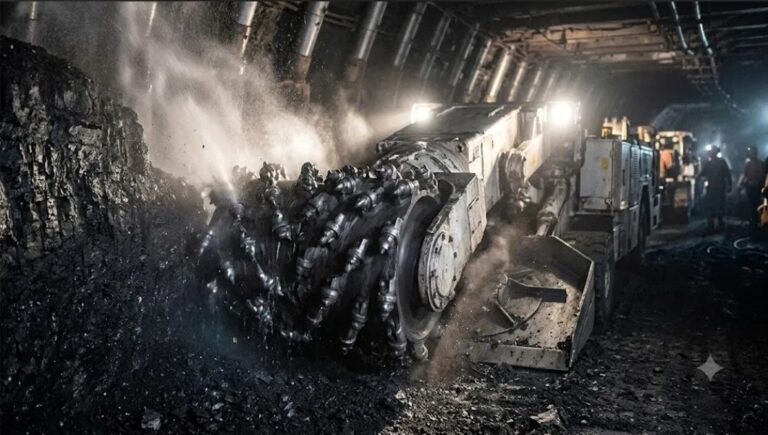
Underground coal mining is one of the most demanding environments on Earth for cutting and drilling tools. Continuous mining machines and longwall shearers rely on specialized cutting picks to break through coal seams that are often interspersed with hard rock, sandstone, and abrasive pyritic inclusions. To maintain high production rates and keep miners safe, operators need drilling and cutting bits designed to handle these varied and punishing geological formations.
The Physics of Rock Penetration and Shear
To break rock and coal efficiently, a cutting tool must apply force that exceeds the compressive strength of the material. This is achieved through a combination of compressive shear and tensile cracking:
DRILLING POINT
│
▼
/\
/ \ ◄─── Shear cracks propagate outward,
/ \ breaking rock away in large chunks
\ / rather than grinding it to dust.
\ /
\/
Dull or poorly shaped bits cannot penetrate the rock efficiently. Instead of shearing the material, they grind against it, generating intense heat and massive dust clouds while placing heavy loads on the mining machine’s electric motors. Premium mining drill bits are engineered with optimized carbide tips that maintain their sharp cutting edges, ensuring clean fractures, lower dust levels, and faster drilling speeds.
Combating Thermal Fatigue and Tip Brazing Failures
Water is pumped directly to the cutting face during mining to suppress dust, which subjects the hot cutting bits to rapid temperature changes. This thermal cycling can cause cheap brazing alloys to crack and fail, leading to lost carbide tips. Premium mining tools prevent this by using specialized silver-copper-nickel brazing alloys that remain strong and resilient under extreme thermal and mechanical stresses.
