


There occurs a point in some people’s lives when the manner in which they have been traversing life can no longer follow the same path. This can manifest itself in subtle, albeit consequential ways.
It could be the fluorescent lights in a local supermarket that cause disorientation or perhaps sensory loss, affecting one’s perception of the outside world.
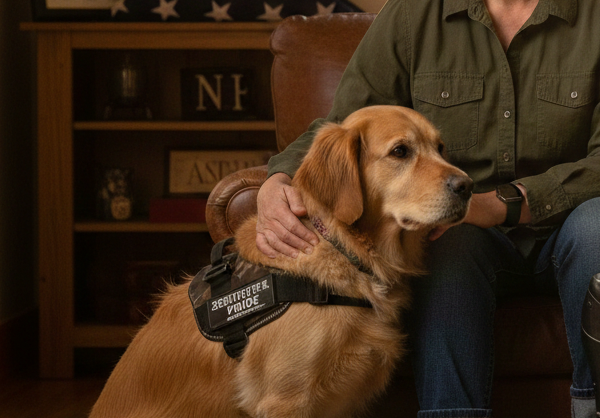
One option available to those with diagnosed disabilities or deteriorating mental health is working alongside a trained service dog. They can help individuals navigate the shifting realities of a condition.
The practical reasons to have a service dog are numerous, but with it comes companionship, a steady presence, and the confidence of regaining a sense of predictability in everyday living.
Medical and Functional Benefits
A service dog extends the body’s capabilities. For someone with mobility impairments, this might mean retrieving dropped items, opening doors, or providing balance support. For an individual with epilepsy, it can involve detecting seizures or assisting in their aftermath.
Service dogs are trained to respond with consistency in environments that are anything but. The precision with which tasks are carried out in real time helps restore stability and security.
With that reliability in place, something less visible begins to shift. The constant need to scan for risk or prepare for worst-case scenarios starts to recede. Cognitive load is reduced, and in its place comes usable mental space; energy that can be directed toward work, relationships, or even rest.
Life for a handler then begins to shift away from the constant management of limitations, toward something closer to ease.
Emotional Stability and the Invisible Work of Support
Not all disabilities are visible, and not all assistance looks physical.
A service dog can serve as an anchor to someone living with depression, severe anxiety, or PTSD. Categorized as a psychiatric service dog, they are trained to interrupt panic attacks, provide grounding through tactile stimulation, and create physical space in overwhelming environments.
What distinguishes a service dog from a pet in these contexts is intention. The dog goes beyond offering comfort by performing a task that directly mitigates a diagnosed mental health condition.
This layer of support often translates into something larger: more independence and the ability to attain goals that once felt unfeasible.
Restoring Control in Public Spaces
For many people with disabilities, the hardest part of daily life isn’t what happens at home but what happens the moment they step outside.
Unpredictability can compound in ordinary settings, such as a crowded store, a delayed train, or a sudden medical episode. Without adequate support, these moments can escalate into immediate barriers to functioning. Over time, people often adjust by reducing exposure, shortening outings, and allowing avoidance to become the norm.
A well-trained service dog helps stabilize these environments, transforming them from unmanageable places to navigable terrain.
The Long-Term Reasons to Have a Service Dog
Over time, the benefits of having a service dog compound. What begins as assistance gradually becomes an integrated part of daily life for the handler.
Confidence develops in incremental steps, often visible in the way tasks that once required planning become automatic. Environments that once felt hostile grow more manageable. The handler’s identity can shift from being defined primarily by limitation to being shaped by what becomes possible within it.
Alongside this gradual shift are observable changes in health and stability, including fewer hospital visits, improved adherence to medical routines, and stronger overall mental well-being among service dog handlers.
But beyond any measurable outcome lies something harder to quantify: the quiet relief from constant vigilance, isolation, and the slow exhaustion of navigating a world that no longer feels familiar.
Reasons to Have a Service Dog Go Beyond Practicality
It is fairly simple to frame service dogs purely in terms of what they do, how they help, and the tasks they perform. While accurate, it doesn’t paint the complete picture.
Their true impact lies in what they make possible. Service dogs expand the realms of possibility by enabling handlers to live a life that might otherwise be out of reach. They do not remove limitations, but soften the hold those limitations have.
Perhaps the most striking outcome is the consistency with which these dogs support their handlers, in the form of a quiet partnership, working seamlessly in the background of everyday life.
That, ultimately, is one of the best reasons to have a service dog.
