


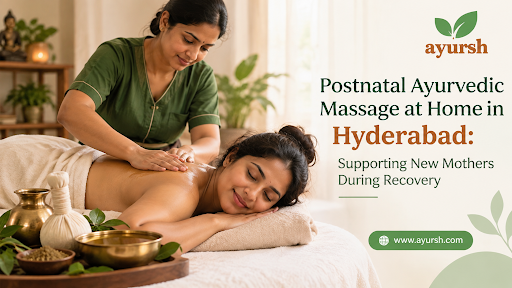
After childbirth, a woman’s body goes through a significant period of change. Recovery takes time as the body adjusts after pregnancy and labour, while hormonal changes, interrupted sleep and the physical demands of caring for a newborn can add to the challenges. During the early postpartum period, new mothers may experience tiredness, back pain, muscle stiffness, digestive discomfort, disturbed sleep and emotional stress, whether they have had a vaginal delivery or a c section.
Ayurveda has traditionally considered postnatal care an important part of a mother’s recovery. This is addressed through a structured approach known as Prasootika Charya. It includes suitable food, rest, gentle movement, oil application, bathing and other personalised therapies. Postnatal massage, when selected appropriately by a qualified Ayurvedic professional, can be included as a comforting part of this recovery process.
For mothers searching for Postnatal Ayurvedic Massages At Home in Hyderabad, receiving the therapy at home can make the recovery period easier and more comfortable, particularly when travelling to a clinic is difficult after childbirth.
Why Postnatal Care Is Important After Delivery
Pregnancy and childbirth put considerable physical demands on a mother’s body. Following delivery, the body gradually works towards its pre-pregnancy state while the mother begins adjusting to feeding, carrying and caring for her baby.
Recovery is not the same for every woman. For example, a mother who has undergone an episiotomy may have discomfort around the perineal area. A woman who has had a c section, meanwhile, needs enough time for the surgical incision to heal. Interrupted sleep and the everyday demands of caring for a newborn can further contribute to physical and emotional fatigue.
In traditional Ayurveda, this stage is considered important for restoring strength and supporting balance. Postnatal care is therefore not necessarily identical for every mother. It can be adjusted according to factors such as the delivery method, recovery, constitution, symptoms and overall health.
Common Concerns During the Postpartum Period
Back discomfort is among the common concerns experienced after pregnancy. The changes that occur during pregnancy, altered posture, weakened abdominal muscles, breastfeeding positions and repeatedly lifting the baby can all put extra pressure on the back and shoulders.
Changes in digestion can also occur after childbirth. Constipation may be linked with reduced movement, insufficient fluid intake, dietary changes, iron supplements, pain medicines or discomfort following an episiotomy or c section. Lack of sleep may also have an effect on digestion and overall wellbeing.
Emotional stress is another factor that deserves attention. A new mother can feel exhausted even while feeling happy about her baby. Changes in sleeping patterns, feeding schedules and responsibilities may influence stress levels. Cortisol, commonly referred to as a stress hormone, plays a role in the body’s response to stress. This makes adequate rest and emotional support important during postpartum recovery.
For this reason, traditional postpartum routines focus on more than massage alone. Nourishing food, suitable rest, hydration, gentle activity and emotional support are also given importance.
What Is Prasootika Charya?
Prasootika Charya is the traditional Ayurvedic approach to postnatal care. It aims to support the mother’s recovery following childbirth and help her gradually regain strength.
The practices included may vary according to the mother’s condition and the advice of an Ayurvedic practitioner. These may include Sootika Abhyanga, herbal powder applications, bathing procedures, gentle abdominal wrapping and other supportive practices.
One of these practices is Prasootika Abhyanga, a traditional postnatal oil massage. Gentle massage techniques may help a tired mother relax while providing comfort to muscles that have experienced strain during pregnancy and childbirth.
Traditional postnatal practices may also include Churna Snana, in which suitable herbal powders are used during bathing, and Udaraveshtana, which refers to a traditional abdominal wrapping practice. Parisheka, involving the application of warm water or a suitable decoction, may also be included depending on individual requirements.
Being traditional does not mean that these procedures should automatically be used by every mother. Their suitability, timing and method should be assessed according to the mother’s health and stage of recovery.
Ayurvedic Oils Used During Postnatal Care
Different medicated oils and Ayurvedic preparations may be used during postnatal care depending on the mother’s individual requirements.
Dhanwantaram Thailam is traditionally associated with postnatal Ayurvedic care and massage. It is commonly used in traditional practices intended to support the body following childbirth.
Ksheerabala Thailam is another classical Ayurvedic oil that is used in selected traditional therapies. It should be used according to individual suitability and professional guidance rather than routinely without assessment.
Sukhumara Gritha, also commonly written as Sukumara Ghrita, is a traditional Ayurvedic formulation associated with Vata-related concerns and women’s health. It has also been discussed within traditional approaches to postpartum digestive discomfort. Internal Ayurvedic medicines, however, should always be taken under the guidance of a qualified Ayurvedic physician, particularly when the mother is breastfeeding or taking other medicines.
The same oil or formulation may not be suitable for every new mother. Before recommending a particular preparation, a practitioner may consider the delivery type, digestive health, pain, sleep, breastfeeding, medications and the mother’s overall recovery.
Can Ayurvedic Postnatal Massage Support Back Pain?
Back discomfort is something many mothers notice after pregnancy. The additional weight during pregnancy, changes in posture and the physical effort involved in caring for a newborn can contribute to muscular tension.
Gentle Ayurvedic massage may help relax tense muscles and offer a feeling of comfort. It can be particularly useful when combined with suitable posture, rest and gentle movement.
At the same time, persistent or severe back pain should not simply be assumed to be a normal part of postpartum recovery. If back pain occurs along with weakness, numbness, fever, significant swelling or other unusual symptoms, medical assessment is required.
Managing Postpartum Constipation With Gentle Recovery
Constipation can be uncomfortable following childbirth and may be especially difficult for mothers recovering from an episiotomy or c section. Several factors can contribute to it, including fear of discomfort, reduced movement, changes in diet, dehydration, iron supplements and certain pain medicines.
Adequate hydration, suitable fibre-rich foods, gentle walking when medically appropriate and sufficient rest may help support normal bowel function. Depending on the mother’s individual condition, traditional Ayurvedic approaches may also include dietary and herbal recommendations.
The reference article on postpartum constipation points to the importance of addressing common misconceptions related to hydration, movement and diet after childbirth. It also discusses traditional Ayurvedic preparations such as Sukumara Ghrita, along with oils such as Dhanwantaram Thailam and Ksheerabala Thailam, in relation to postpartum care. These preparations should be used only with appropriate professional guidance, especially by breastfeeding mothers.
Benefits of Having Postnatal Massage at Home
Going out with a newborn can be challenging, particularly during the first few weeks following delivery. Home-based care allows the mother to stay in a familiar setting while receiving a planned therapy session.
Another advantage is that the mother can rest before and after the session without having to spend additional time travelling. This can be particularly helpful for mothers recovering from a c section, dealing with fatigue or managing frequent feeding schedules.
A professional home-service approach should take the mother’s privacy, cleanliness, available space and comfort into consideration. Before beginning the therapy, the therapist should also be informed about relevant health conditions, allergies, medications and the type of delivery.
Postnatal Massage After Vaginal Delivery or C Section
There is no single timing that applies to every mother when it comes to postnatal massage.
Following a vaginal delivery, suitable massage or traditional postnatal therapies may be started after the initial recovery period, depending on professional assessment. If the mother has had an episiotomy or experienced another complication, additional care may be required.
After a c section, special attention needs to be given to the abdominal surgical wound. Massage should not be carried out over an unhealed incision. The appropriate timing of therapy should be decided with suitable medical or Ayurvedic guidance.
This makes the mother’s delivery history an important consideration before treatment begins. A traditional therapy that is appropriate for one mother may need to be changed or postponed for another.
Postnatal Ayurveda Goes Beyond Massage
Massage is only one part of postpartum recovery. A balanced postnatal routine may also include nutritious meals, enough hydration, suitable rest, gentle movement and emotional support.
Ayurvedic dietary principles may be personalised based on the mother’s digestion, constitution and stage of recovery. A yogic diet or another dietary approach should not be followed blindly while breastfeeding because nutritional requirements can vary considerably.
It is also important for new mothers not to compare their recovery with someone else’s. Weight changes, abdominal recovery, sleeping patterns and energy levels can differ significantly from one woman to another.
The focus should be on gradual recovery instead of trying to return immediately to a pre-pregnancy routine.
Personalised Postnatal Ayurvedic Care
Every mother’s recovery journey is different. The appropriate postnatal therapy may depend on whether she has had a vaginal delivery or c section, whether an episiotomy was performed, her current pain level, digestive health, breastfeeding status and overall wellbeing.
A qualified Ayurvedic professional can assess whether Prasootika Charya and its individual components are appropriate at a particular stage of recovery.
For mothers in Hyderabad, home-based Ayurvedic postnatal care can be a convenient choice when professional guidance and traditional therapies are considered suitable. The priority should remain on safe recovery, comfort and the individual needs of the mother.
Final Thoughts on Postnatal Ayurvedic Care
The postpartum period calls for patience and proper care. While recovering physically, a new mother is also adapting to an entirely new daily routine. Traditional Ayurvedic practices such as Prasootika Charya and Prasootika Abhyanga may be included in a personalised postnatal recovery plan when performed at the right time and under professional guidance.
Back pain, tired muscles, digestive discomfort, disturbed sleep and general postpartum weakness can all make this period challenging. Recovery should therefore be approached gently rather than rushed.
Ayurvedic postnatal massage can be used as a supportive wellness practice, but it should complement appropriate medical care and not replace it. Mothers recovering from a c section, significant episiotomy, complicated delivery or any medical condition should seek suitable professional advice before beginning massage or taking Ayurvedic medicines.
A comfortable home setting, qualified practitioners, suitable oils such as Dhanwantaram Thailam or Ksheerabala Thailam when recommended, nourishing food, adequate rest and individualised care can together contribute to a more comfortable postpartum journey.
FAQs
1. When can I start Ayurvedic massage after delivery?
The right time depends on the mother’s delivery, recovery and health condition, as well as whether she had a vaginal delivery, episiotomy or c section. Postnatal massage should ideally be started only after receiving suitable guidance from a qualified healthcare or Ayurvedic professional.
2. Is Ayurvedic massage suitable after a c section?
Ayurvedic postnatal massage may be considered after a c section, but the timing and technique should be individualised. Massage should not be performed over an unhealed surgical incision. Appropriate professional guidance should be obtained before beginning therapy.
3. Can postnatal Ayurvedic massage help with back pain?
Gentle postnatal massage may help relax muscles and provide comfort for common muscular tension and back discomfort following pregnancy. However, persistent, severe or unusual back pain should be evaluated by a qualified healthcare professional.
4. Which Ayurvedic oils are used for postnatal massage?
Traditional Ayurvedic oils such as Dhanwantaram Thailam and Ksheerabala Thailam may be considered depending on the mother’s individual requirements. The oil should be selected according to her condition and professional Ayurvedic guidance.
5. Can I get postnatal Ayurvedic massage at home in Hyderabad?
Yes, home-based postnatal Ayurvedic massage can be a convenient option for mothers who prefer to recover at home. The therapy should be planned based on the mother’s delivery history, current recovery and individual requirements.
